
RC Electronics Components: How ESCs, Servos, and Motors Work Together Perfectly
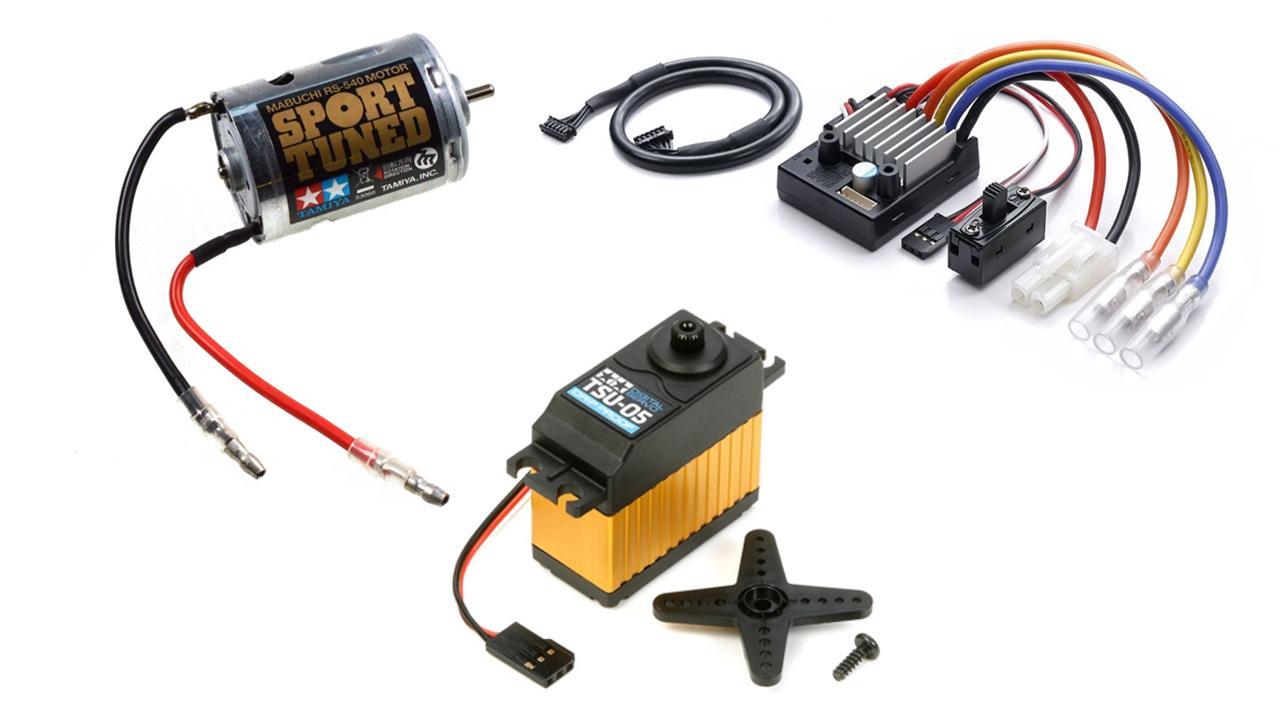
RC Electronics Components: How ESCs, Servos, and Motors Work Together Perfectly
You’ve picked up a classic Tamiya or an agile Carson model and are wondering exactly what’s going on under the body? The interaction between RC electronic components is like a perfectly coordinated team. If you understand how the ESC, servo, and motor communicate digitally with each other, you’ll get the most out of your vehicle and be able to perform any service on your chassis flawlessly.
FAQ: The Basics of RC Electronics at a Glance
How is an RC servo controlled?
An RC servo receives its signals directly from the vehicle’s receiver via a three-wire cable. The receiver sends a so-called PWM signal (Pulse Width Modulation), which specifies the exact target position for the steering angle to the servo.
What types of motors do RC cars use?
RC cars use either classic brushed motors for responsive driving in the entry-level range or modern, efficient brushless motors for maximum speed and maintenance-free operation.
What does the “T” in RC motors stand for?
The “T” stands for “turns” (windings of the copper wire in the motor). Fewer turns (e.g., 12T) mean higher RPM and more top speed, while more turns (e.g., 35T) provide plenty of torque and responsive climbing performance.
What does “kV” mean in RC motors?
The kV value indicatesthe specific speed of a brushless motor. It shows how many revolutions per minute the motor achieves per volt of applied voltage under no load (revolutions per volt).
The Nervous System of Your RC Car: The Signal Path
Before your Tamiya model moves even a millimeter, a digital dialogue takes place in a matter of milliseconds. As soon as you accelerate or steer using your remote control, the transmitter sends high-frequency signals to the receiver in the car.
Here, the signal splits:
- Steering signal: Goes directly to the RC servo.
- Throttle signal: Goes directly to the ESC (Electronic Speed Controller).
[Remote Control] ---> (Radio Signal) ---> [Receiver]
+---> [RC servo] ---> (steering)
+---> [ESC / Controller] ---> [RC Motor] ---> (Propulsion)
The RC Servo: The Muscle Behind the Steering
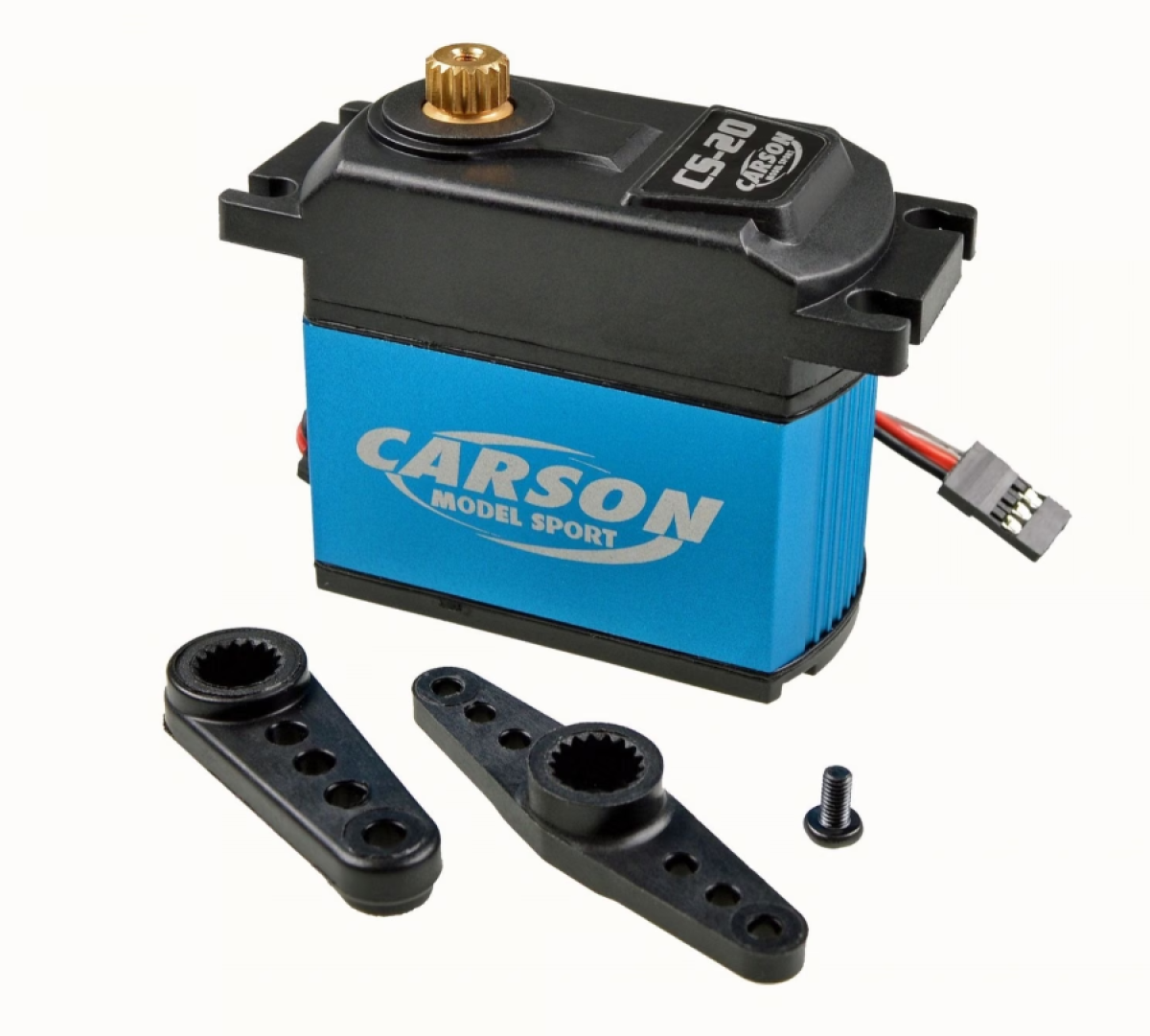
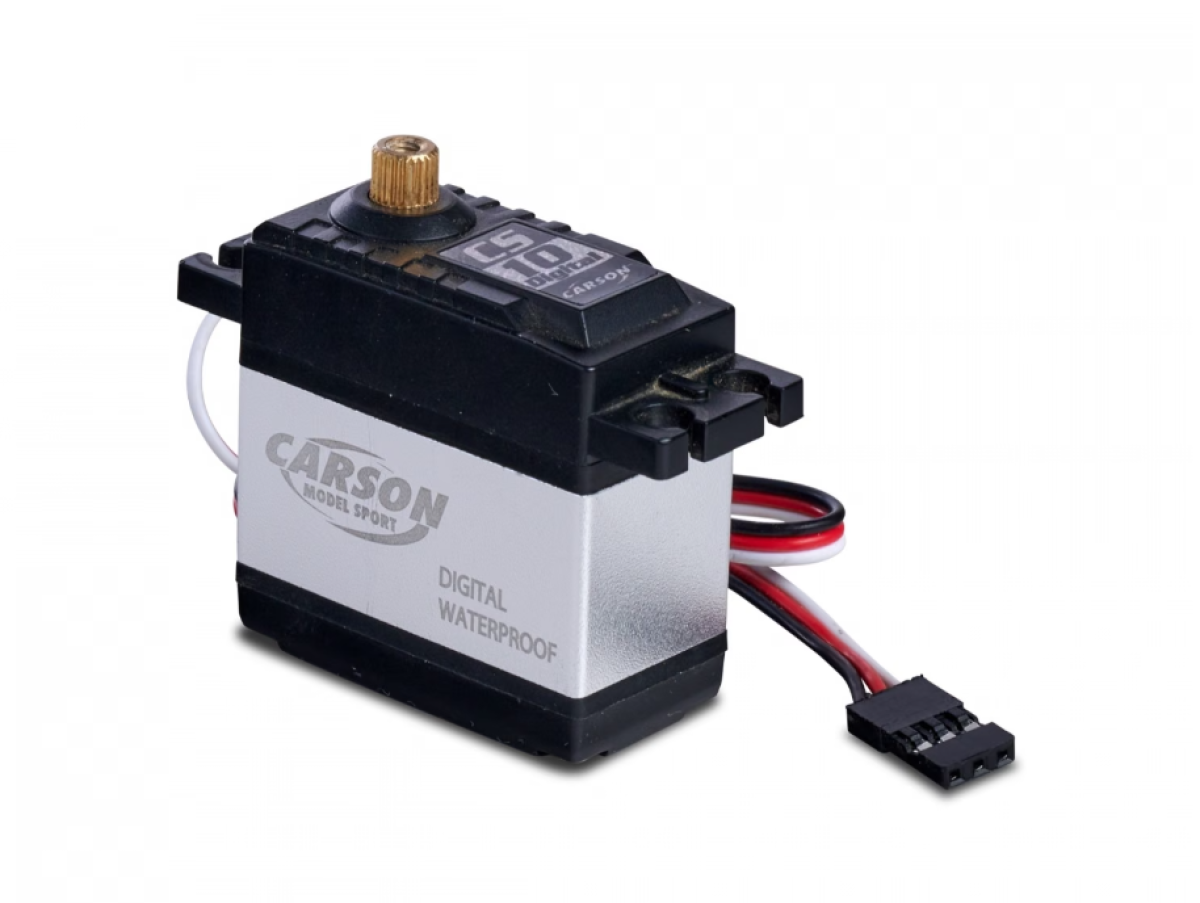
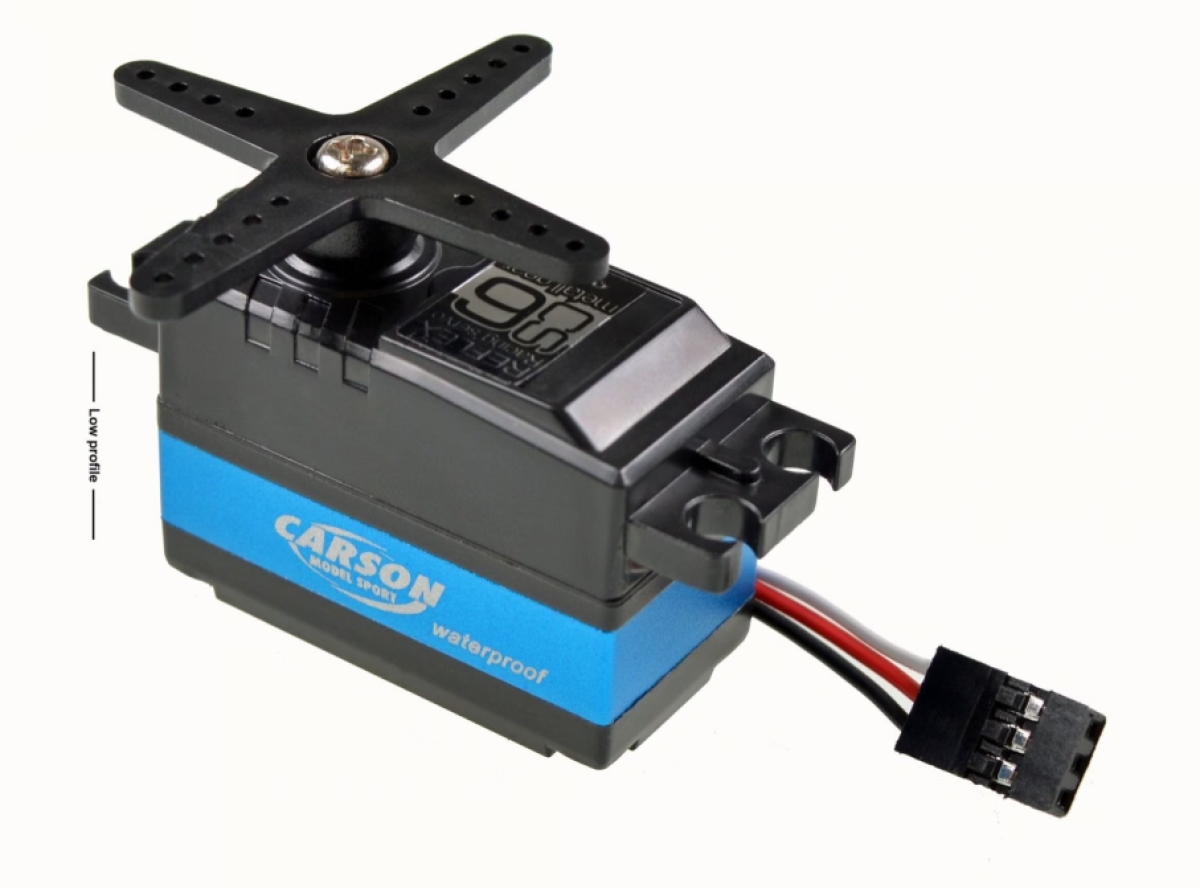
When it comes to how position control works in a servo motor, the secret lies inside the housing. An RC servo is not a normal motor that simply rotates. It has an integrated gearbox, a small electric motor, and a potentiometer for position detection.
As soon as the receiver transmits the control command, the servo’s internal electronics compare the potentiometer’s current position with the target signal. If they don’t match, the motor continues to turn until the desired steering angle is precisely achieved. For 1:10 scale RC cars, we recommend servos with a response time of less than 0.15 seconds to ensure crisp handling.
The ESC (Electronic Speed Controller): The Brain of the Drive System
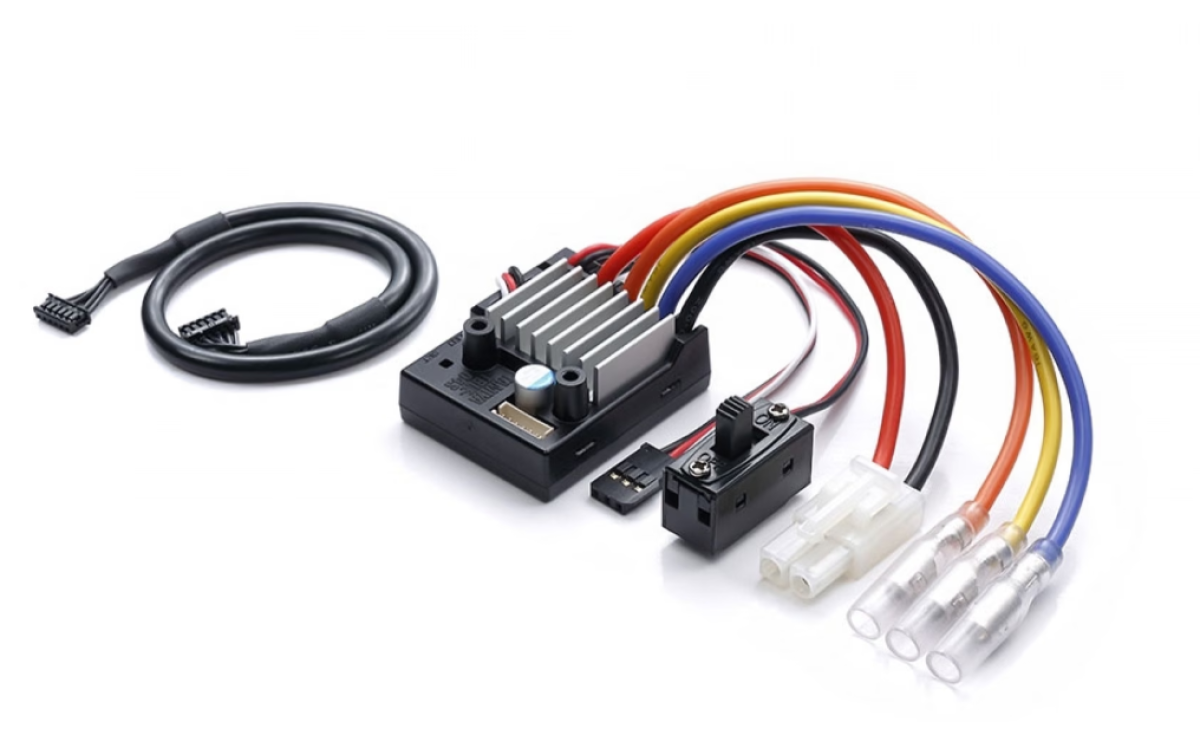
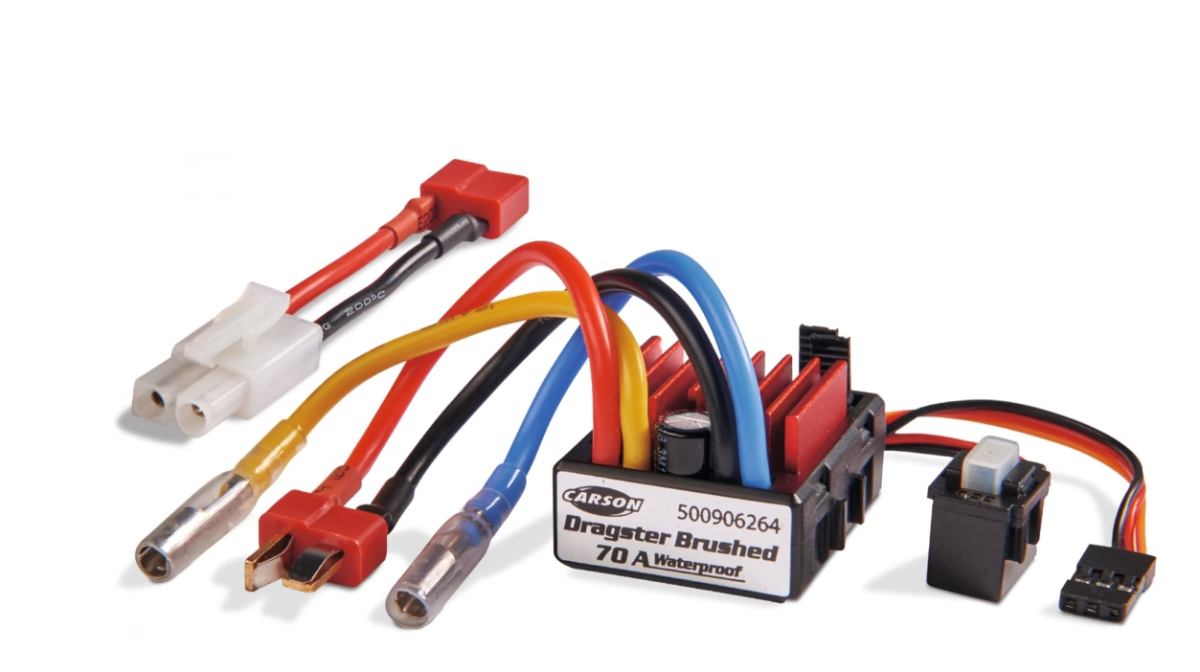
The ESC (Electronic Speed Controller) controls the speed and braking behavior of your model. It acts as an intelligent valve between the battery and the RC motor.
Modern controllers also fulfill an essential dual function: the BEC (Battery Elimination Circuit). The BEC regulates the high battery voltage (e.g., 7.4V for a LiPo battery) down to a compatible 6V to supply power to the receiver and servo directly via the ESC cable. This eliminates the need for a separate receiver battery pack.
The RC Motor: A Powerhouse in Detail
At the end of the chain is the RC motor, which converts electrical energy into mechanical motion. Here, the model-making world distinguishes between two dominant concepts:
Brushed vs. Brushless Motors
- Brushed motors: Mechanical carbon brushes transfer the current to the rotating commutator. They are extremely affordable and straightforward, but they wear out over time.
- Brushless Motors: Here, a permanent magnet rotates while the coils are located on the outside. A sophisticated brushless ESC handles the electronic commutation. The result: significantly higher efficiency, extreme speeds, and no wear.
Comparison: Turns vs. kV value
To select the right motor for your Tamiya chassis, take a look at the technical specifications:
| Motor type | Specification | Effect at low values | Effect at high values | Ideal application |
| Brushed / Brushless | Turns (T) | High RPM, high top speed, lower torque | Low speed, enormous power (torque) | Low T: Smooth-track racing High T: Crawler & Trial |
| Brushless | kV value | Tractor-like torque, battery-friendly | Aggressive acceleration, brutal top speed | Low kV: Off-road basher High kV: High-speed racer |
Expert tip from the Tamiya-Carson workshop: When setting up, always make sure your ESC can handle the motor current continuously. A motor with very few turns (e.g., a 10.5T brushless motor) draws enormous currents under load. In this case, your ESC should be rated for at least 60 to 80 amps of continuous current to prevent overheating.
Discover more details about the differences here: Brushed Motor vs. Brushless Motor
Bottom line: It’s all about perfect synergy
Only when the RC servo, ESC, and motor are perfectly matched will your RC model come to life smoothly. A powerful servo is useless if the ESC’s BEC voltage drops. And even the most powerful brushless motor will remain tame if the ESC blocks the current. So for your next project, rely on high-quality, compatible components from Tamiya and Carson—that way, nothing will stand in the way of perfect driving fun on the track!