
Endurance Runner
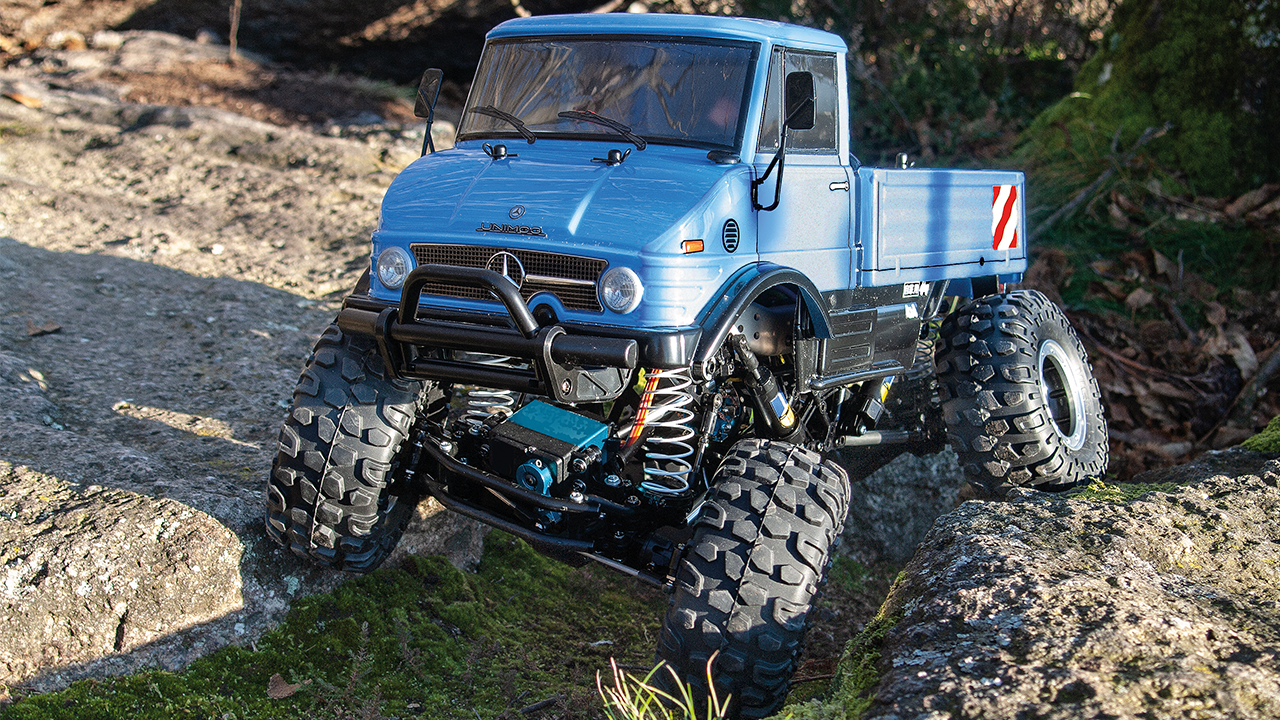
Tamiya Mercedes-Benz 406 Series U900
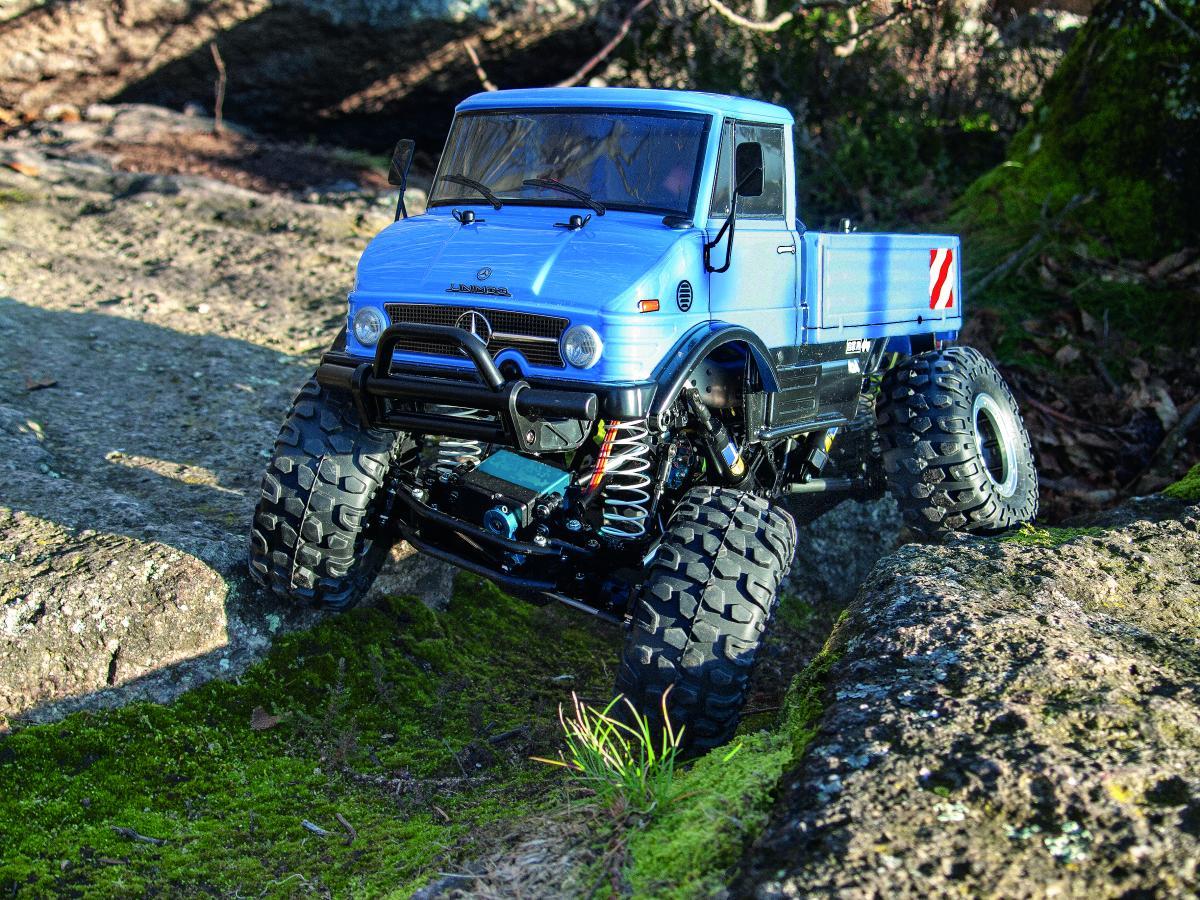
The Tamiya Unimog 406 is a well-known classic. The
technology behind the CR-01 chassis dates back to 2008.
However, the legend surrounding the Unimog lives on
. We’ll take a close look at the kit and
report on our long-term experience and tuning modifications
that have taken place over the course of this review.
The History of the Unimog
The Unimog is a legendary vehicle, an all-around workhorse that is second to none. For 70 years, this “universal motor vehicle” has been in use around the world.
It all began immediately after World War II. Albert Friedrich developed a basic concept for a special off-road vehicle that could till fields and clear the land of wartime debris. The vehicle also had to be fast enough to transport six to eight people on the flatbed to the fields within a few minutes and, in turn, bring the harvest back to the farms while keeping it dry. After numerous tests and a great deal of persuasion, production of prototypes began in October 1946 at Erhard & Söhne in Schwäbisch Gmünd.
In November 1948, the Unimog was patented in Munich as a multi-axle motor vehicle for agriculture under the number 950 430. A completely new feature of the “universal motor vehicle” was its departure from the classic “tractor-only concept.” With a wide range of attachments and superstructures, the focus was on the concept of a utility vehicle designed to streamline agriculture and forestry. The term “Universal-Motor-Gerät” was shortened to Unimog.
In 1951, the then-Daimler-Benz AG acquired all rights to the Unimog and began producing it at its truck plant in Gaggenau starting in 1951. Prior to taking over production, Daimler-Benz AG had already been the supplier of the drive engine.
Classification
Tamiya almost always goes its own way and sets its own trends. From today’s perspective, the CR-01 chassis is not a standardized crawler. The classic T-Bone chassis has not been the standard for 10 years due to its height. Even the Unimog’s large tires are no longer in vogue in this segment. However, with a few sensible modifications, you can enjoy its smooth handling on moderate terrain. And building a Tamiya model is always a lot of fun.
Good Old Kit
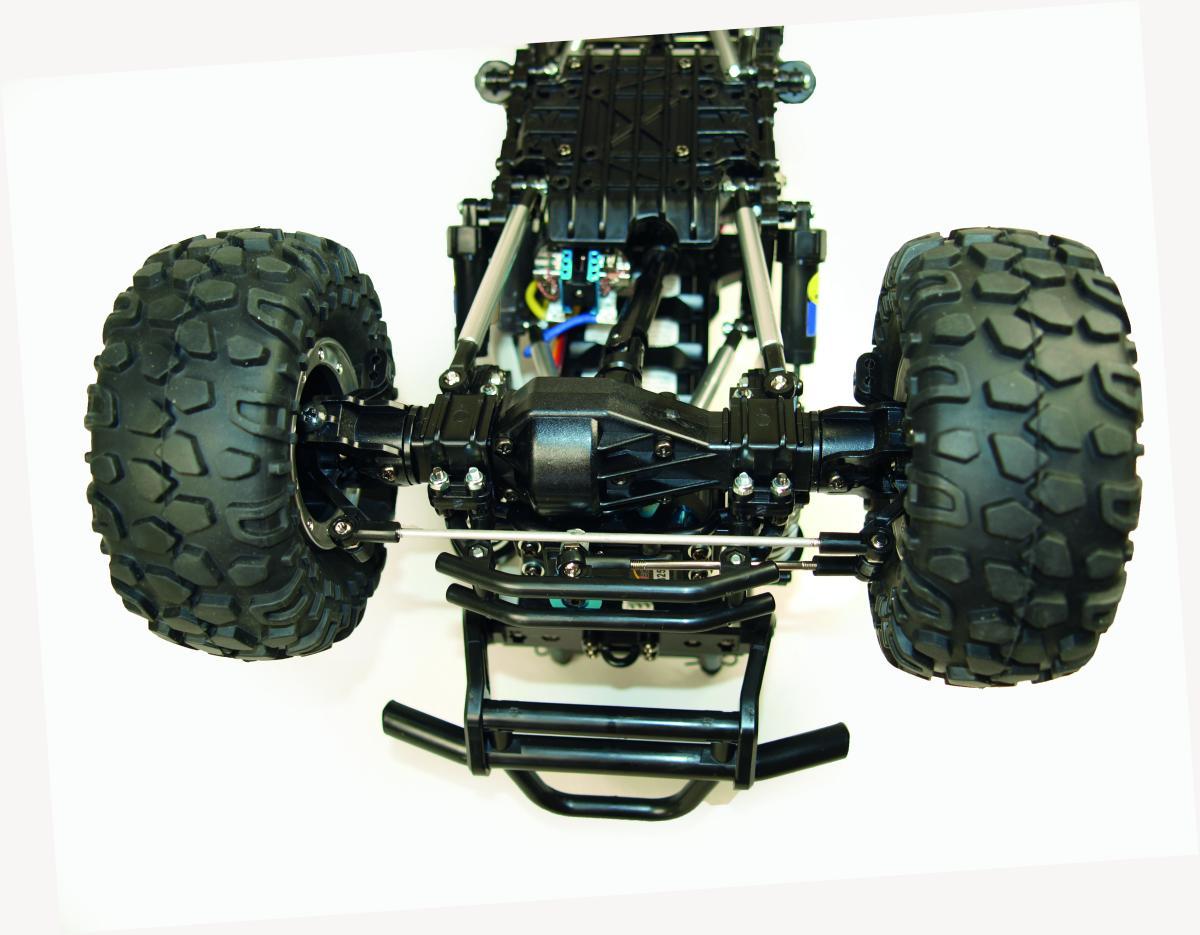
Before we set off, the guys from Shizuoka, Japan, provided us with a multi-part kit that, along with its excellent assembly instructions, will keep us busy for a few hours. As described above, the classic T-Bone chassis is assembled first. Next come the front and rear axles, which feature ball bearings. Yes, this Tamiya kit comes fully equipped with 40 ball bearings—kudos to Tamiya.
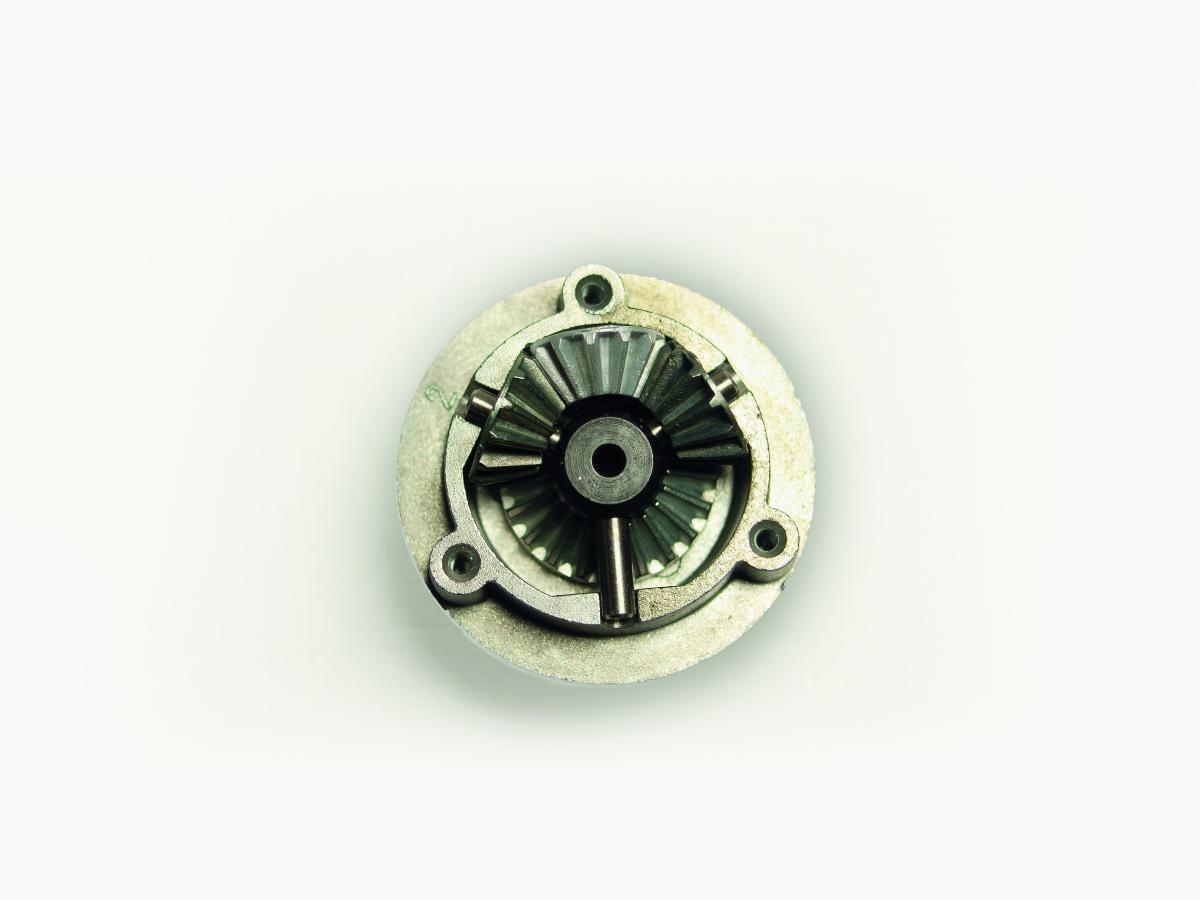
Back to the axles. Each one features an all-metal differential. Since we want to build a semiscaler model from this kit, the differentials will, of course, be locked. By default, Tamiya provides a locking mechanism via a screw pin. We found that this solution runs a little unevenly, so we opted for different solutions on the front and rear axles.
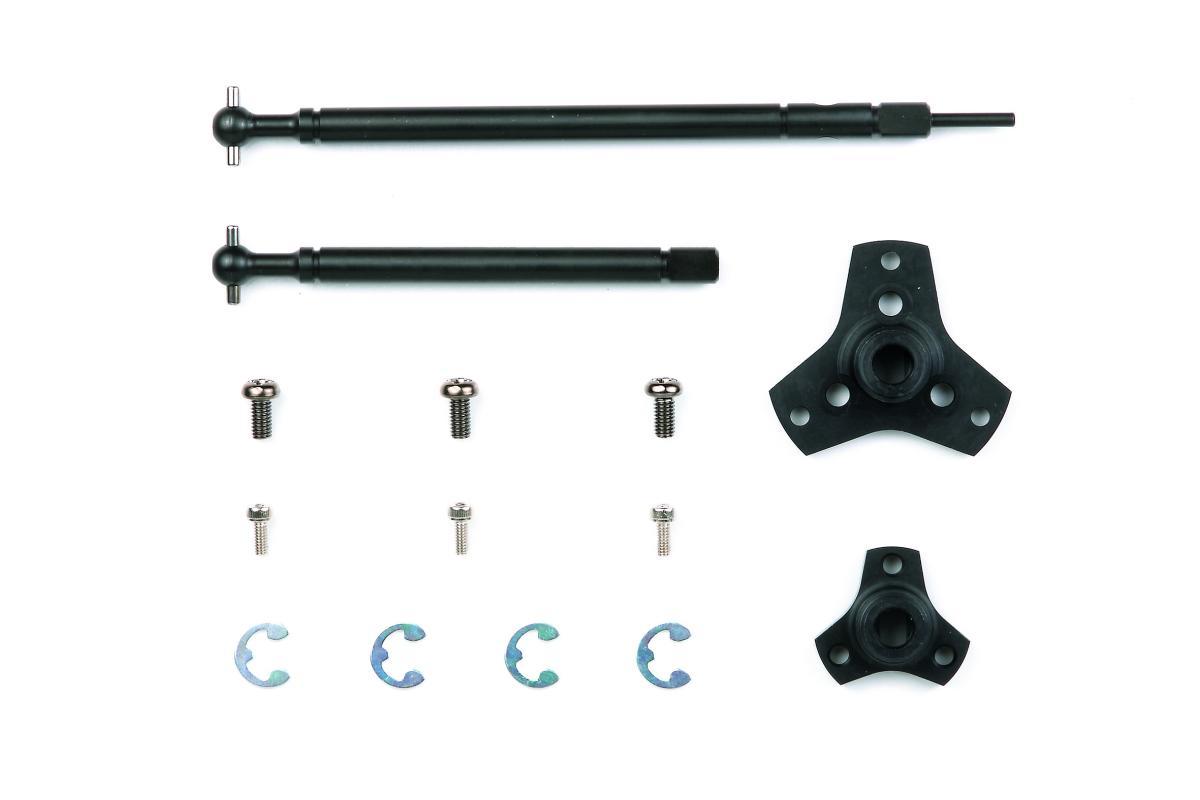
On the front axle, we’re using the optional Tamiya “Reinforced Drive-Shaft & Diff-Lock Set.” Here, fixed mounts are screwed directly to the gear instead of using gear teeth. The drive shafts have flat sections instead of splines for power transmission, and all tuning parts are made of hardened material.
On the rear axle, we lock the differential by repositioning the bevel gears. This works flawlessly for us. Four solid aluminum links connect each axle to the chassis.
Steering
The steering is somewhat disappointing in its stock configuration, even though the servo is mounted directly on the front axle. The steering travel is simply too limited. The author isn’t a fan of the option to convert the CR-01 chassis to four-wheel steering on this model. However, the kit is designed to accommodate this conversion. But with a little Dremel work on the steering levers, you can achieve much greater steering angle. We equipped the Unimog with a 20 kg steering servo with a metal gearbox, and the stock servosaver had to be replaced with an aluminum servo horn. This servo steers very precisely, and as for the missing servosaver, all we can say is: “So far, so good.”
Suspension
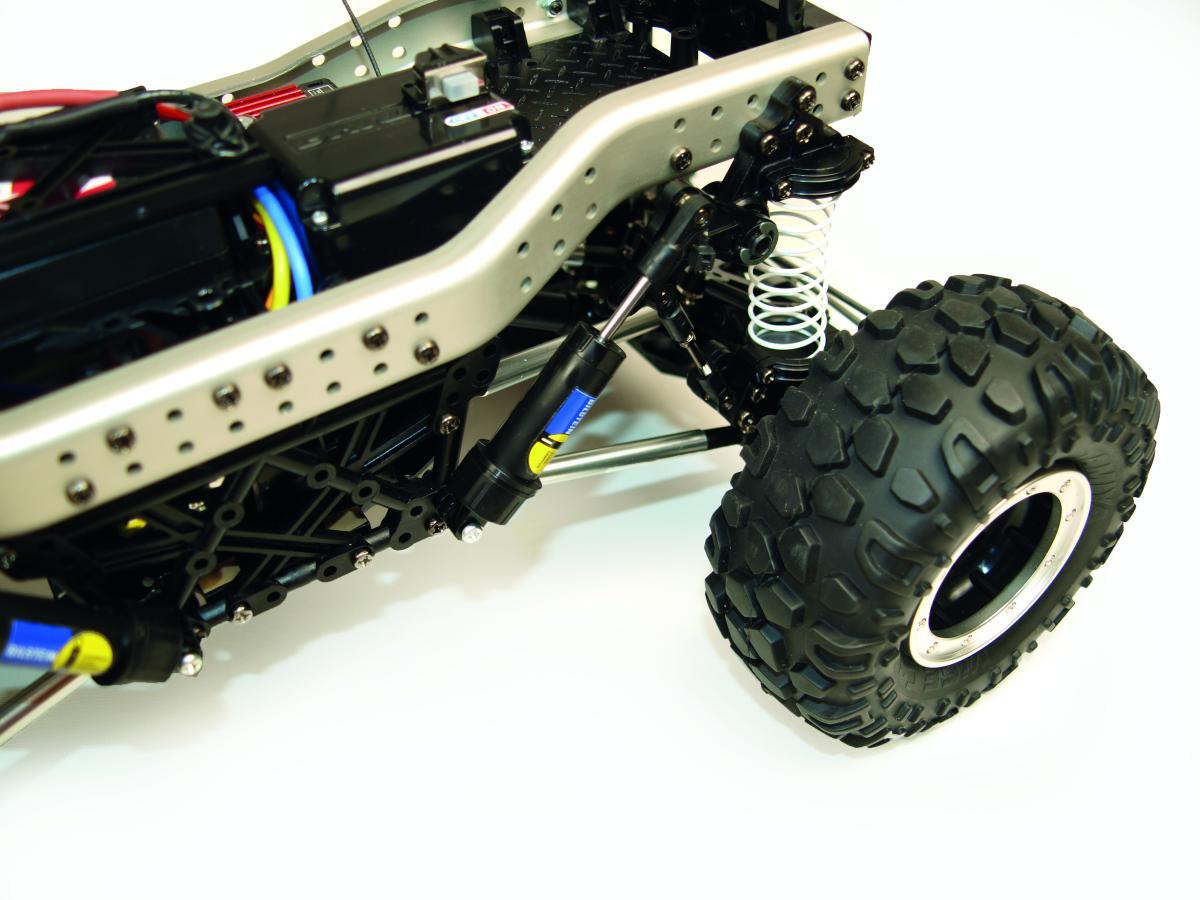
The suspension and damping systems on the Unimog operate independently of one another. Unfortunately, the aftermarket coil springs are no longer available. Damping is provided by redirected, large-volume hydraulic shock absorbers. At this point, let’s briefly turn to the test drives. First, the body of this model tends to sway, and the suspension feels a bit too stiff. The body sway is caused by excessive play in the shock absorber linkage levers. A simple solution is to use cable ties with metal tabs. After that, the linkage is free of play and responds much better. The shock absorbers are now filled with just a few drops of oil. The next test drive was impressive, and the car is no longer as wobbly.
Gearbox
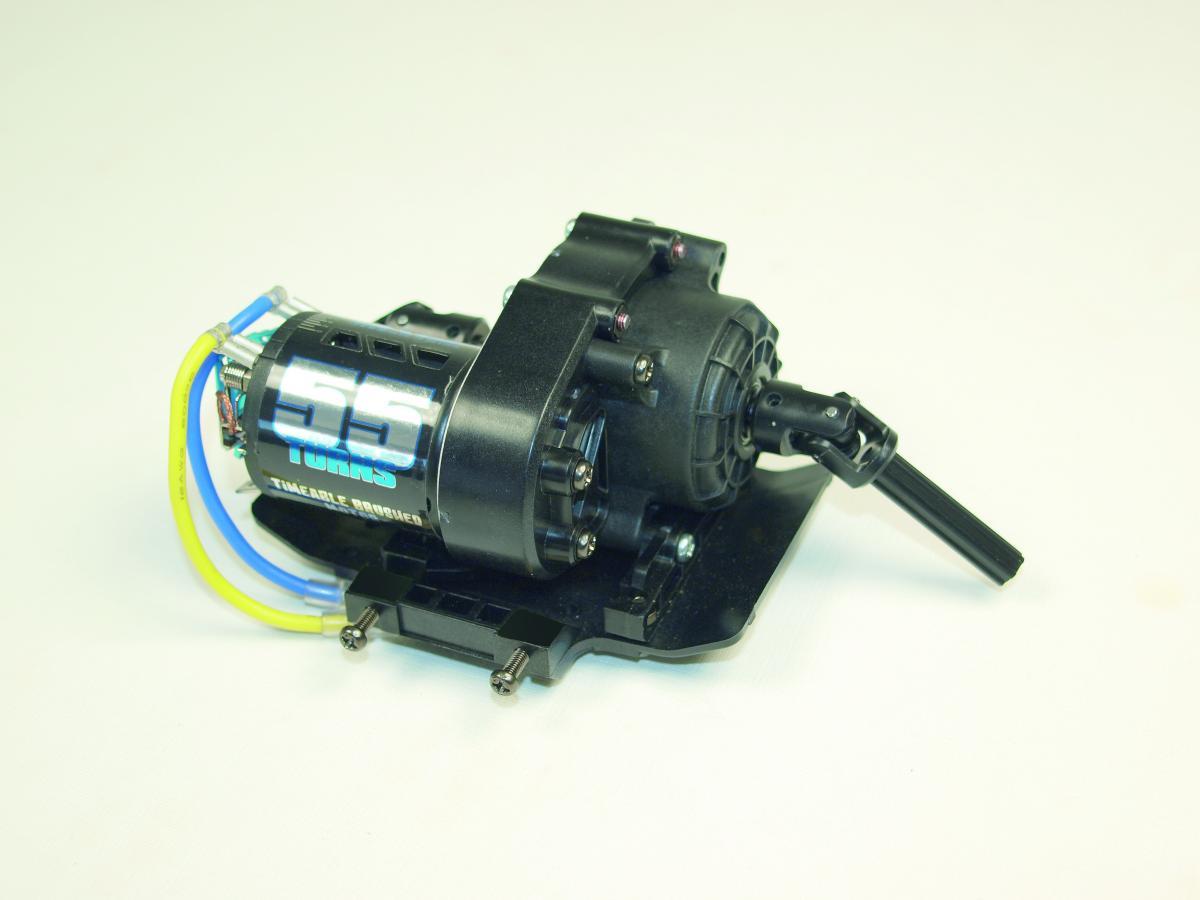
In short, the CR-01 chassis features an intricately designed planetary gearbox with a reduction ratio of 40.5:1. The kit includes a 540 Mabucci motor. However, we opted for the new LRP 55-turns brushed motor. The motor is bolted to the gearbox via an aluminum plate. With the stock gear ratio, this motor provides sufficient power, and the top speed is a respectable hiking speed. Further fine-tuning could easily be achieved by using a smaller or larger motor pinion.
The drive shafts from the gearbox to the two axles are made of plastic and seem a bit undersized. The kit actually includes two sets of these shafts. However, it’s worth noting that in our case, we’re still using the first set. Tamiya offers a reinforced set for this. We’re keeping an eye on them just to be safe.
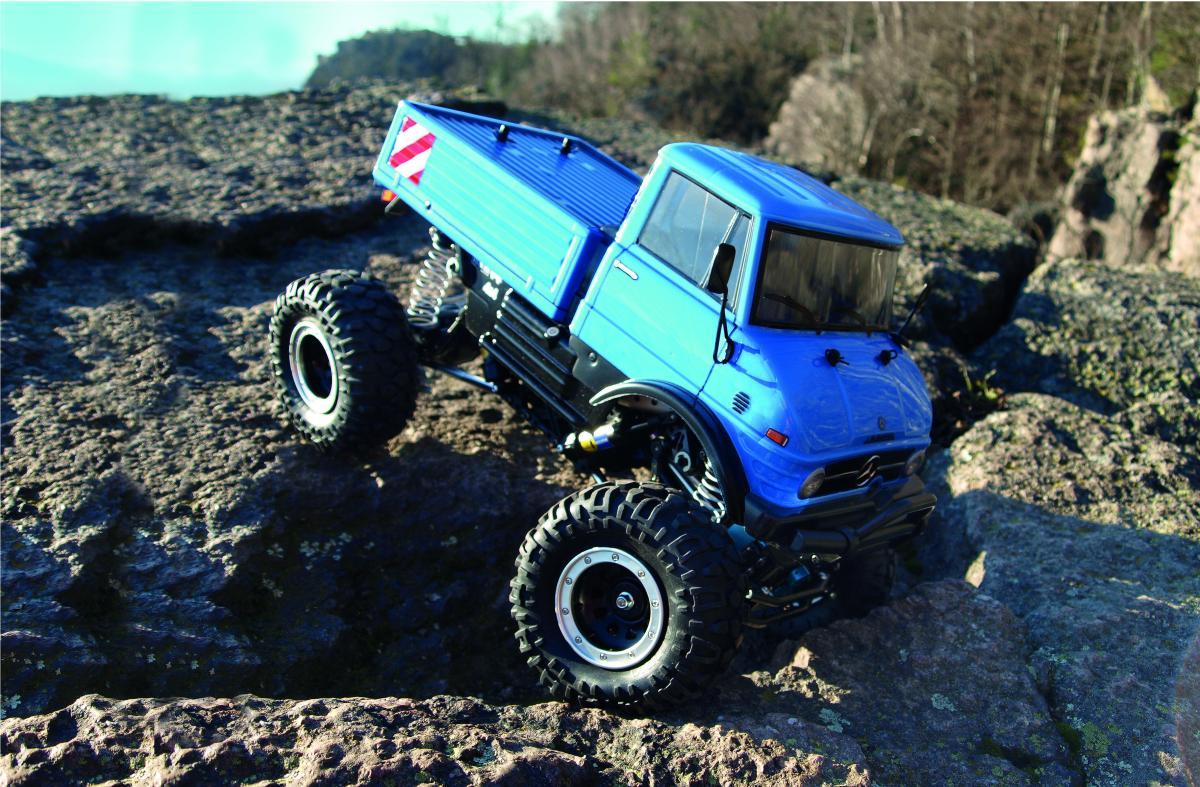
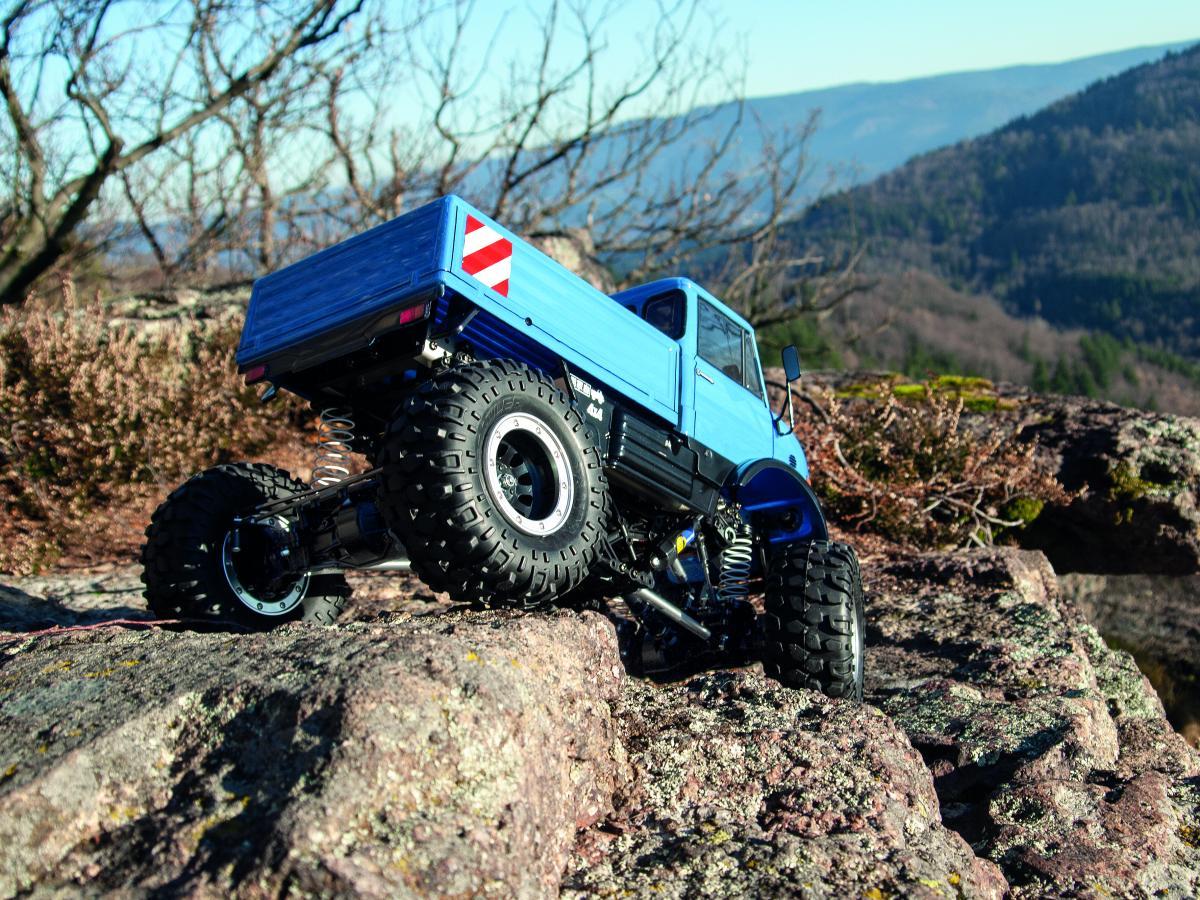
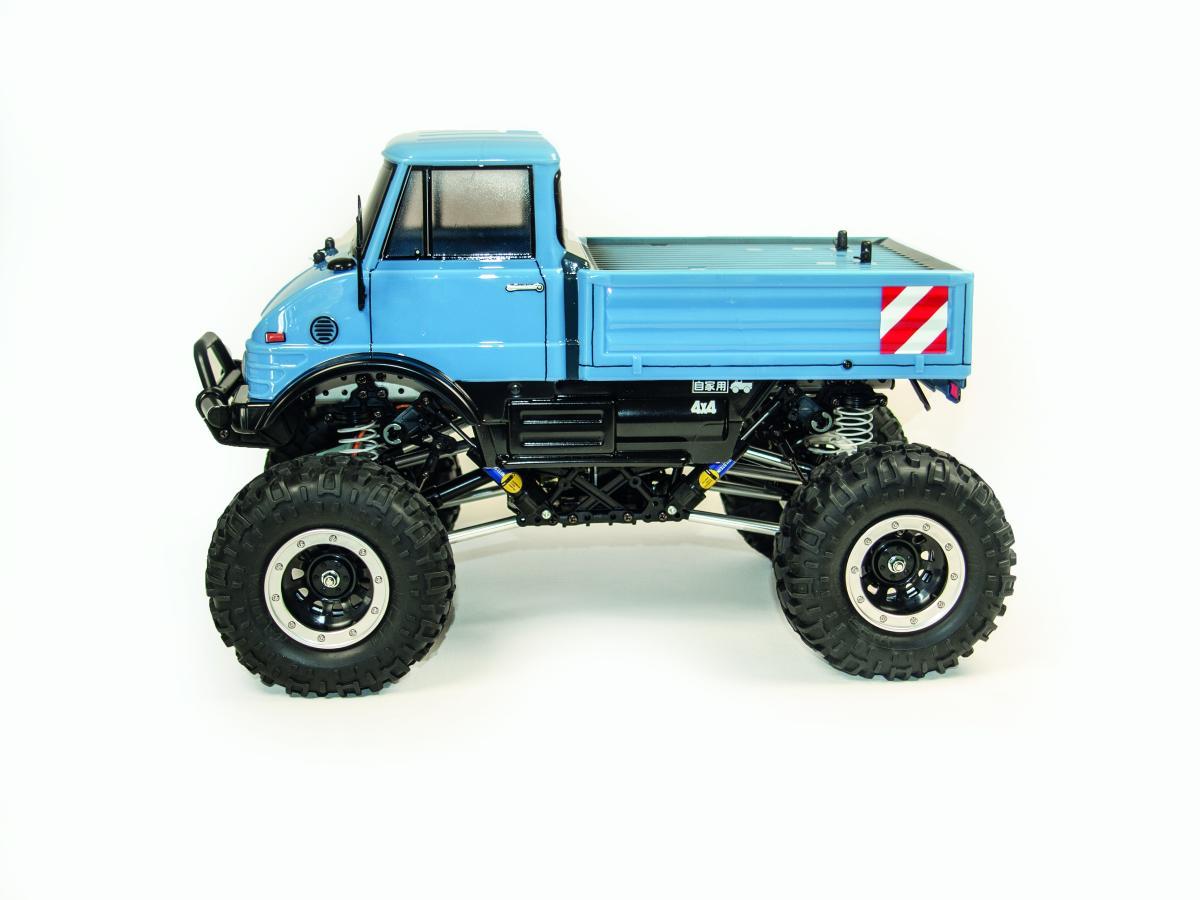
Now the large trial tires—with a diameter of 125 mm and a tread width of 56 mm—are mounted on the beadlock rims using 20 screws each, and the Unimog already stands with its legs spread wide apart.
Body Art
As is typical with Tamiya models, the Lexan body always demands the modeler’s full attention. And it’s not uncommon for this stage of construction to take more time than the entire assembly of the chassis. The Unimog’s body consists of multiple parts. The right and left side panels are screwed into place. At the front, the chrome-plated radiator grille and the two large side mirrors catch the eye. The Mog is equipped to be LED-ready.
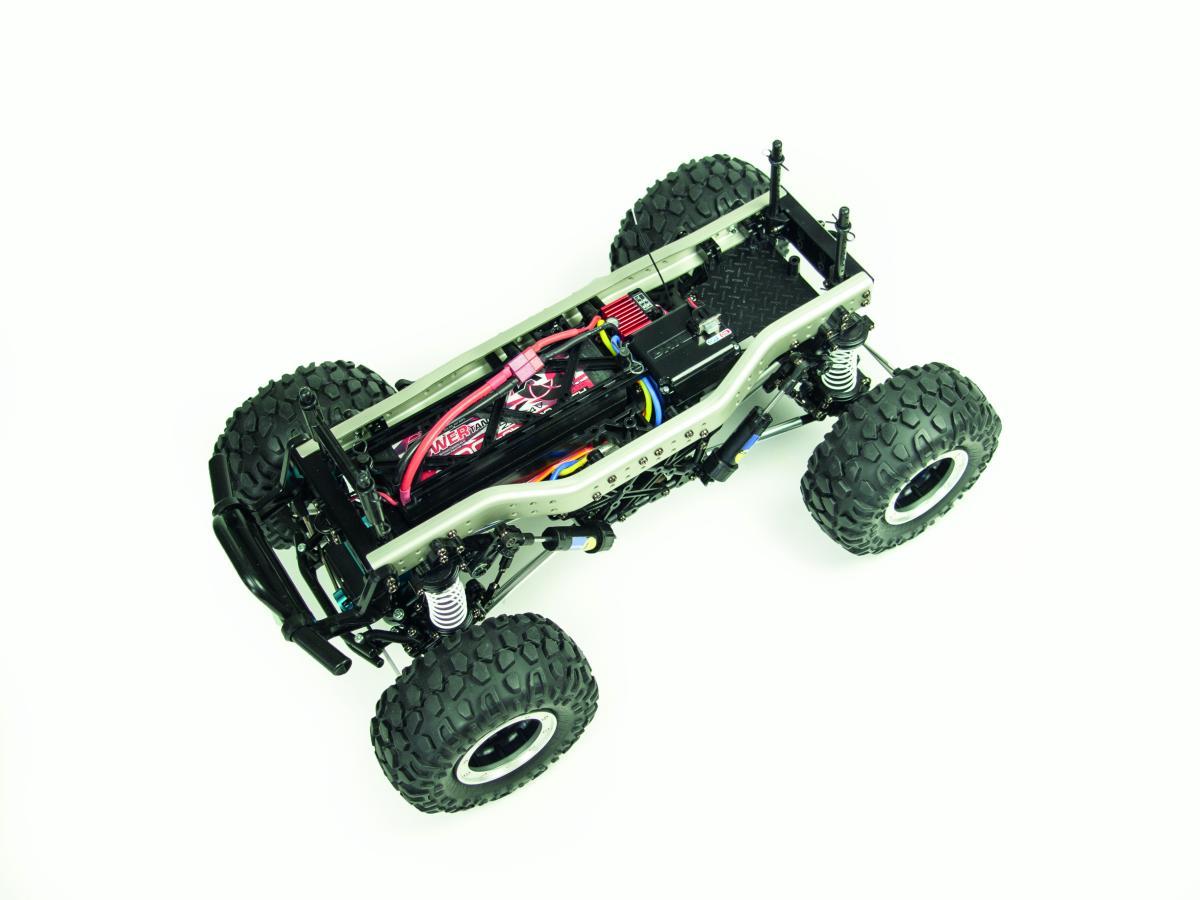
We equipped our model with a Hobbywing Quicrun-1060 speed controller. The receiver was stowed in an optional receiver box (51530) with minor modifications. We power the car with a 2S LiPo battery. At first, a standard LiPo pack wouldn’t fit into the battery compartment, which is located above the front axle. We quickly fashioned a slightly longer bolt from the shortened body struts. We drilled it out, screwed in a threaded rod, and the LiPo fits perfectly.
Drive
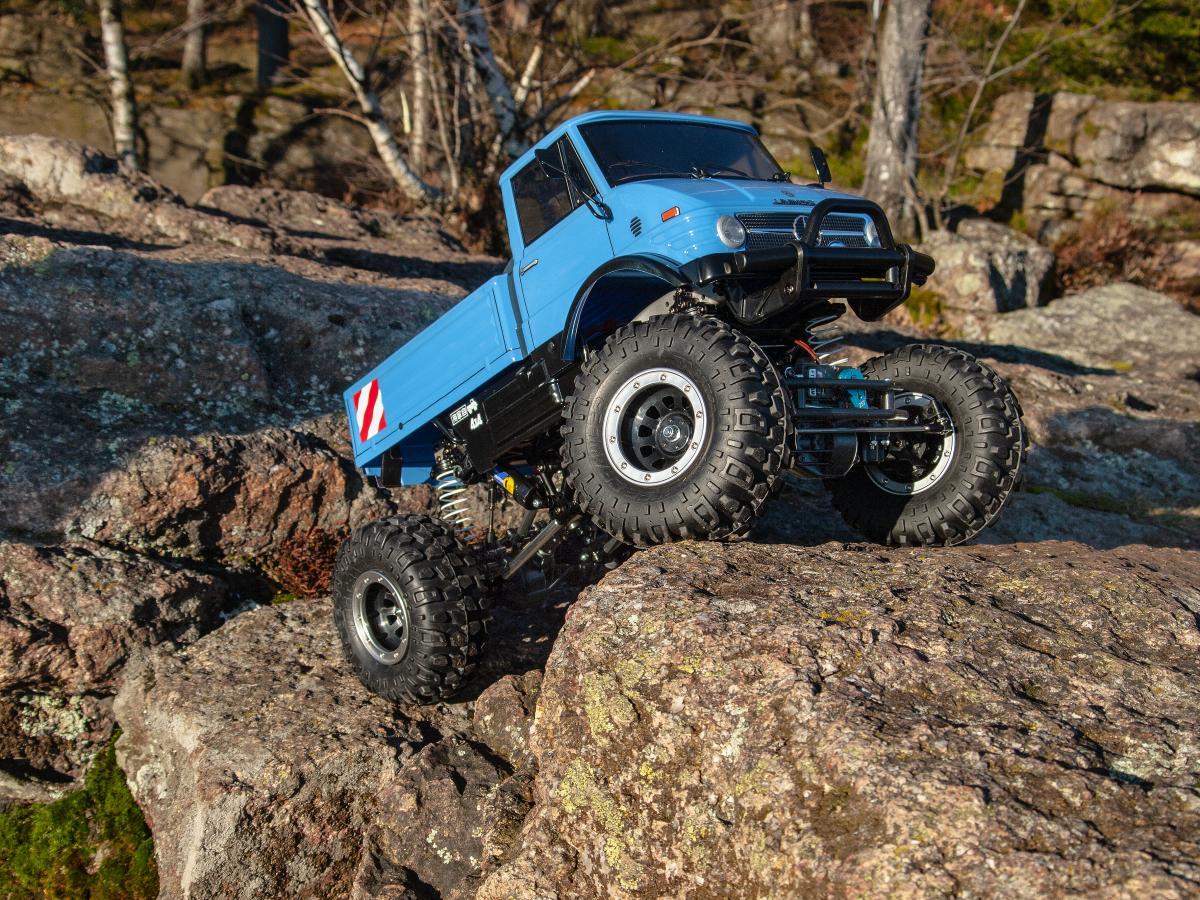
We’ve been driving the Unimog quite a bit by now. We’ve already reported on the optimized steering and improved suspension. What you immediately notice about this model is how quietly the drivetrain runs. The planetary gearbox has never caused any problems, and the locked differentials operate reliably. The 55-turn motor accelerates smoothly and has plenty of power available in every situation. It should be noted that the CR-01 is designed more for 2.2-inch tires. In comparison runs with an SCX10 equipped with identical 1.9-inch tires, the Unimog frequently touches down.
Tuning
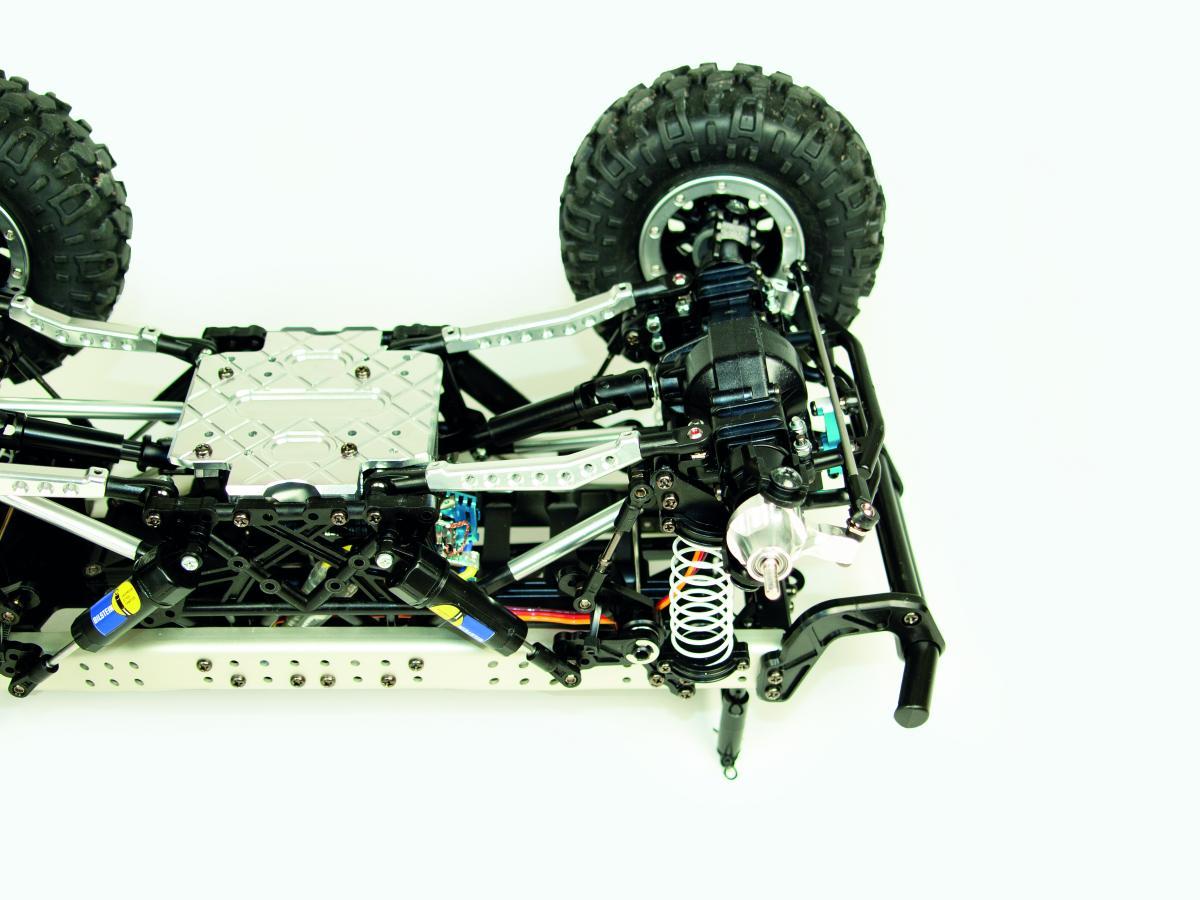
As already mentioned, the Unimog tends to scrape the underside. So I ordered a link set with angled links. While I was at it, I also got a pair of aluminum front steering levers and an aluminum skid plate. It looks good and adds a bit of weight to the bottom. What was a bit annoying was that the standard plastic hex wheel hub caps always got stuck in the rims during removal, causing the small metal pin to fall out. We eventually opted for an optional aluminum version that screws into place.
Tuning
As already mentioned, the Unimog tends to scrape the underside. So I ordered a link set with angled links. While I was at it, I also got a pair of aluminum front steering levers and an aluminum skid plate. It looks good and adds a bit of weight to the bottom. What was a bit annoying was that the standard plastic hex wheel hub caps always got stuck in the rims during removal, causing the small metal pin to fall out. We eventually opted for an optional aluminum version that screws into place.
Conclusion
The quality of the kit and its features is very good. The model looks great on the road with its beautiful body. The only thing is that the cargo bed could have had a bit more detail. If you’re not looking for a hardcore crawler and are satisfied with an extremely off-road-capable vehicle, and if you’re interested in unique technology and enjoy building and tuning, then the CR-01 chassis is just the thing for you. A true endurance runner!
What's Included:
Model kit with detailed, illustrated assembly instructions, electronic speed controller, 540-series electric motor, and polycarbonate body.