
Tamiya Vintage Buggies – A Journey Through Time on Four Wheels
-
By
Oliver K.
The scent of Tamiya grease and childhood dreams
Anyone who grew up in the 1980s is sure to remember that very specific feeling: the thick Tamiya catalog lay open on the floor of the kids’ room, its pages already well-worn from being flipped through so often. Models like the Grasshopper, the Hornet, or the seemingly unattainable, legendary Hotshot were, for many of us, the very embodiment of freedom and technical fascination. It smelled of plastic model kits, that signature Tamiya grease, and the pride you felt when, after days of tinkering, the model finally rolled its first few meters across the gravel lot in front of the house.
Today, Tamiya is bringing these very icons back to the market as so-called “re-releases.” Visually, they’re nearly identical to the originals from our youth, but they’ve been gently modernized under the hood. A look at the latest releases and the demand in the RC scene shows that vintage buggies are more popular than ever. But what is it that still makes these retro models so appealing today? And how do you combine the pure, unfiltered charm of the past with the performance and reliability of today? This guide takes you on a deep, nostalgic journey into the world of Tamiya classics.
Then vs. Now
Are the re-releases 100% identical to the original models from the '80s?
No, not quite. Tamiya has carefully adapted the re-releases to modern standards. While the beloved look and body styles are faithfully reproduced, the transmission materials have often been reinforced, electronic speed controllers are included (instead of the old mechanical ones that tended to jam), and the battery compartments have been slightly modified to accommodate modern battery packs.
Can I install a brushless motor in a vintage buggy?
In principle, yes, but extreme caution is advised. The gearboxes in models like the Grasshopper or Frog were designed for simple 540 or 380 brushed motors. If using a brushless motor, you should definitely choose a very moderate setup (e.g., 21.5T or 17.5T), otherwise the transmission gears and drive shafts will wear out extremely quickly.
Are there still replacement parts available for the original models from my youth?
Thanks to the re-releases, countless replacement parts are once again readily available, as they are often backward compatible with the first editions. However, specific original parts from back then (with old embossing or in blister packaging) continue to fetch truly high prices at collector’s markets.
An Overview of Iconic Models: The Legends Live On
A look at the current product lines is sure to make any RC enthusiast’s heart race. There’s an impressive variety of reissued classics. Here are the true milestones that laid the foundation for many model-building careers:
The Frog (2WD)
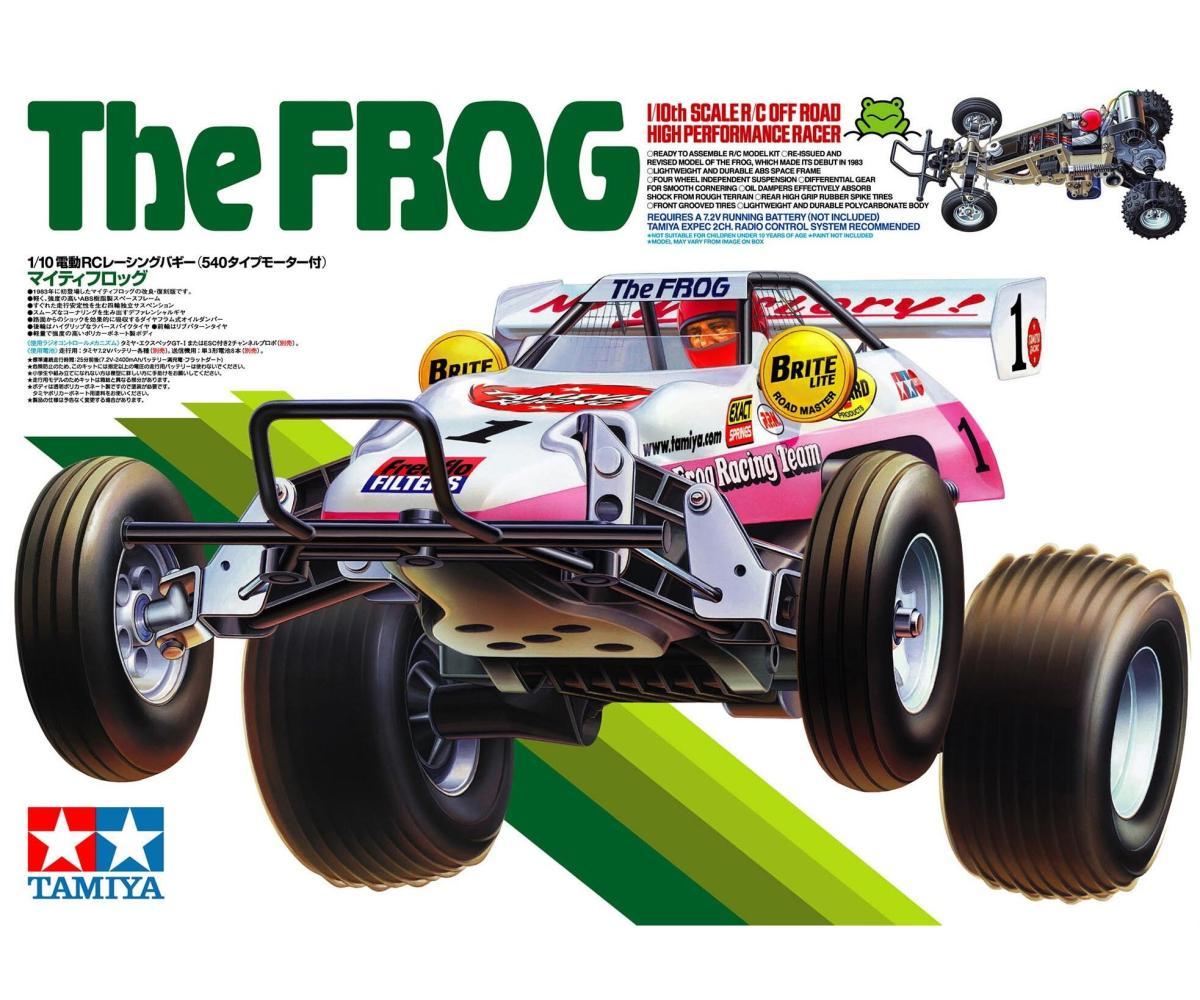
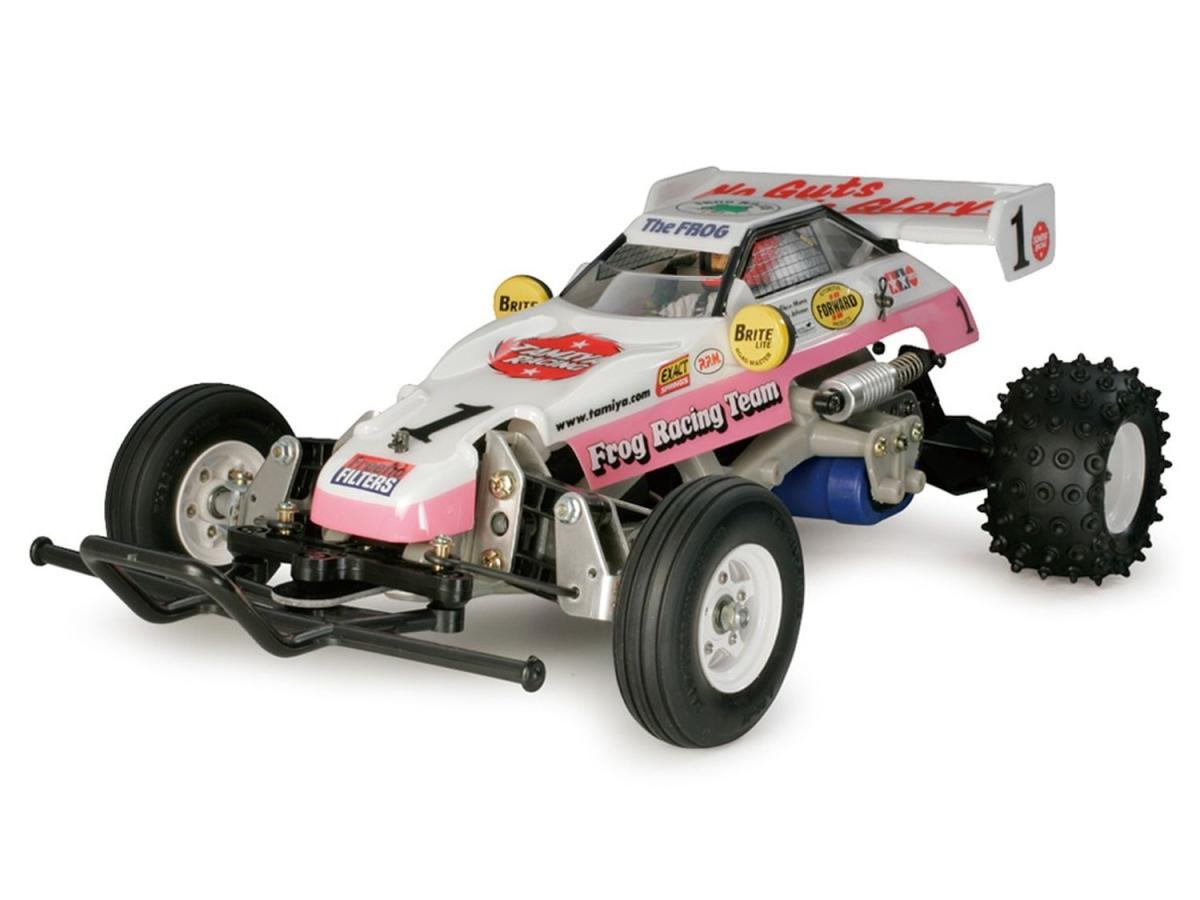
Also released in 1983–1984, The Frog set new standards in chassis architecture and immediately stood out from the crowd with its colorful appearance.
- The tubular space-frame chassis: Instead of a conventional monocoque, the “Frog” featured an innovative space-frame chassis made of pink injection-molded plastic, which was extremely lightweight and torsionally rigid.
- The suspension: The rear axle featured independent suspension with inclined control arms and horizontally mounted hydraulic shock absorbers, while the front used inboard struts. This suspension system gave The Frog outstanding jumping capabilities.
- The Iconic Design: The bold color combination of white, pink, and blue, along with the exposed roll cage, made The Frog a true style icon of the 1980s.
The Grasshopper
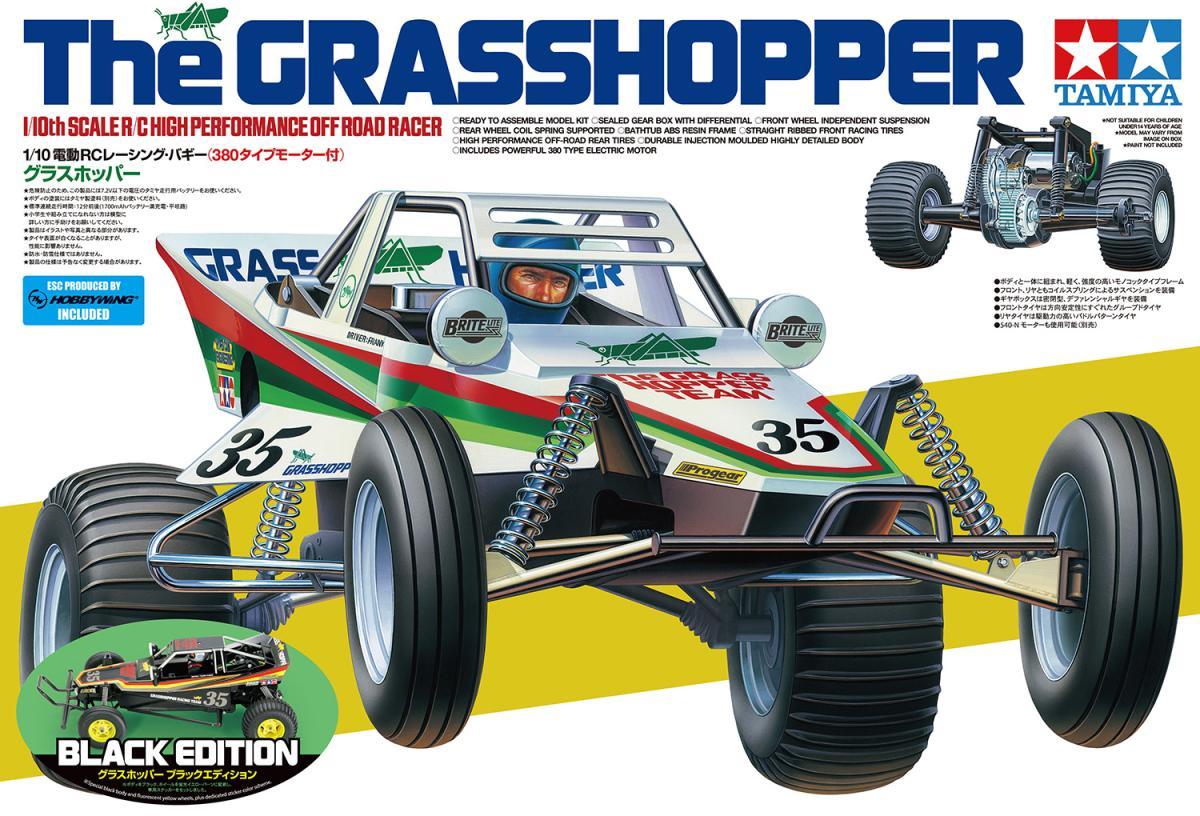
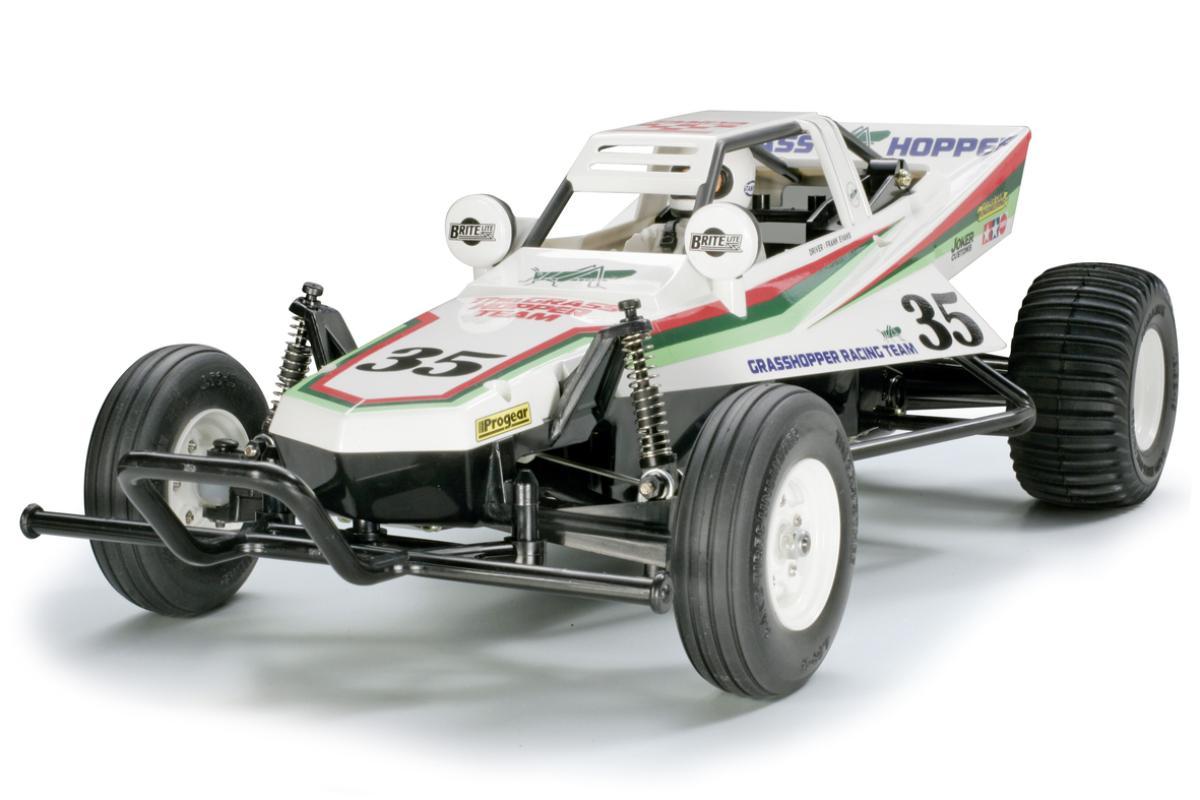
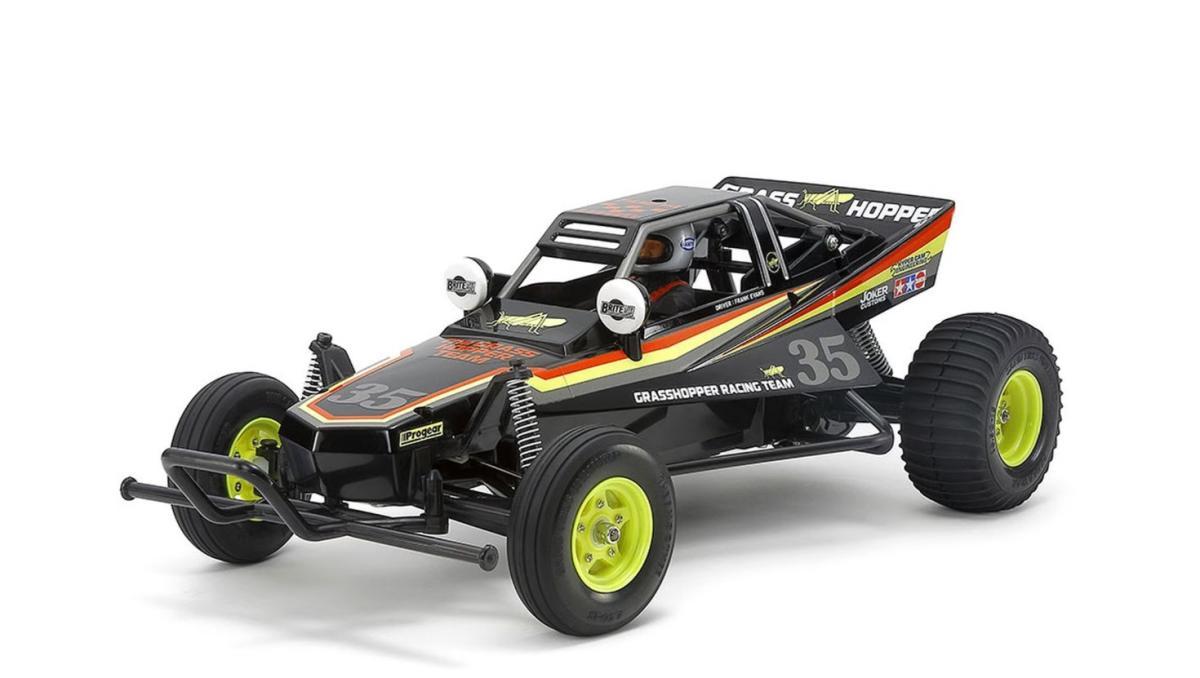
In 1984, The Grasshopper saw the light of day and laid the foundation for a lifelong passion for model building for countless young people. It was the quintessential affordable, simply designed, and virtually indestructible entry-level buggy.
- The driving experience: With its rigid rear axle and simple friction dampers, the Grasshopper bounced wildly over the ground at every bump—and it was precisely this hopping, bumpy ride that gave it its apt name (“Grasshopper”).
- The Technology: The tub chassis, made of sturdy ABS plastic, could withstand almost any curb hit head-on. Shipped with an economical 380 electric motor, the buggy could later be easily upgraded to the more powerful RS-540 motor.
The Hornet
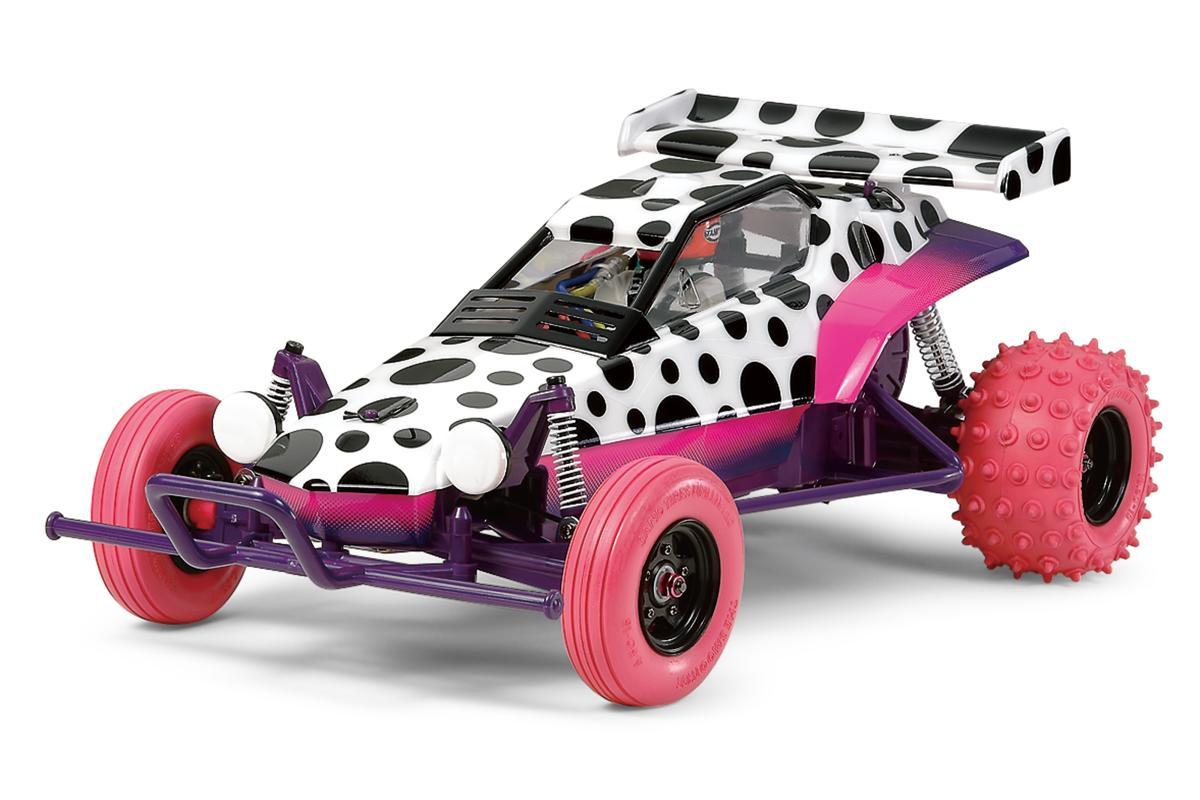
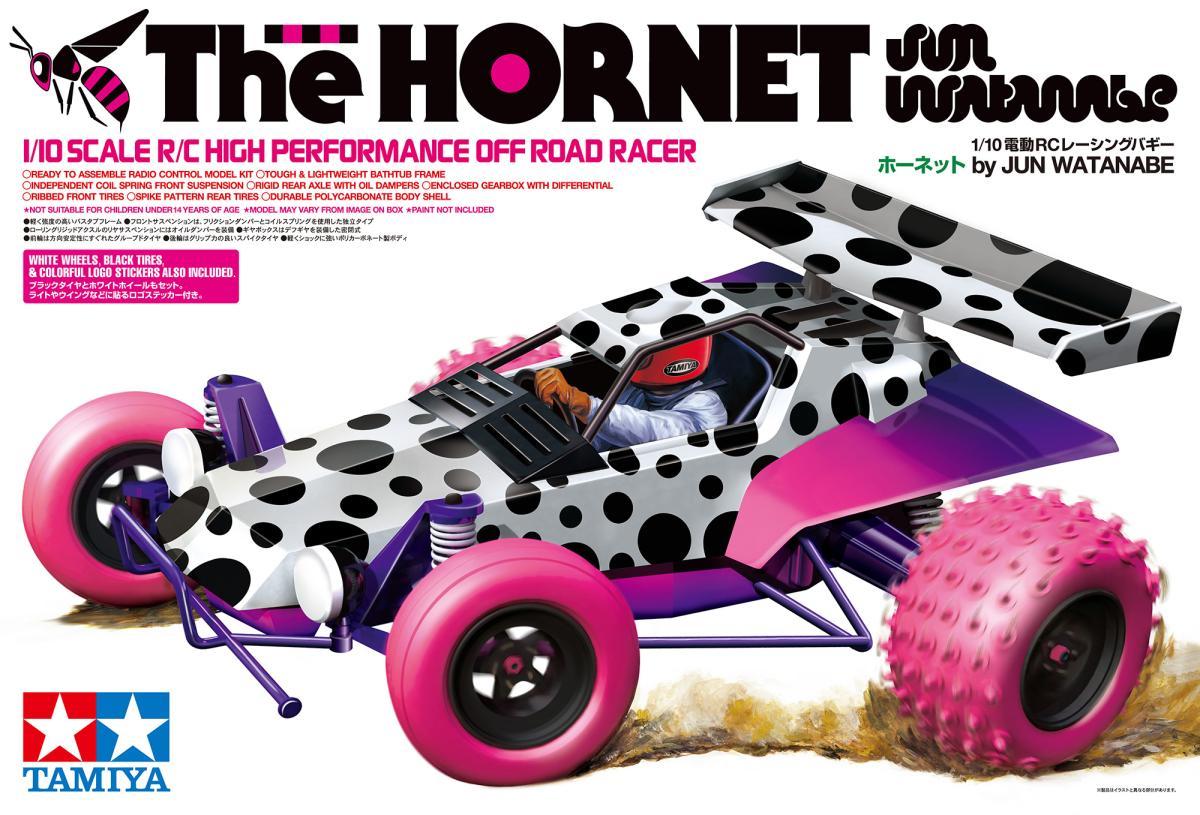
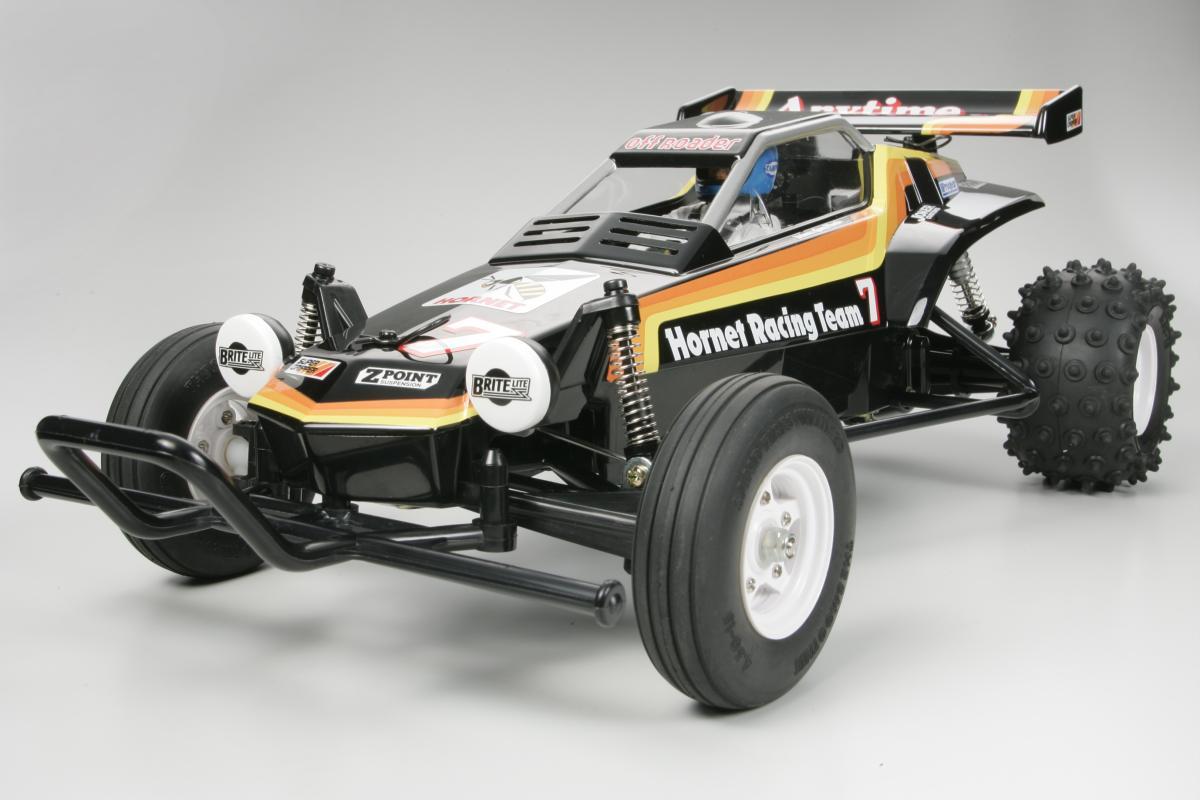
If the Grasshopper was the go-to entry-level car for many, then The Hornet was the next wild step for anyone looking for even more speed and a racing vibe on the school playground!
When the “Hornet” hit the market in 1984, it took RC fans by storm. Its appearance was nothing short of legendary: The jet-black, sleek ABS body with its bright yellow-and-red racing decals, the aggressive rear end, and the spiky Pin-Spike tires on the rear axle made it immediately clear that this wasn’t just a toy—it was a real off-road racer.
Hotshot (4WD)
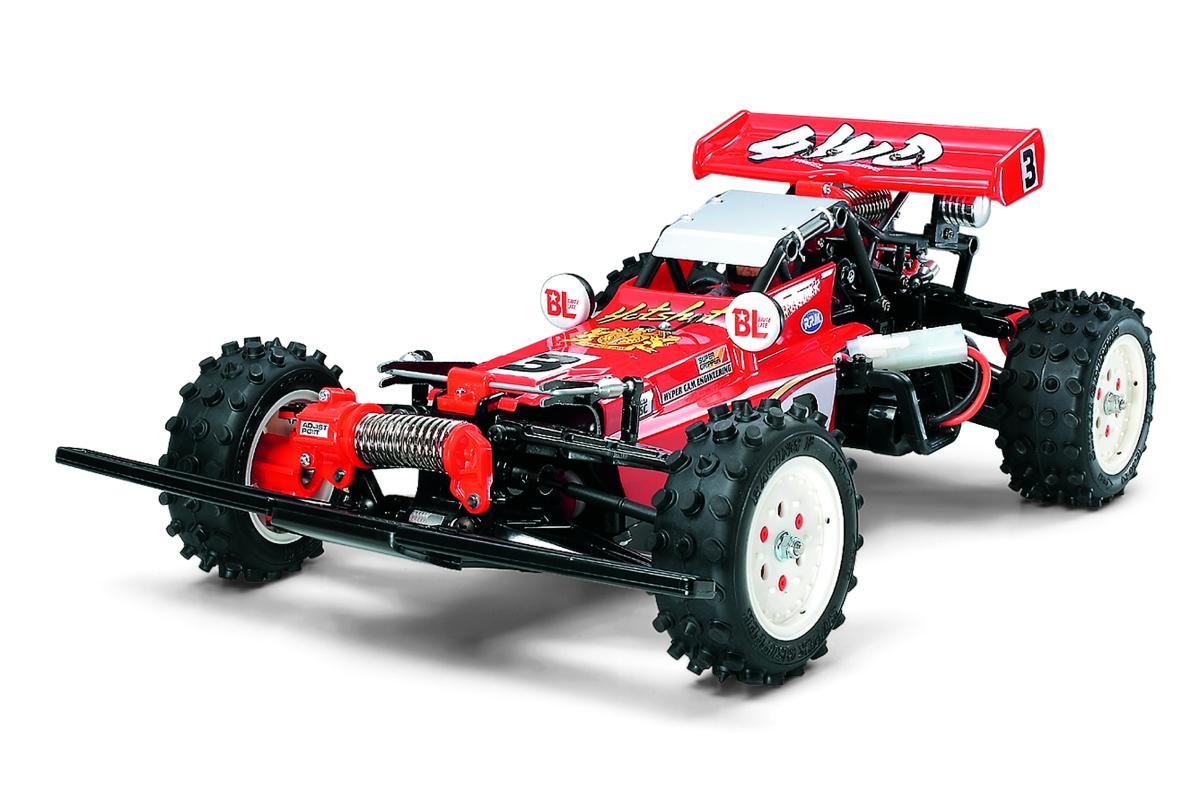
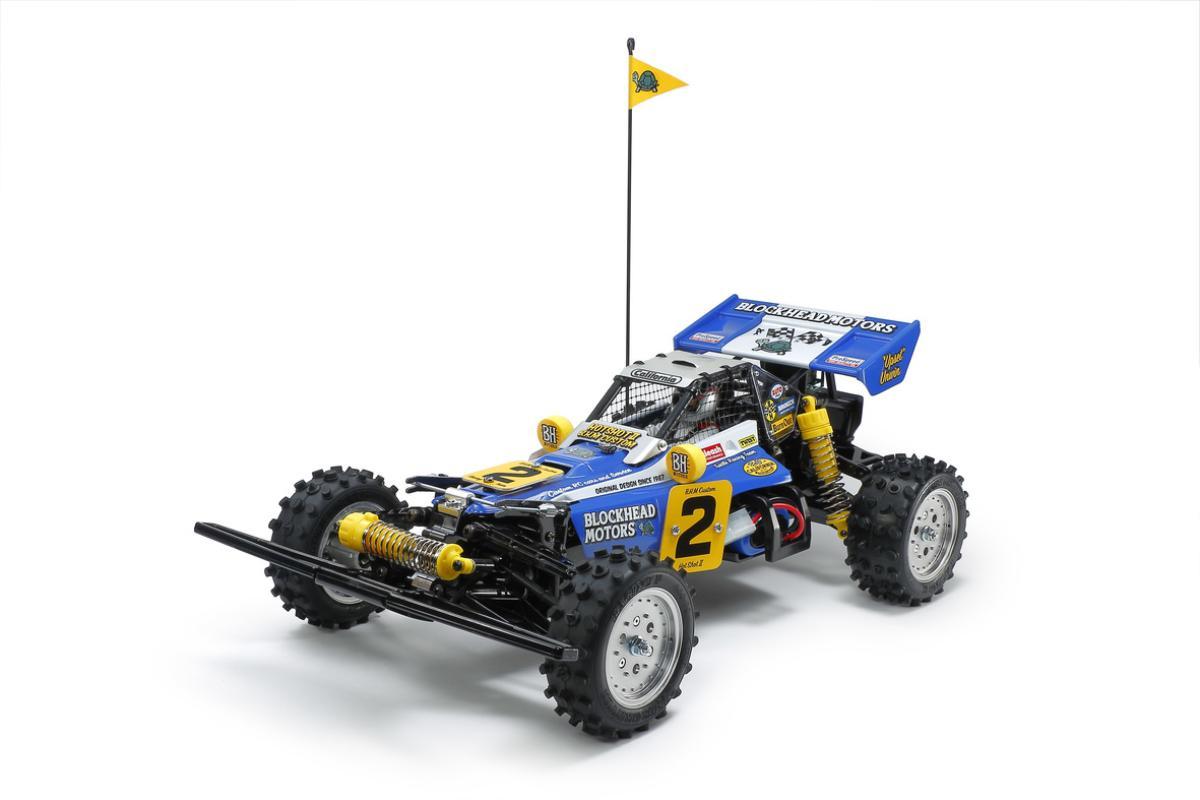
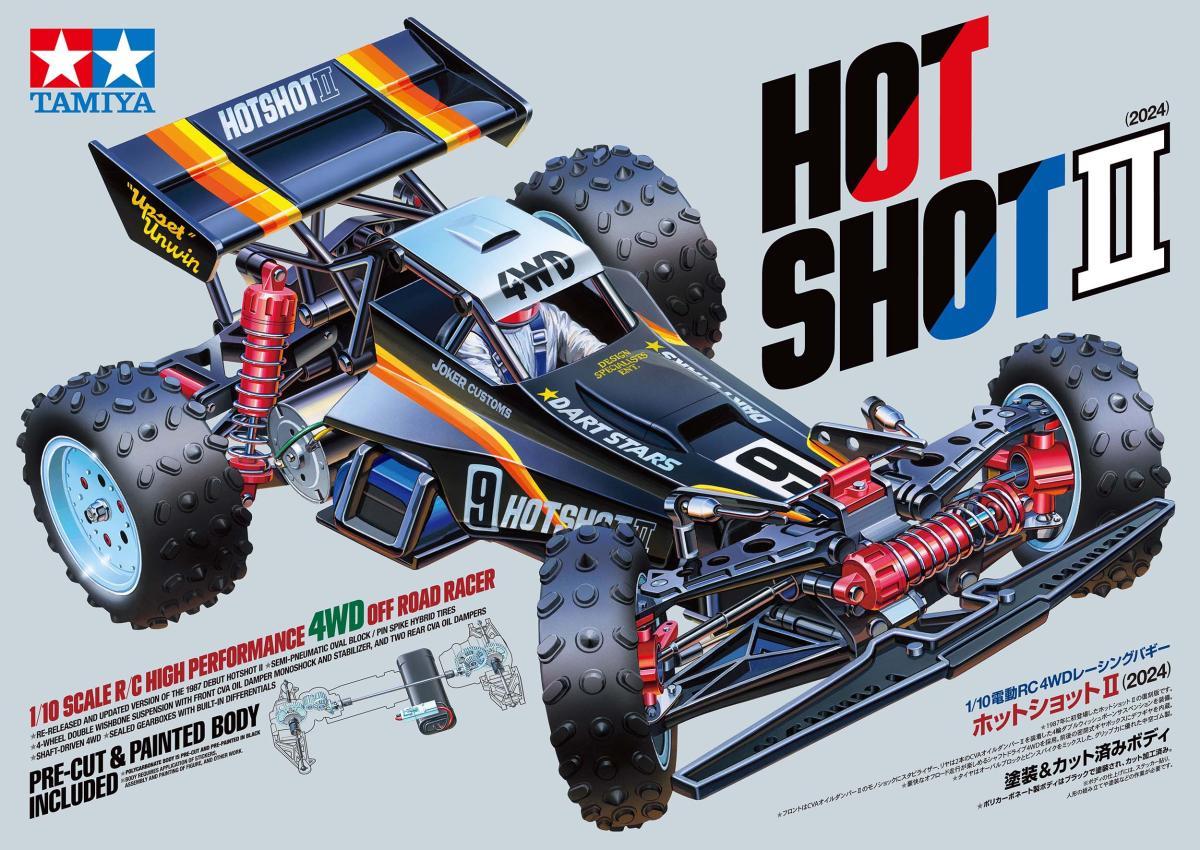
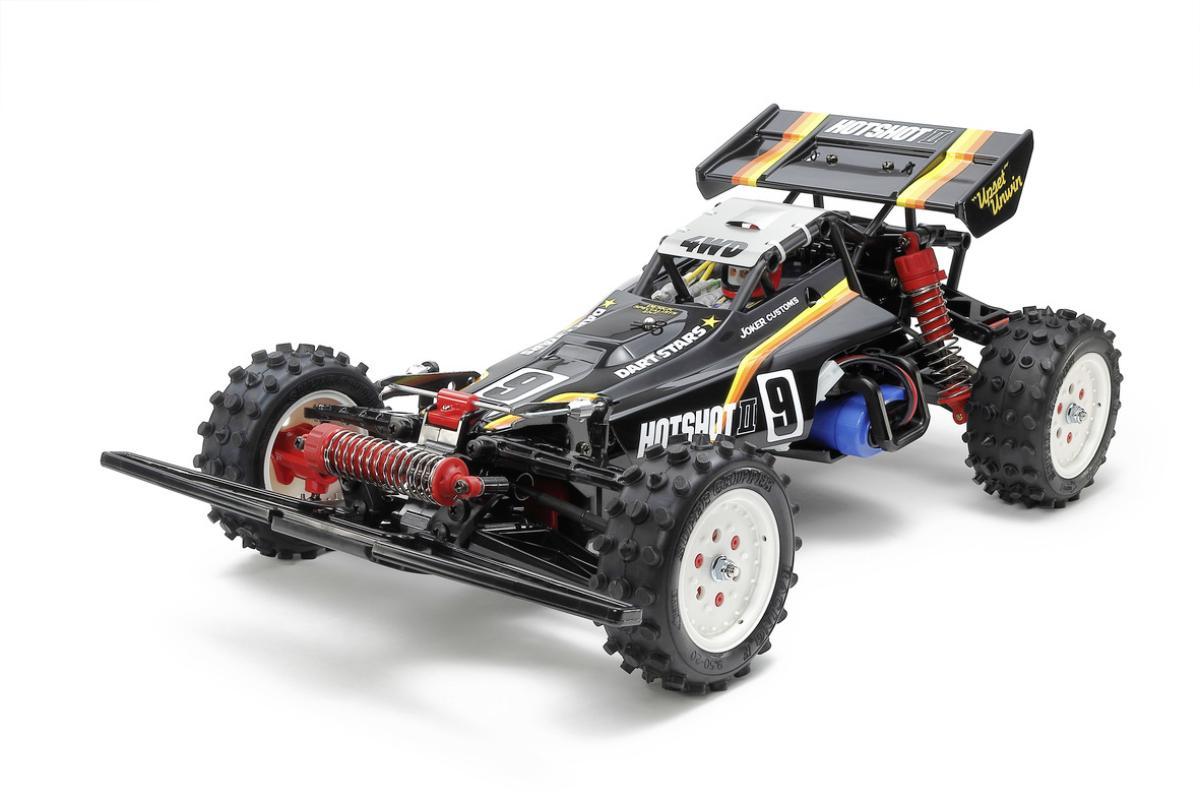
In 1985, the Hotshot marked a monumental turning point in Tamiya’s model-making history: It was the Japanese manufacturer’s very first cardan-driven all-wheel-drive (4WD) buggy and, for many teenagers, the absolute highlight of RC racing.
- The all-wheel drive: The 4WD system, powered by a central cardan shaft, offered unmatched grip on loose surfaces and enabled extremely precise and drift-friendly cornering.
- The Monoshock System: One of the most fascinating features was the unique suspension system, which featured just one central mono-oil shock absorber at the front and one at the rear, each controlled by ingeniously designed linkage arms.
- The Design: A fiery red body, a massive roll cage, enclosed transmission cases, and red-anodized shock housings made the Hotshot the undisputed king of every gravel track.
Sand Scorcher
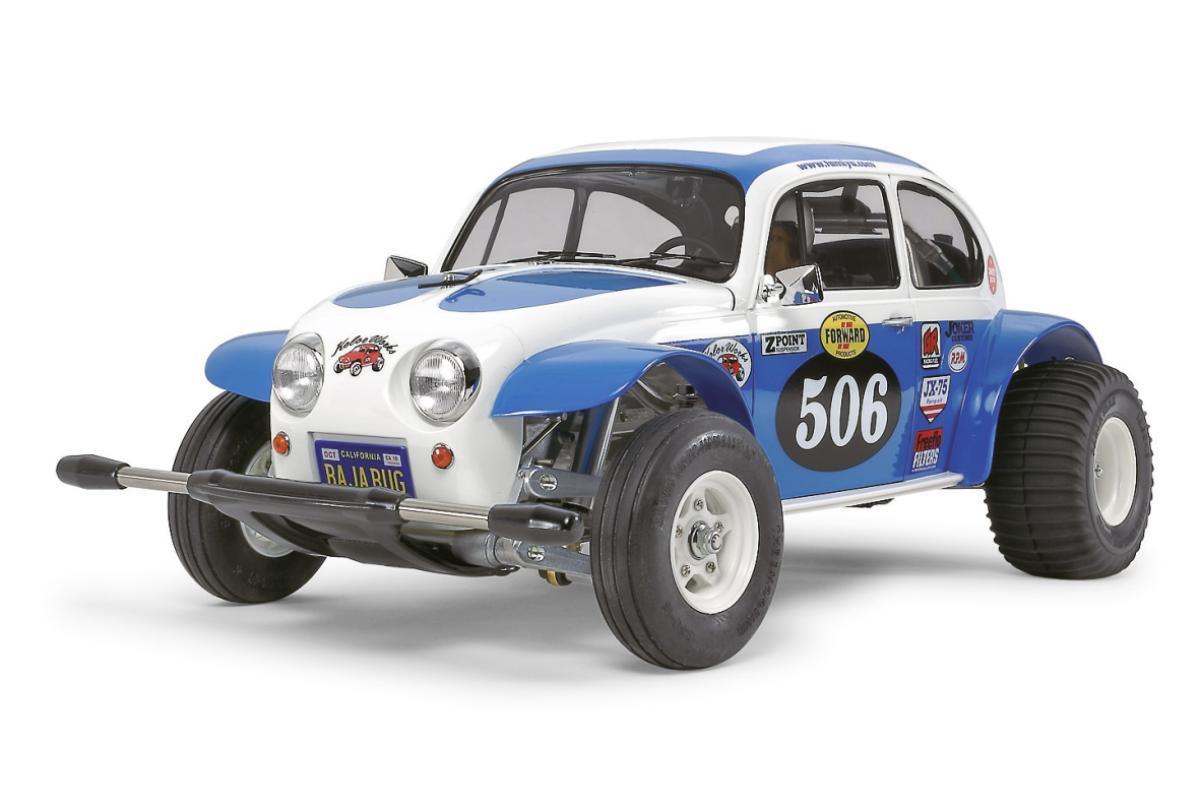
First introduced back in 1979, the Sand Scorcher is based on the legendary SRB (Special Racing Buggy) chassis. To this day, collectors consider it one of the most detailed, solidly built, and high-quality RC models Tamiya has ever produced.
- The body: A beautifully sculpted, thick hard-plastic body based on the iconic VW Baja Bug (Beetle), featuring real pop-out windows, chrome parts, and headlights—perfect for painting and customizing.
- The metal construction: The chassis consists largely of solid duralumin and die-cast metal parts (control arms, steering knuckles). All the electronics are safely housed in a transparent, waterproof plastic box.
- The driving experience: With its real rubber tires (grooved in the front, massive shovel-tread in the rear) and torsion bar suspension, the heavy Sand Scorcher plows majestically and extremely realistically through the finest beach and dune sand.
Modern Technology with a Retro Twist: The Perfect Setup
Anyone restoring a vintage buggy today faces a pleasant dilemma: Should it be a faithful reproduction for the display case, or optimized for driving in the parking lot? To ensure the models run safely, reliably, and—above all—smoke-free, we recommend the following modern electronic components:
| Component | Recommendation | The Nostalgic & Technical Reason |
| Electronic Speed Controller (ESC) | Carson Dragster Brushed ESC or Tamiya TBLE-04S | Compact, waterproof, and responsive. Replaces the error-prone and fire-hazardous mechanical speed controllers of the past, where the hot resistor would often scorch the body. |
| Motor | Tamiya Torque Tuned (Brushed) or 21.5T Brushless | Preserves the model’s authentic charm. Too much power causes the old chassis to become completely undriveable and leads to mechanical failures. |
| Battery | 7.2V NiMH or 2S LiPo (round case / stick pack) | Many older chassis trays can only accommodate batteries in the classic round stick-pack format. Today’s square hard-case LiPos often don’t fit in the original battery compartments. |
| Steering Servo | Standard size, 6 kg of torque or more | A modern, fast digital servo greatly improves the somewhat sluggish steering response of vintage chassis. |
Upgrade Priorities: What Should Be Considered for the Re-Release?
Just as with modern chassis, there are a few absolute must-haves when building vintage models to ensure longevity and avoid frustration:
- Ball Bearings Instead of Plain Bearings: For nostalgic reasons,Tamiya often still includes traditional plastic or sintered bronze bearings with its models. Replacing them immediately with rubber-sealed ball bearings increases service life, reduces wear, and significantly improves smoothness.
- Oil-filled shock absorbers: Entry-level models like the Grasshopper come equipped with simple friction dampers (affectionately known as “pogo sticks”). Upgrading to Tamiya CVA oil-filled shock absorbers significantly smooths out the bouncy suspension and provides noticeably better traction.
Tire inserts (foams): Once a completely foreign concept, now standard. Whenever possible, tire inserts should be installed to give the soft tire on the rim more lateral support and stability in corners.
Pure nostalgia with modern driving fun
The Tamiya Vintage Buggies are far more than just remote-controlled cars—they’re rolling time capsules to our own past. These re-releases give us the priceless opportunity to build and drive the childhood dreams of yesteryear with our own hands, without spending a fortune on fragile original parts from the ’80s.
If you address the mechanical weaknesses by installing ball bearings during assembly and carefully modernize the electronics, you’ll end up with an RC car that puts a big smile on your face every time you take it out for a drive. Because let’s be honest: A Grasshopper bouncing around uncontrollably on your backyard gravel lot is just as much fun today as it was 40 years ago!
Today, Tamiya Vintage stands for the successful combination of classic design, high-quality model building, and modern technology. Collectors and beginners alike appreciate the faithful re-releases, as they preserve the charm of the 1980s while being more reliable and easier to assemble. Those who value an authentic look can leave their model virtually unchanged. Those who want to drive regularly will benefit from ball bearings, modern speed controllers, and carefully tuned brushed setups. This keeps the driving experience classic while significantly increasing reliability and longevity.
Why is Tamiya Vintage more popular today than ever before?
The trend toward Tamiya Vintage has been growing steadily for years. Many model builders are rediscovering the passion of their youth, while younger RC fans appreciate the charm of classic designs. Faithful re-releases combine nostalgic design with modern reliability. Models such as the Grasshopper, Hornet, Frog, and Hotshot are particularly popular both as collector’s items and for casual driving. With ball bearings, a Carson Dragster Brushed ESC, a reliable brushed motor, and a modern servo, the authentic character is preserved without unnecessarily overloading the system.