
Tamiya Lotus Europa Special with M-06-M Chassis
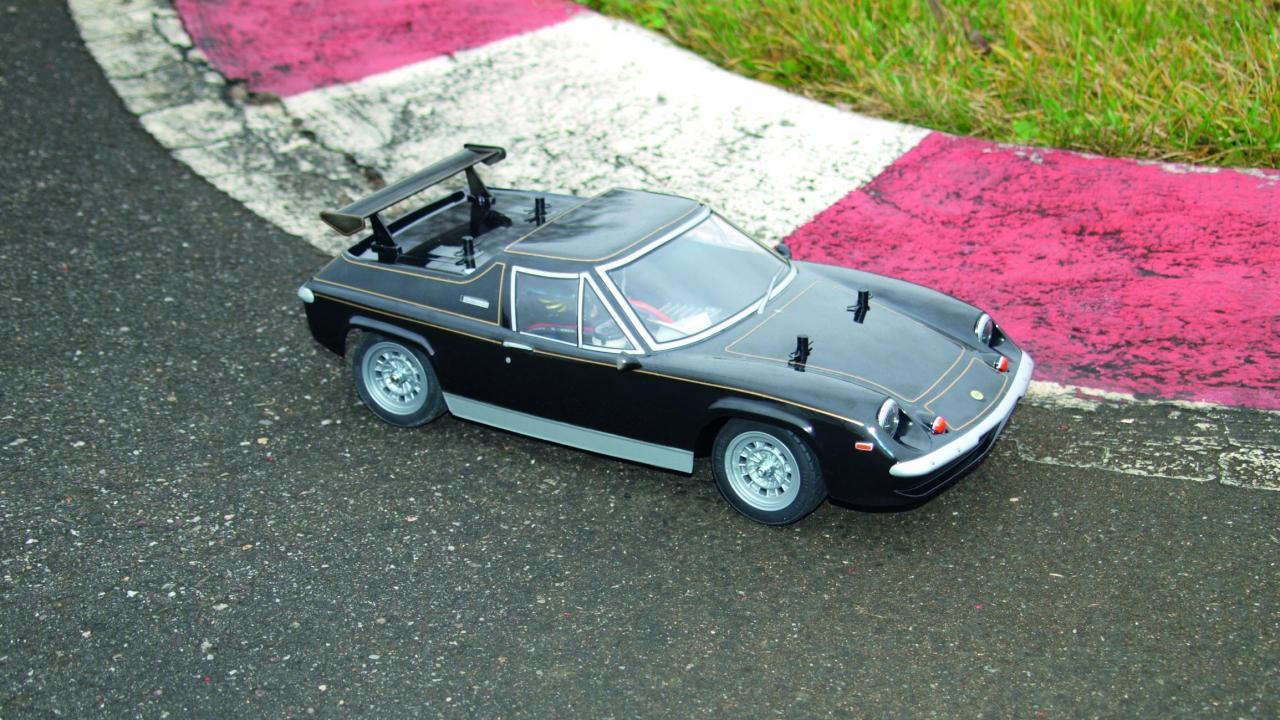
For Team Lotus, 1972 was a golden—or rather, black-and-gold—year in many respects. Looking back 50 years, one recalls the Lotus 72 Formula 1 race car in its classic John Player Special livery: the familiar black with gold stripes. Brazilian driver Emerson Fittipaldi won his first Formula 1 world championship title with Team Lotus, and Lotus Cars, based in Hethel, United Kingdom, unveiled the most powerful version of the Lotus Europa Special road sports car, with an output of 126 PS.
In this review, we’ll explore what the 1:10 Tamiya model with its M-06-M chassis is capable of.
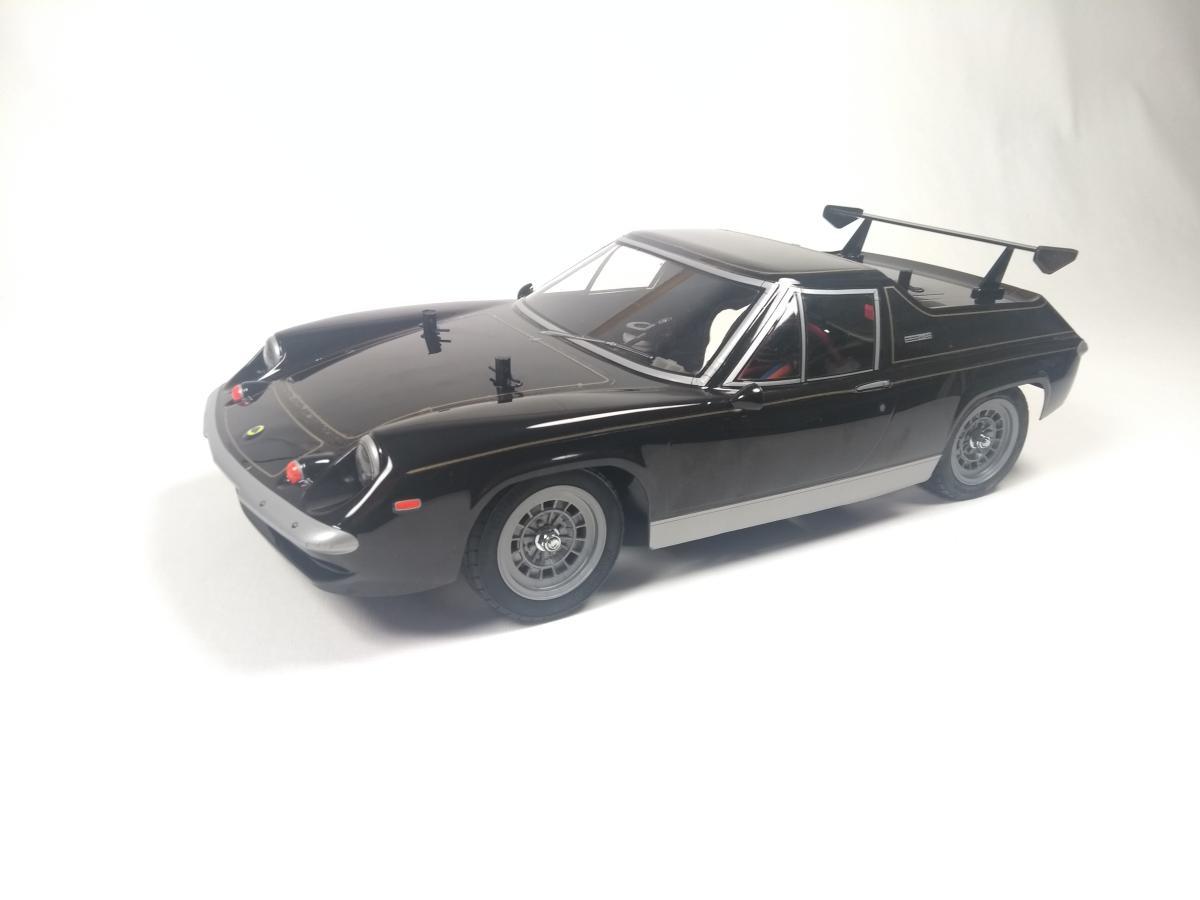
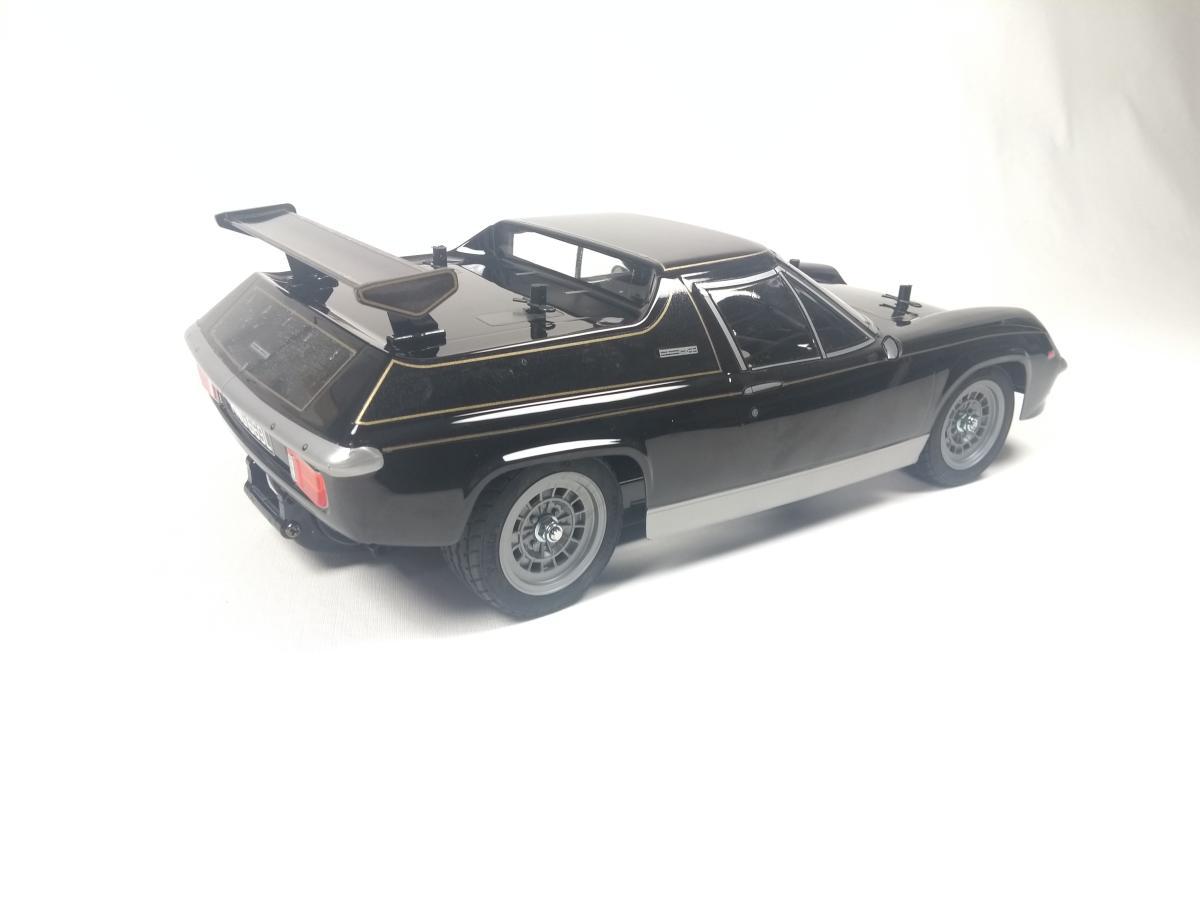
The Lotus Europa Special in the black-and-gold color scheme of the John Player Special design.
Lotus and the Europa
Team Lotus was a British motorsports racing team and, like Lotus Cars, a subsidiary of the Lotus Group, which had been founded by Colin Chapman. Lotus competed as a factory team in numerous motorsports series, including Formula 1, Formula 2, and American championships such as the IndyCar Series. In Formula 1, Lotus is among the most successful racing teams: From 1958 to 1994, the team competed in nearly 500 Grand Prix races, won the Constructors’ Championship seven times, and produced six Drivers’ World Champions. Lotus is considered one of the most innovative teams in Formula 1. A number of innovations in both engineering and marketing can be directly attributed to Lotus, such as the monocoque chassis, the use of front and rear wings, the ground effect, and the placement of advertising lettering on body panels.
In 1966, the Lotus Europa road sports car was introduced. Its engine and transmission were sourced from the Renault 16. The Europa was one of the first commercially available mid-engine sports cars after World War II. Its road holding and handling characteristics were reminiscent of a race car. The fiberglass-reinforced polyester body was bonded to the sheet-steel chassis, and the suspension featured independent wheel suspension. The front had rack-and-pinion steering and disc brakes, while the rear axle had drum brakes.
Only 296 units of the original S1 were produced. The vehicles were designed in an extremely minimalist style, with simple instruments, fixed side windows, and seats. Only the pedals were adjustable. In the second series, the S2, introduced in the spring of 1969, the chassis and body were bolted together, which, however, altered the handling characteristics. At the same time, a larger engine was introduced for the American market.
In mid-1971, the Europa TwinCam followed, featuring a Ford Kent engine modified for Lotus with an aluminum cylinder head, two overhead camshafts, and a displacement of 1,558 cm³. In 1972, the company switched to the more powerful “Big Valve” version and paired it with a five-speed transmission from Renault. The curb weight was approximately 700 kg. This model was called the Europa Special and was to remain the most powerful version in the Europa lineup.
In the box
When you open the beautifully designed Tamiya box, you’ll see the clear Lotus Europa body with additional attachments and many parts of the Tamiya M-06 chassis, neatly packed in bags, including a 540-series electric motor. The included assembly instructions are a universal M-06 chassis version, plus painting and decaling instructions for the Lotus Europa body.
Bodywork
Let’s take a closer look at the highly detailed Tamiya polycarbonate body. A three-piece version was used as the deep-draw mold for this classic British sports car, allowing for beautiful undercuts at the front and rear. The accompanying ABS plastic sprue includes two side mirrors, a large rear wing, and light inserts for the front and rear headlights. These light housings are compatible with the optional Tamiya LED Light Unit Set TLU-01.
The three-piece body features attractive undercuts at the front and rear. Gold pinstripes, a rear wing, and side mirrors are molded from the sprue.
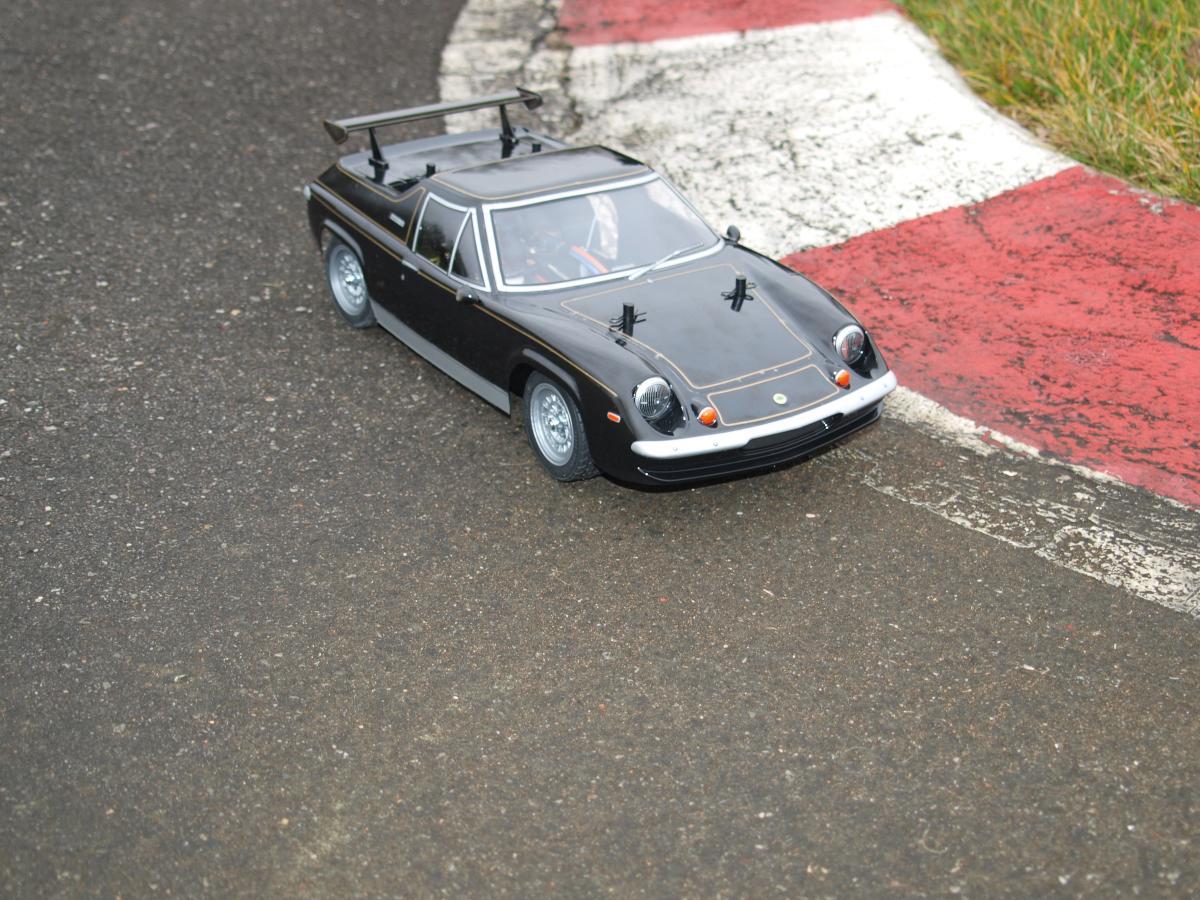
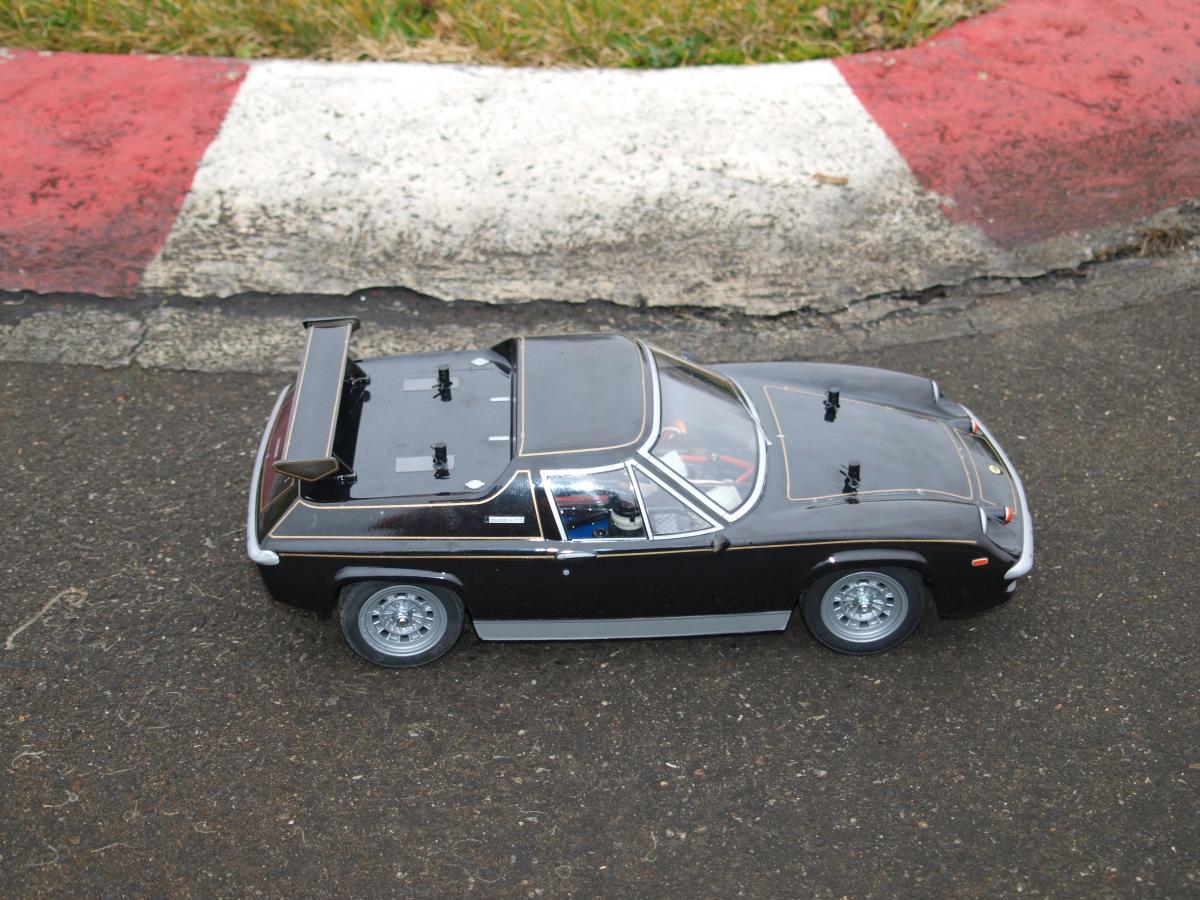
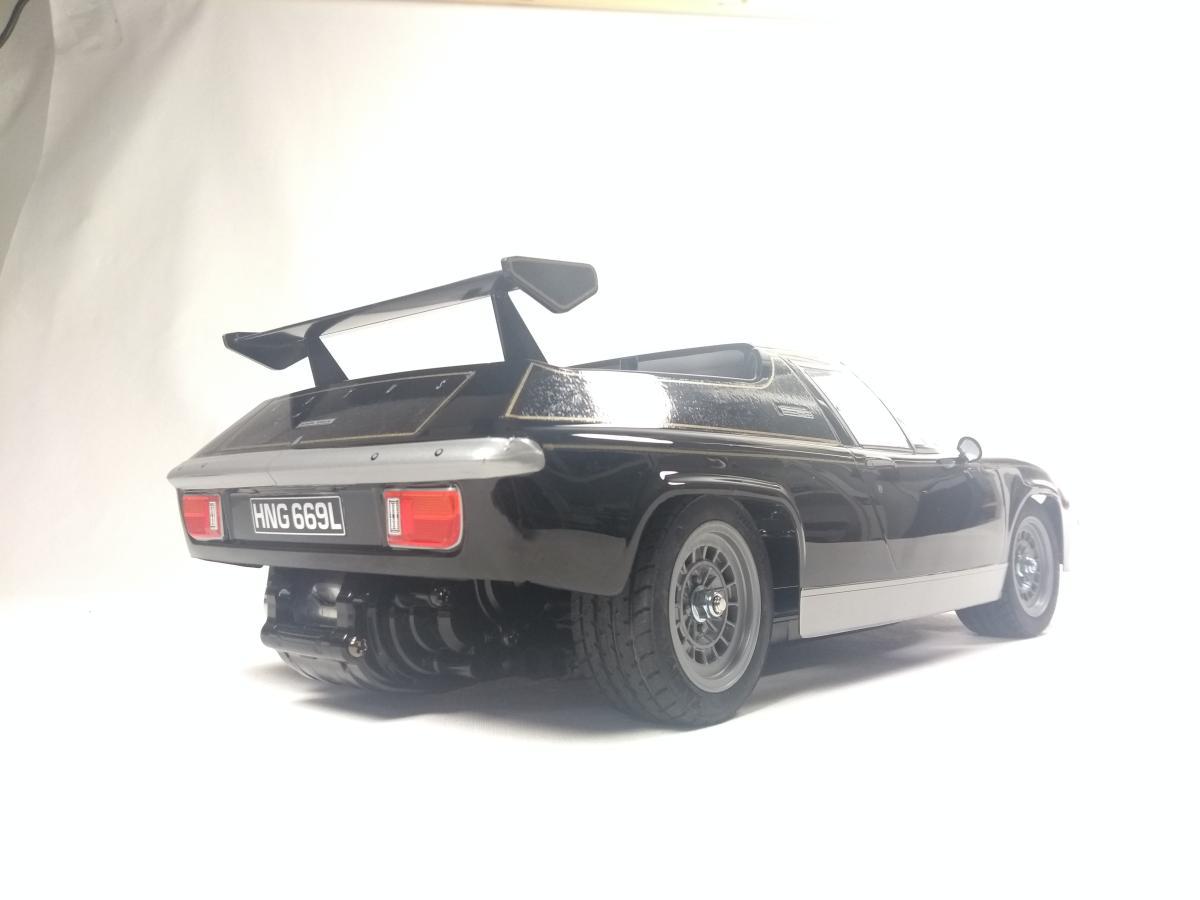
The sticker sheet features gold pinstripes inspired by the Lotus race car, which was successful in Formula 1 at the time. We opted for the black design with the gold stripes. Best regards to Emerson Fittipaldi! Window masking stickers for use during painting are, of course, also included.
The rear end with a large rear wing. Decal details on the rear of the Lotus.
M-06 Chassis
The history of the M-chassis family began with the first M-chassis for the Mini Cooper, a small 2WD chassis designed for compact vehicles. Here we’re looking at the M-06 version: The chassis features a rear-mounted motor, rear-wheel drive, and a longitudinally mounted battery. This model uses the M-06-M chassis with a 225 mm wheelbase. The M-06 can be built with three wheelbases: M-06-S with 210 mm, M-06-M with 225 mm, and M-06-L with 239 mm. All the necessary parts are included in the kit.
The M-06-M chassis: Electronics are located to the right and left of the longitudinally mounted battery, and the motor is positioned behind the rear axle.
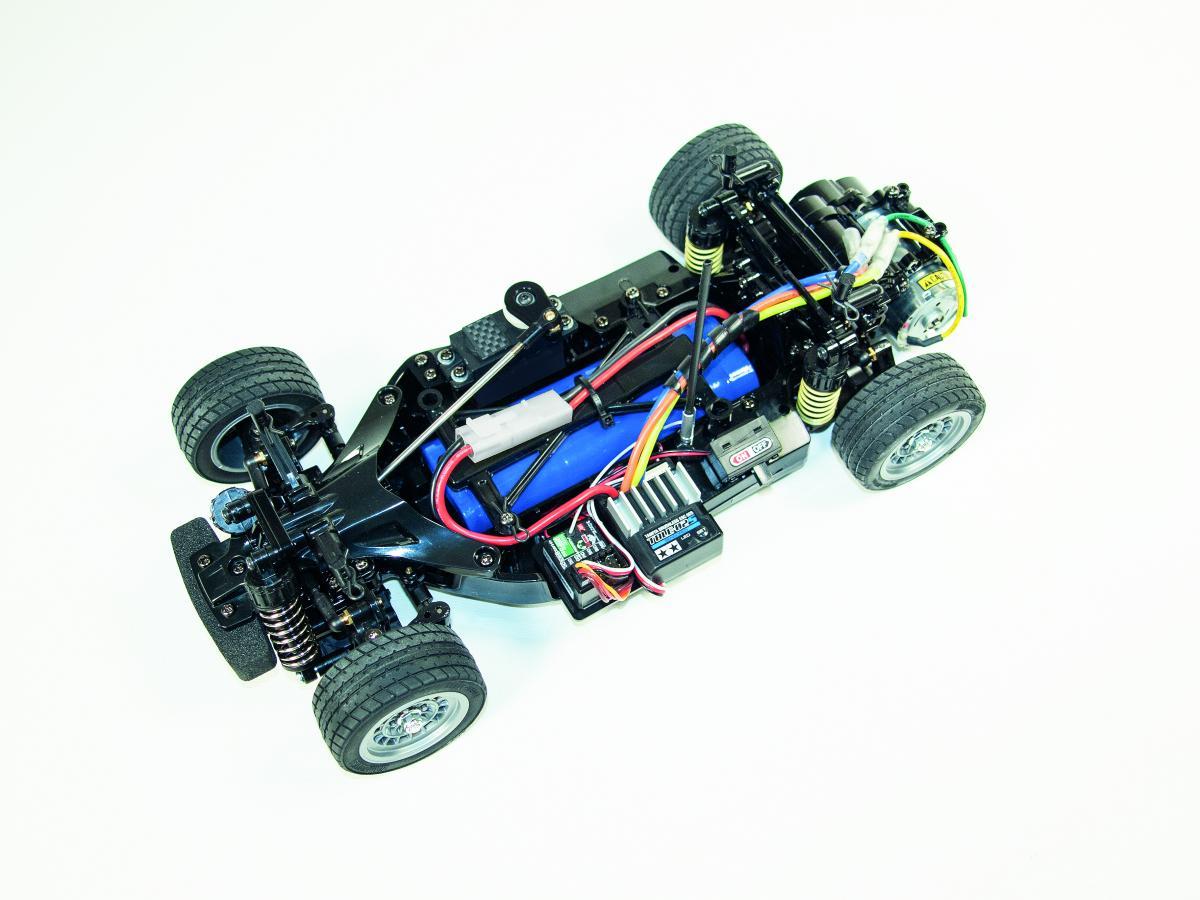
The RC components are positioned to the right and left of the drive battery to ensure optimal balance and a low center of gravity.
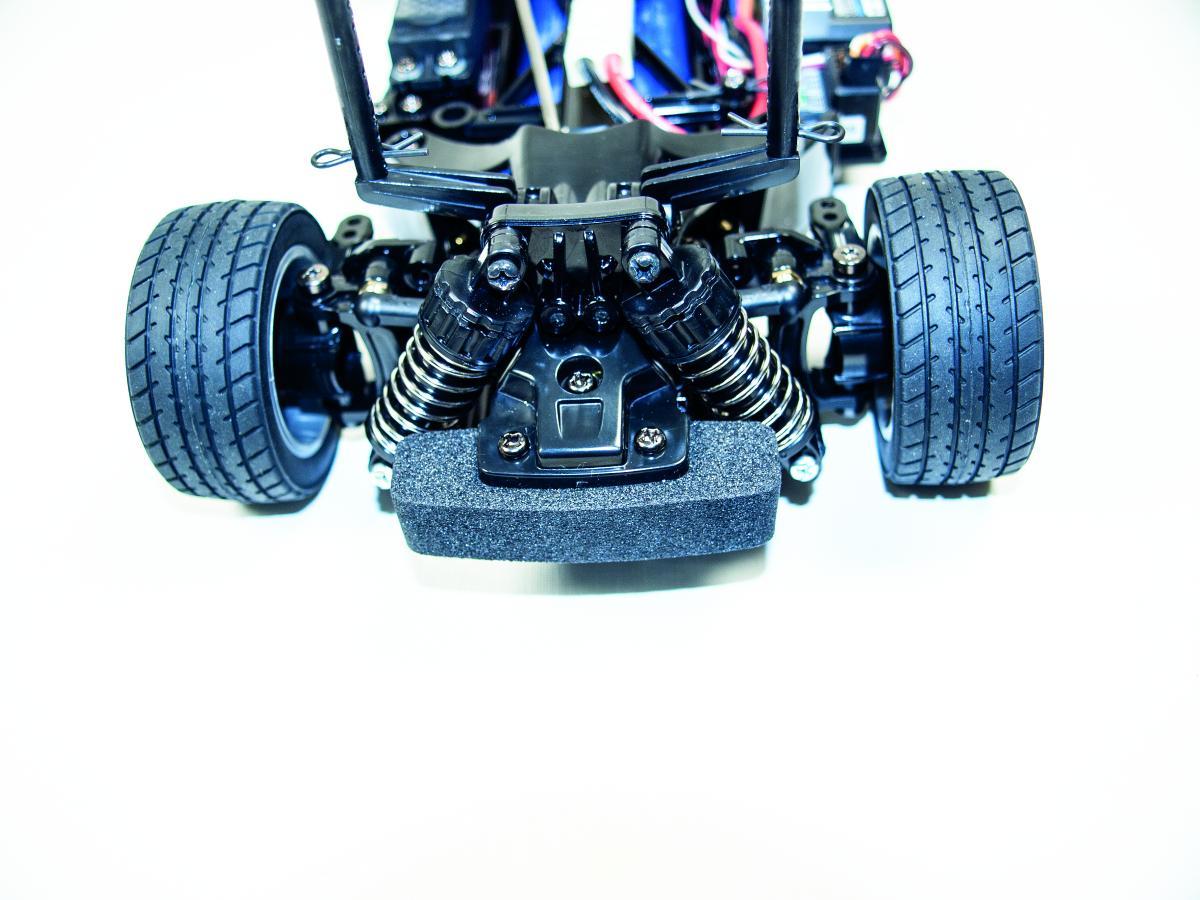
On the chassis, the first thing you notice are the struts: they are not oil-pressure shock absorbers. Due to the 2WD configuration, different springs are used—silver ones in the front and gold ones in the rear. The M-06 features double-wishbone-style independent suspension. At the bottom are fairly short control arms, and at the top, an adjustable threaded rod on each side, allowing the wheel camber to be individually adjusted. The mounts for the optional stabilizer bar set are pre-installed as blind fittings. A three-piece steering linkage ensures smooth handling. The model is equipped with the familiar white plastic bearings; only the final drive contains a few bronze bearings.
The front axle with independent suspension and struts.
A Tamiya-style bevel differential does its job inside the transmission. The motor is mounted behind the rear axle in a small plastic cage, and three different gear ratios are available. The differential output shaft, drive shafts, and wheel axles are made of metal and feel solid. Worth noting is the relatively large toe-in on the rear axle, which is designed to ensure stable handling.
The transmission with the engine behind the rear axle.
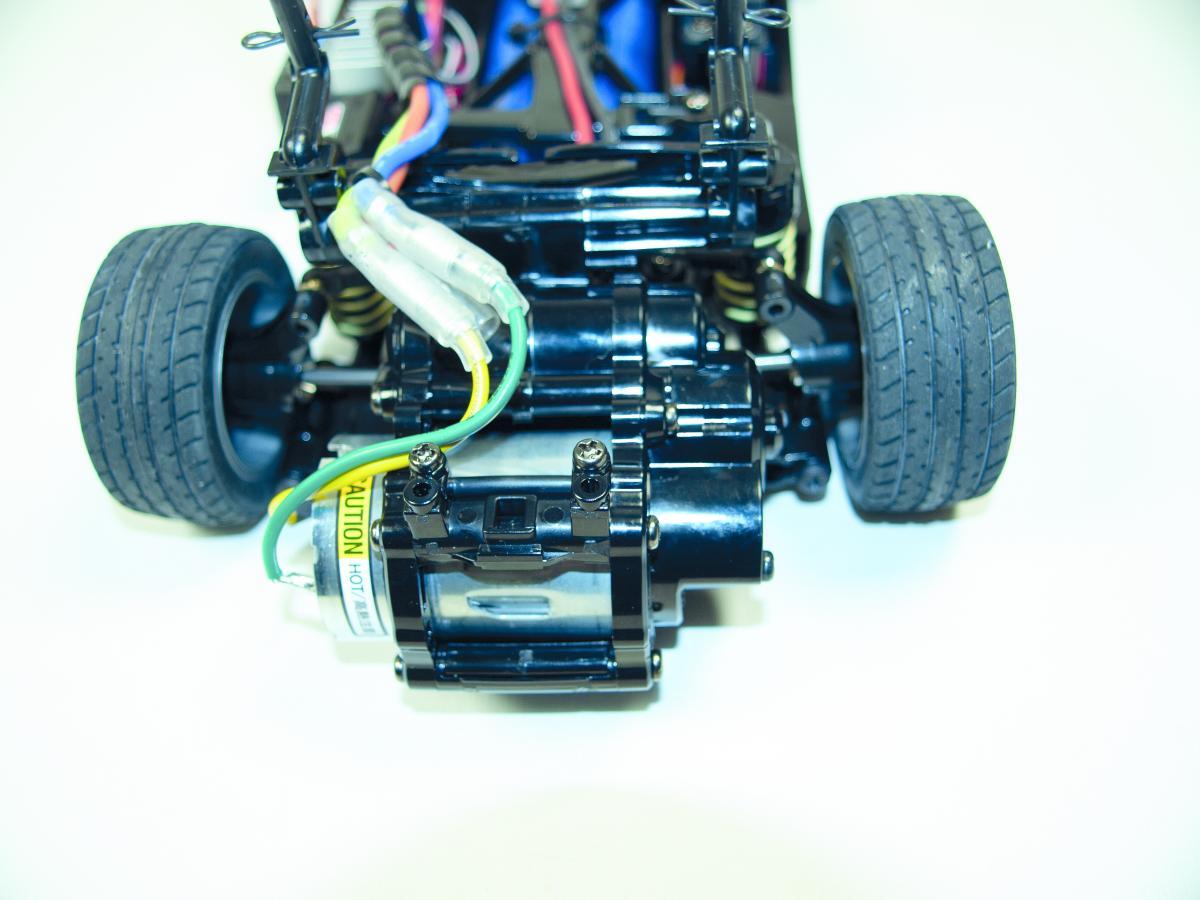
The silver rims feature the standard 12-mm hex wheel mounts. Note the two different sets of tires: The front axle uses the stiffer 60D radial tires, while the rear axle uses the 60D Supergrip tires. If the vehicle handles extremely aggressively during the first test drive, it’s worth checking that the wheels are mounted correctly.
Driving Pleasure
What’s the Lotus Europa Special like to drive? Imagine having a real Lotus Europa as a second car in your garage and taking it out for a leisurely drive on a beautiful, sunny day—of course, with the goal of not getting a single scratch. On a clean, smooth stretch of asphalt, this rear-wheel-drive British car is a real blast to drive.
On smooth asphalt, this rear-wheel-drive British car is a real blast to drive.
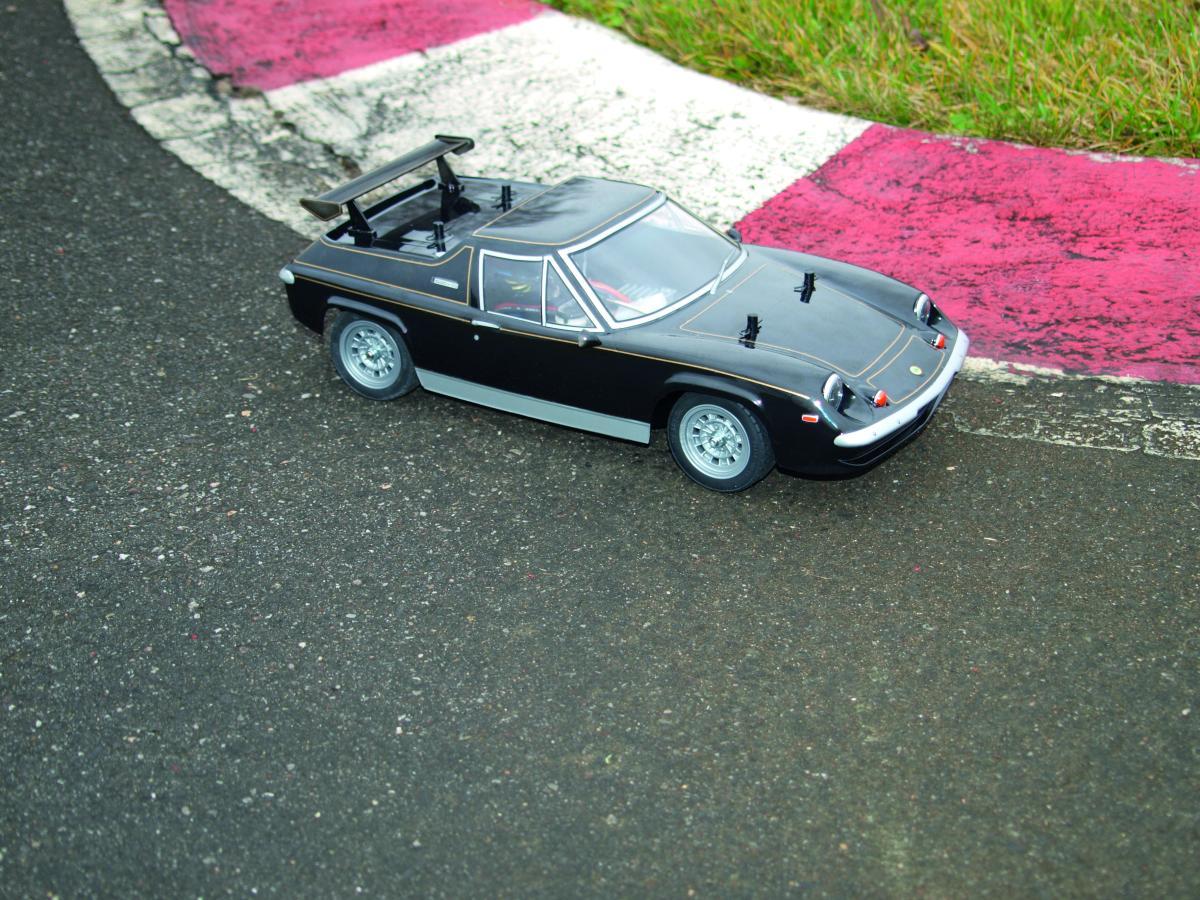
Of course, the lack of oil-pressure shock absorbers is noticeable: the car bounces a little, but that doesn’t matter much. The soft 60D Supergrip tires on the rear axle provide plenty of grip, and the Lotus can be steered exactly where you want it to go. The hard front tires don’t allow for very tight cornering, but the car has an almost foolproof suspension balance.
The Lotus Europa’s handling is a feast for the eyes, and we just kept driving this little model, battery after battery. Somehow we couldn’t bring ourselves to stop, and everything was wonderful. So much for the modular configuration.
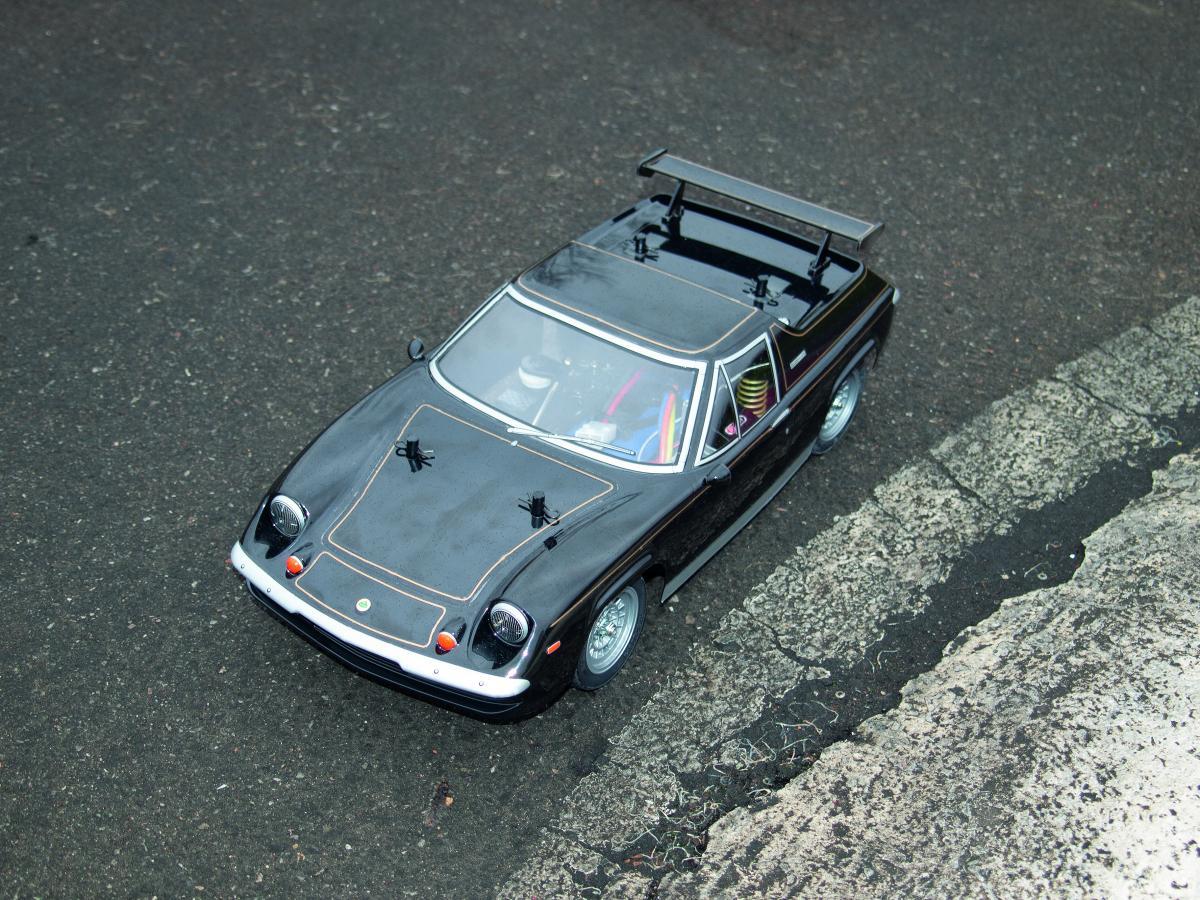
Back at the workbench, we performed a quick inspection. Since all moving parts were well-lubricated with the included Tamiya grease, we didn’t notice any signs of wear. That will likely change once the model is made faster later on. There are tons of tuning parts available for this Tamiya model, and you can further customize the chassis to suit your own preferences.
Technical Specifications
| Characteristic | Specification |
|---|---|
| Scale | 1:10, RC model kit |
| Length | 390 mm |
| Width | 176 mm |
| Height | 114 mm |
| Wheelbase | 225 mm (M-06-M) |
| Required | 2-channel remote control, steering servo, ESC (electronic speed controller), 7.2–7.4 V battery with compatible charger, polycarbonate paint |
Conclusion
A typical model kit, designed in Shizuoka, Japan, where Tamiya is headquartered. With the perfect assembly instructions, even a beginner can get the model up and running. Experienced model builders can assemble the chassis in a single weekend, and the necessary electronics (steering servo, speed controller, and receiver) are quickly installed.
Cutting out the polycarbonate body, masking it off, and painting it comes next on your next modeling day, and the numerous decals add a few hours to the building process. Tamiya models are simply always beautiful: they’re fun to build, tune, and drive. The Lotus Europa Special definitely falls into this category.