
The Comprehensive Tamiya Paint Guide: An Overview of AS, TS, PS, X, and XF Paints
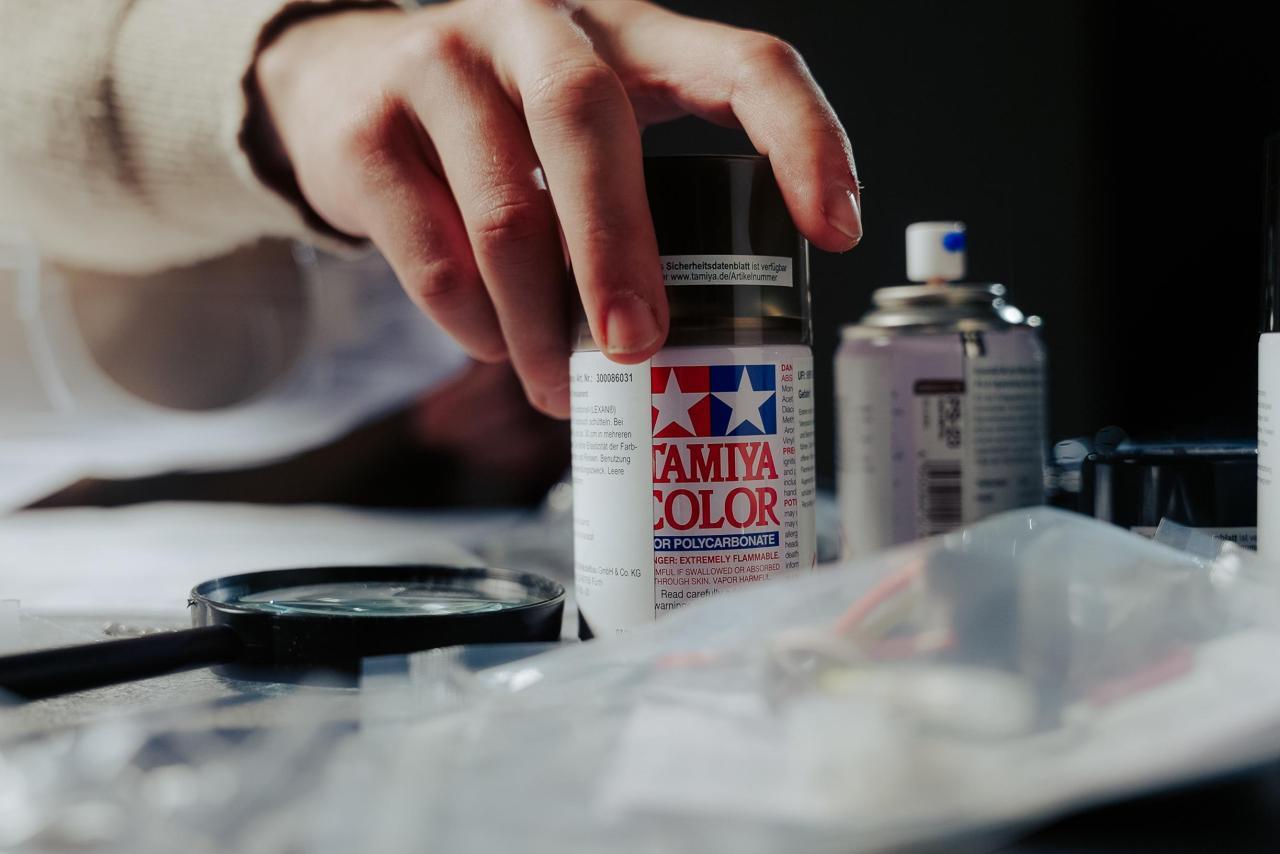
Are you standing in front of the model-making aisle or planning your next RC project and feeling completely overwhelmed by all the abbreviations on the paint cans? Don’t worry! This guide will shed some light on the matter. We’ll explain exactly which Tamiya paints are suitable for which materials, how to apply them best, and how the different series differ.
Quick & Easy: Answers to the most important questions about Tamiya paints
What is the difference between Tamiya TS and PS paints?
TS paints (spray cans) are specially developed for rigid plastic models (polystyrene) and hard plastic. PS paints (polycarbonate sprays), on the other hand, are highly elastic and were designed exclusively for the flexible, transparent Lexan bodies of RC cars, as they do not chip when impacted.
How can Tamiya X and XF paints be thinned?
Tamiya acrylic paints (X/XF) are best mixed with the brand’s own Tamiya X-20A thinner (alcohol-based) or, for an even smoother finish, with Tamiya Lacquer Thinner. For airbrush use, a mixing ratio of approximately 1:1 to 2:1 (paint to thinner) is recommended.
Are Tamiya paints water-soluble?
Tamiya’s liquid X and XF paints are alcohol-based acrylic paints. While they can theoretically be diluted with water or washed out of brushes when wet, you should always use the original Tamiya thinner for optimal results and clean, lump-free surfaces. Dried paint is completely waterproof.
How long do Tamiya paints take to dry?
Tamiya acrylic and spray paints dry extremely quickly. Depending on the surface, they are often dust-dry after just 15 to 30 minutes. However, to allow the paint to cure completely so you can mask or paint over it, you should let the model rest for at least 24 hours.
The most important facts about Tamiya model paints at a glance
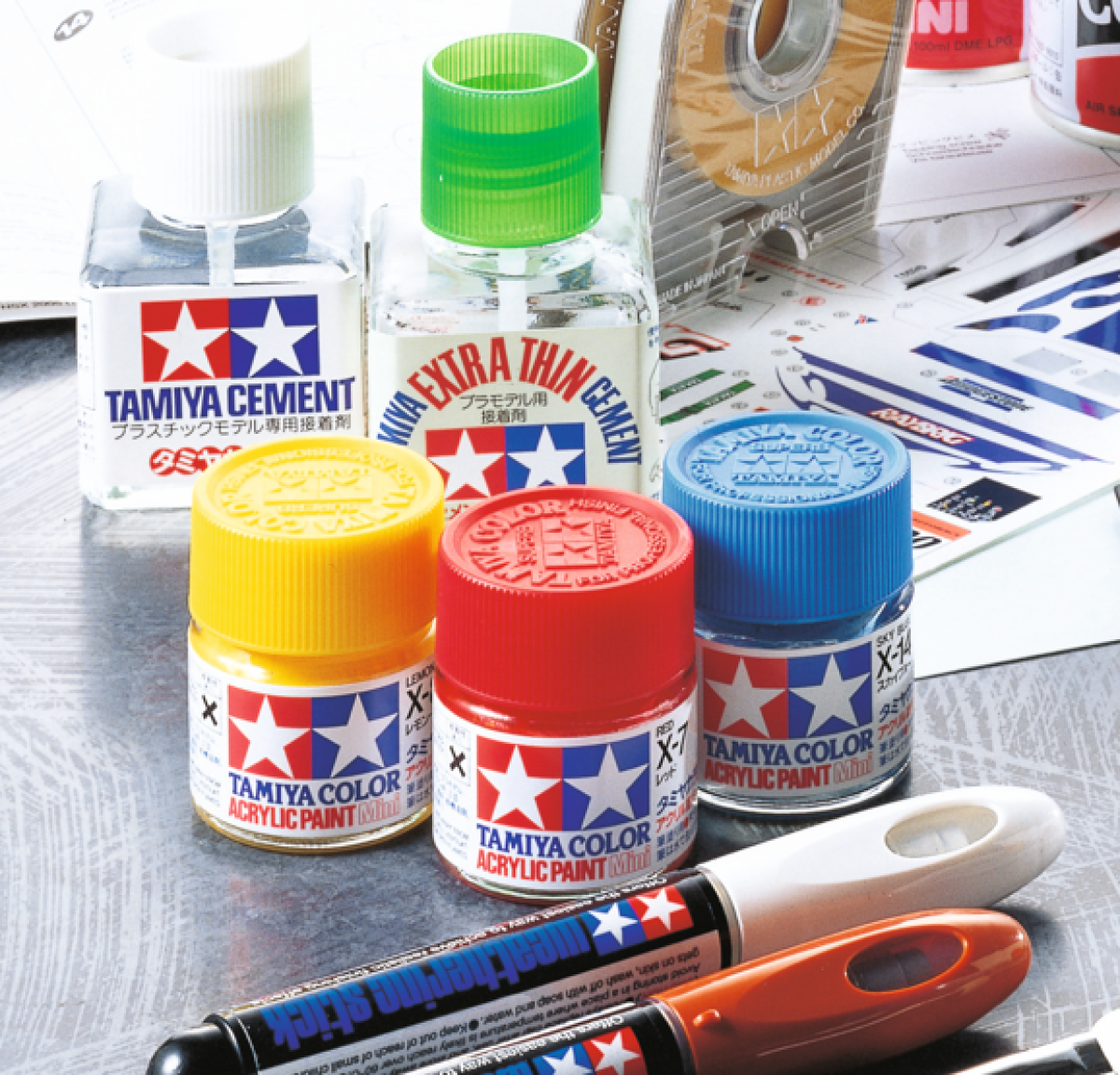
- X & XF (jars): Acrylic paints for brushes and airbrushes. X stands forgloss, XF forflat.
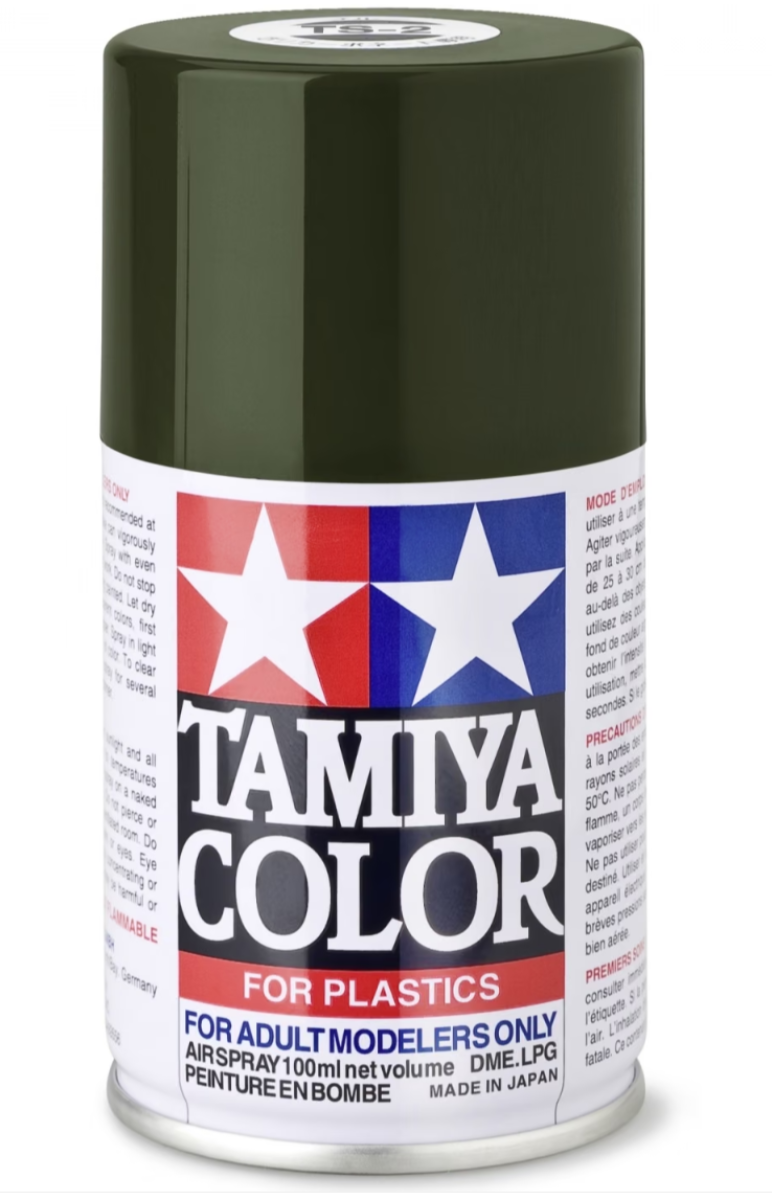
- TS (Aerosol Can): Universal acrylic paint for plastic models (e.g., display models, military, cars).
- AS (spray can): Special matte shades historically accurate for aircraft models.
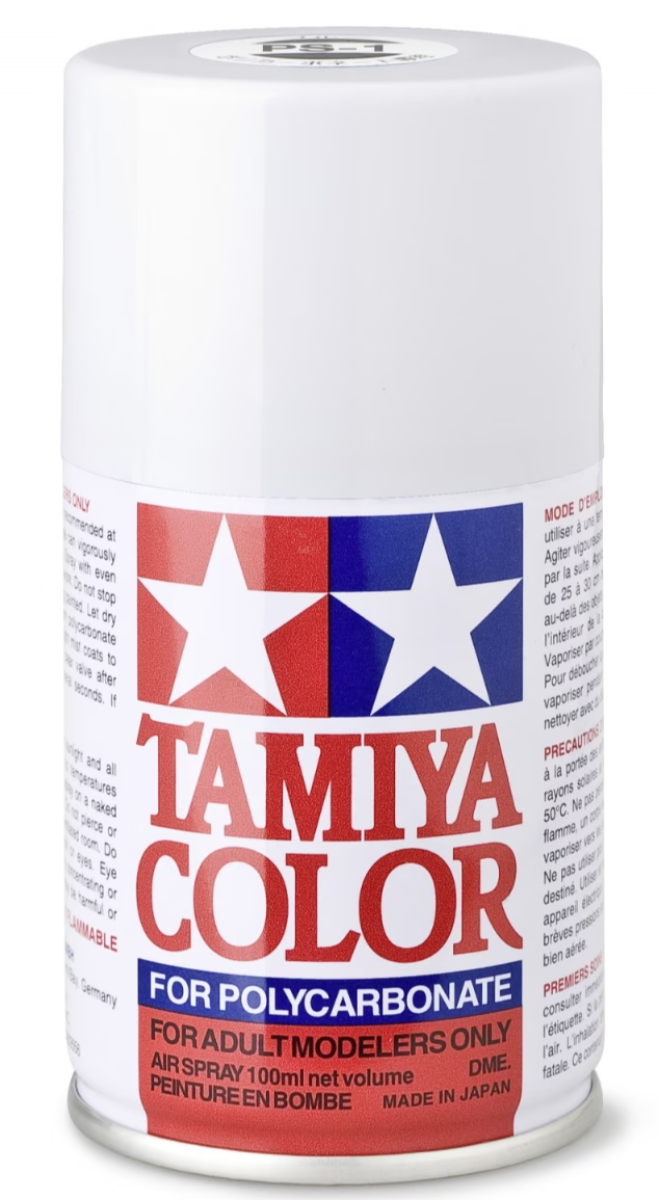
- PS (spray can): Flexible special lacquer for Lexan/polycarbonate bodies in the RC sector. Spray from the inside!
- LP (Jars): Modern "Lacquer Paints" for extremely hard, glossy surfaces and perfect airbrush results.
The Tamiya Paint Line: What Does Each Letter Stand For?
Tamiya uses a simple but strict system of letter abbreviations. Once you understand this system, you’ll never grab the wrong product off the shelf again.
Tamiya X and XF: The All-Rounders in a Jar
These small bottles are the heart of every model-building table. They contain high-quality, alcohol-based acrylic paints that can be applied with a brush or—when properly thinned—work excellently with an airbrush.
- Tamiya X paints: The "X" stands for glossy surfaces (Gloss). Perfect for civilian vehicles, sports cars, or glossy details.
- Tamiya XF Paints: The "XF" stands forflat finishes. Indispensable for military models, figures, tank tracks, and realistic weathering effects.
Expert tip from the Tamiya workshop: "Anyone who wants to paint tanks or historical military vehicles true to the original will almost exclusively use the XF flat shades. For the perfect airbrush mixture, our product developers use a 1:1 ratio with X-20A thinner —this ensures an extremely fine spray pattern without clogging the nozzle."
Discover our airbrush guide here: Airbrush Model Building – The Comprehensive Guide for Beginners and Those Switching Over
Tamiya TS, AS, and PS: The Professional Paints in Aerosol Cans
When it comes to smooth, large surfaces without brush strokes, Tamiya spray cans are the top choice. But be careful: The material of your model determines the success here!
| Paint Abbreviations | Application | Special Feature |
| TS | Hard plastic models | Universal, hard acrylic paint |
| AS | Aircraft model building | Matte, historically accurate |
| PS | RC Lexan bodies | Extremely flexible, flakes |
TS paints: For classic plastic model building
The TS cans contain a quick-drying acrylic paint that adheres perfectly to polystyrene (the classic plastic used in display models).
Important:
Do I need a primer for TS paints?
For light colors (such as white or yellow) on dark plastic, a Tamiya primer (Surface Primer) is strongly recommended to ensure perfect coverage.
AS Paints: The Specialists for the Sky
AS paints are technically closely related to TS paints but were developed exclusively for aircraft model building. The color palette includes precise, historically researched shades for German, British, American, or Japanese World War II aircraft as well as modern jets. They all dry to a satin or matte finish.
PS Paints: A Must-Have for RC Drivers
Here lies the biggest pitfall for beginners: PS paints are intended exclusively for transparent RC bodies (Lexan/polycarbonate)! Since these bodies bend extremely in the event of a crash, the paint must remain elastic. PS paint chemically bonds with the Lexan.
- TIP:
RC bodies are painted from the inside. The glossy outer surface of the Lexan film ensures a perfect deep gloss finish. If you were to spray a TS paint on Lexan, the paint would shatter into a thousand pieces and peel off at the first minor crash.
Practical Tips: Mixing, Thinning, and Compatibility
Can Tamiya paints be mixed together?
- Within the same series: Yes! You can mix any X-Glas with an XF-Glas to precisely determine the level of mattness (e.g., satin).
- Across series: No! Never mix liquid acrylic paints (X/XF) with spray paints from a can or solvent-based LP paints (Lacquer Paints). This causes the paint to clump and become unusable.
Conclusion: How to choose the right Tamiya paint
Before you buy, just ask yourself these three quick questions:
- What material am I painting? (Hard plastic = TS or X/XF | Flexible RC Lexan/polycarbonate = PS)
- How will I apply the paint? (Large surfaces = spray can | Details & airbrush = X/XF bottles)
- What finish do I want? (Glossy = X or TS | Matte/Military = XF or AS)
With this setup, you’ll be perfectly equipped for your next model-building project. Have fun building and painting!
Here you’ll find tips & tricks on how to read Tamiya assembly instructions correctly: Reading Tamiya Assembly Instructions Correctly: Tips for RC Models