
Tamiya HotShot II Blockhead Motors Edition Kit
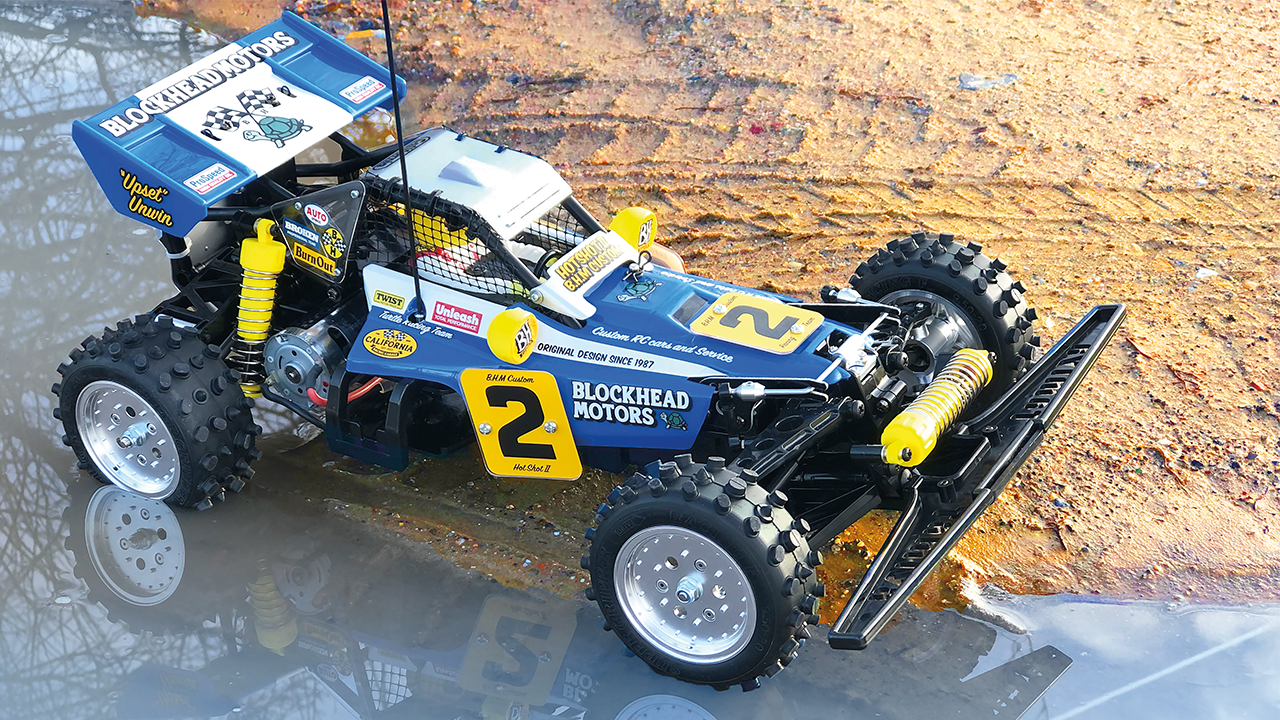
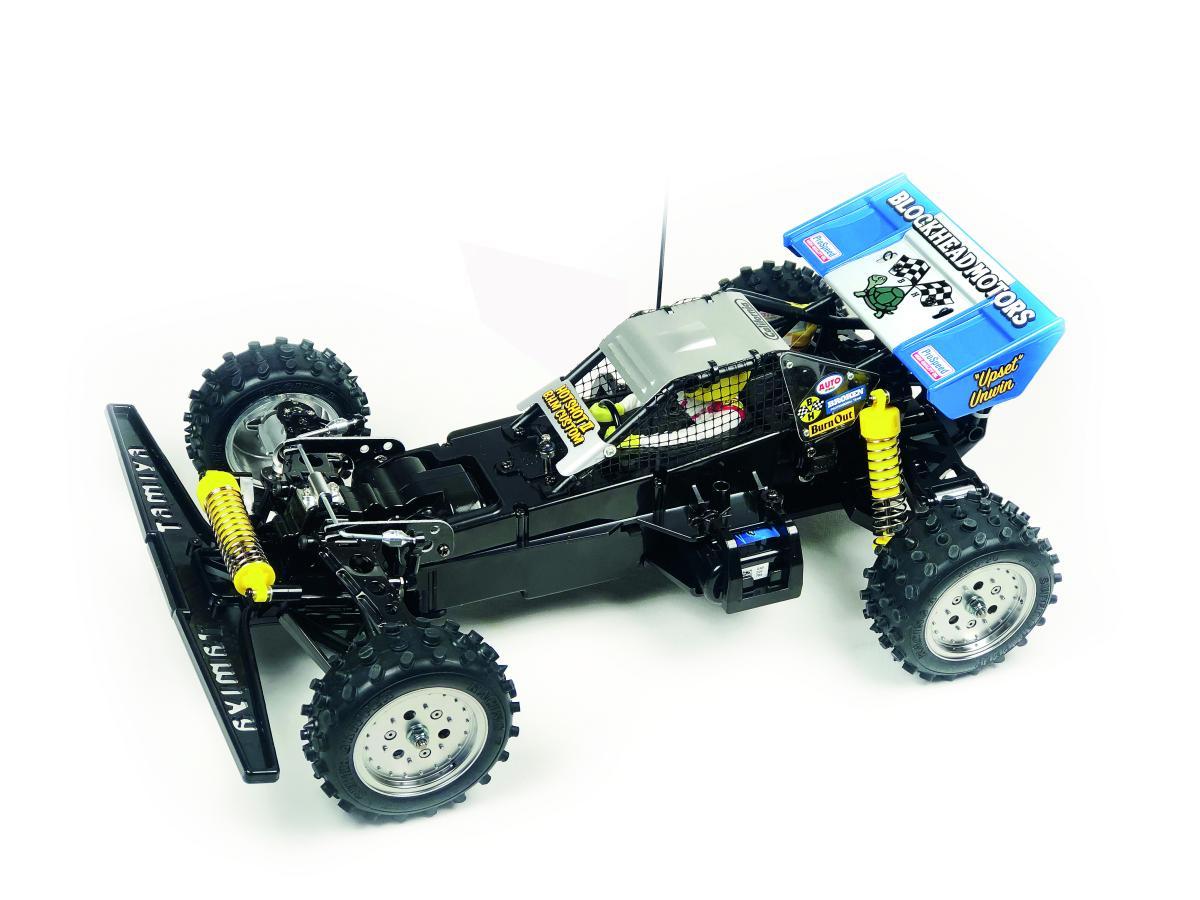
With its reissues of classic buggies from the 1980s, Tamiya is setting the hearts of collectors of this iconic Japanese brand racing. We take a look at the first reissue of the Hotshot II (58062), originally released in 1987, which has been given a fresh makeover in the retro style of the ’80s by Japanese designer Jun Watanabe from the “BLOCKHEAD MOTORS” studio.
First introduced in 1985, the Hotshot was Tamiya’s first 4WD buggy and marked the dawn of a new era in all-wheel-drive buggies. Two years later, the Hotshot II was released with several improvements to the suspension. For this second Blockhead edition—following the Tamiya Wild-One—special attention was paid to the colors and the pioneering spirit of the 1980s, resulting in yet another truly special model.
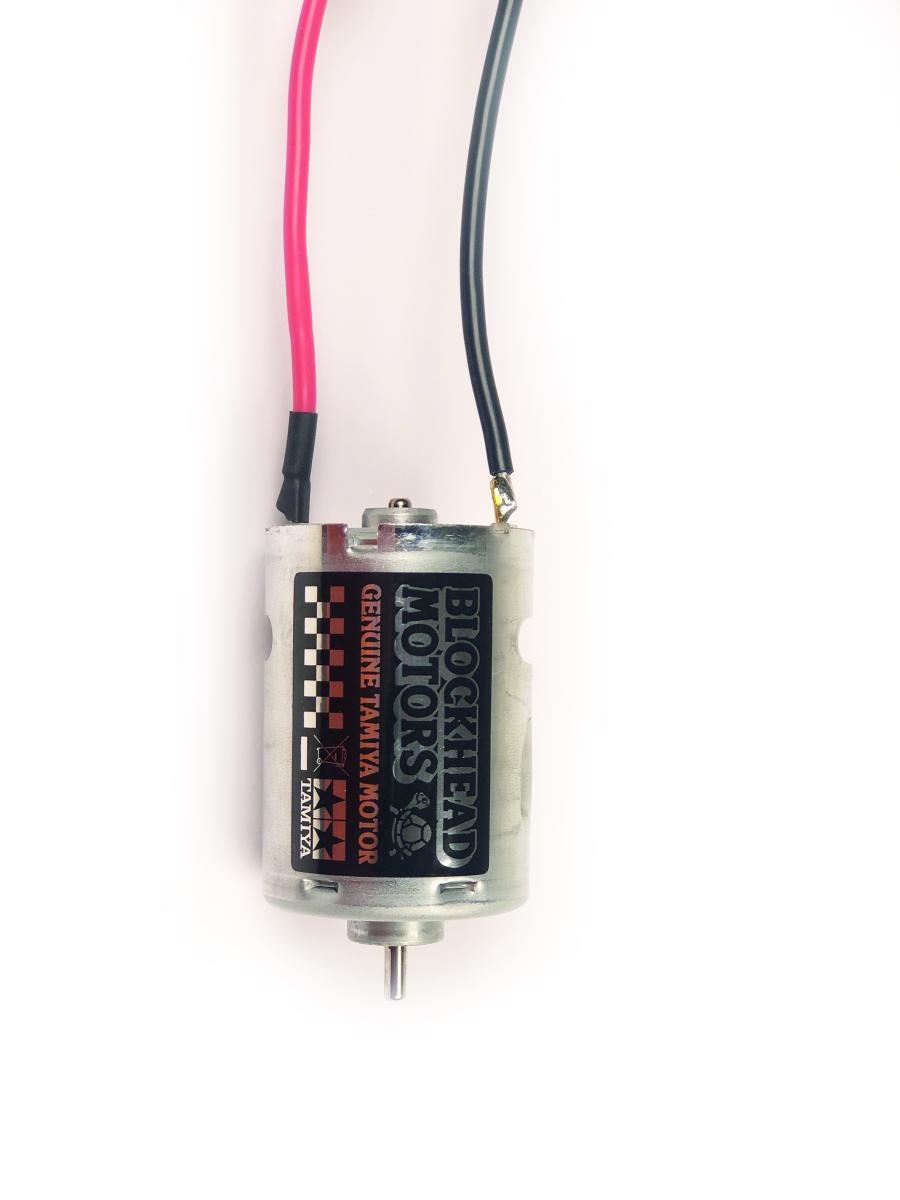
The Blockhead design runs through the entire kit like a red—or rather, blue and yellow—thread. The packaging is adorned with Blockhead logos both on the outside and inside. Everything from the typical Tamiya instructions and the decal sheet to the decal for the 540 electric motor is branded with the playful turtle logo. You can find more about Japanese designer Jun Watanabe in the separate box.
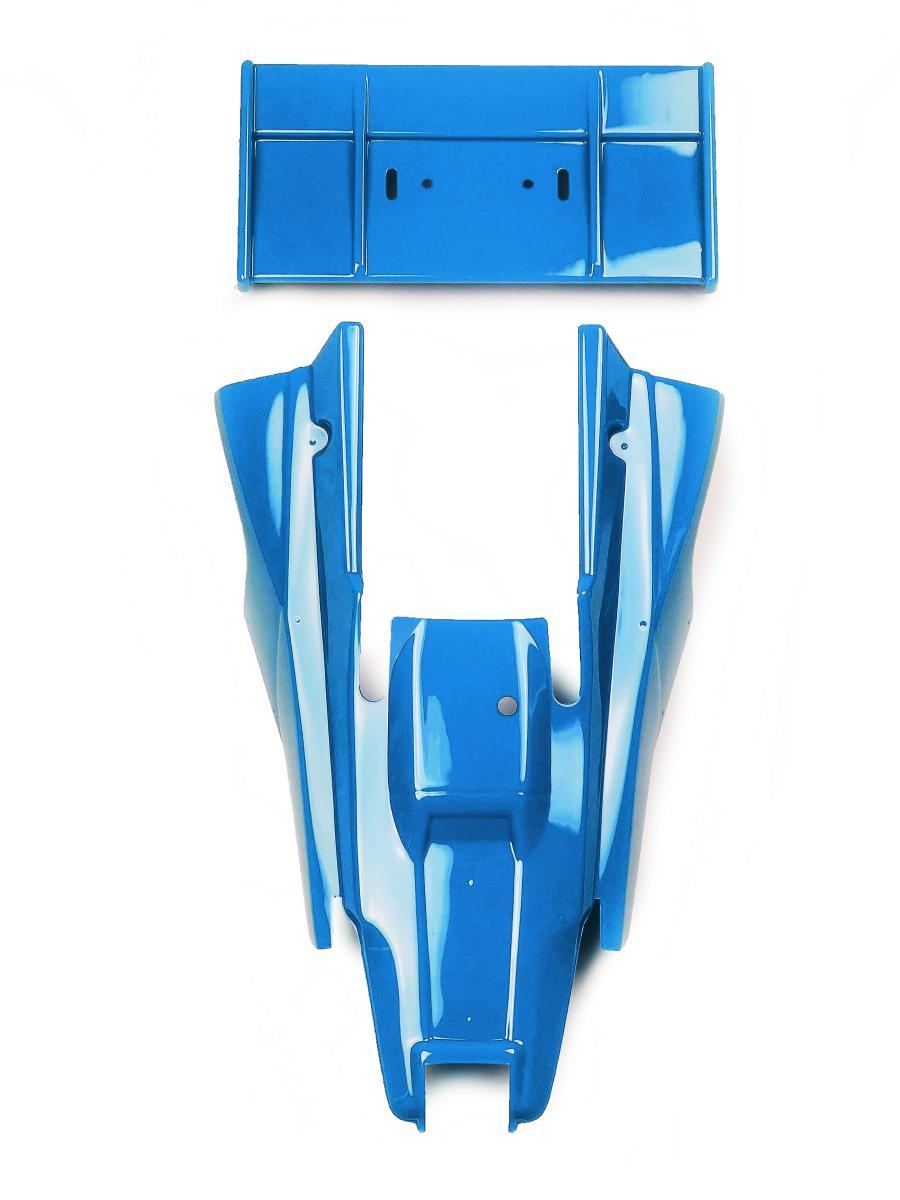
Tamiya 540 motor, also available in the Blockhead Motors design. The body, rear wing, and accessories are already painted and cut out.
As is customary with Tamiya, you start the kit by assembling the two gearboxes, which are connected by a propeller shaft. The mid-engine design features a bevel differential on both the rear and front axles. The differential outputs are each mounted on ball bearings. However, these are also the only ball bearings in this kit.
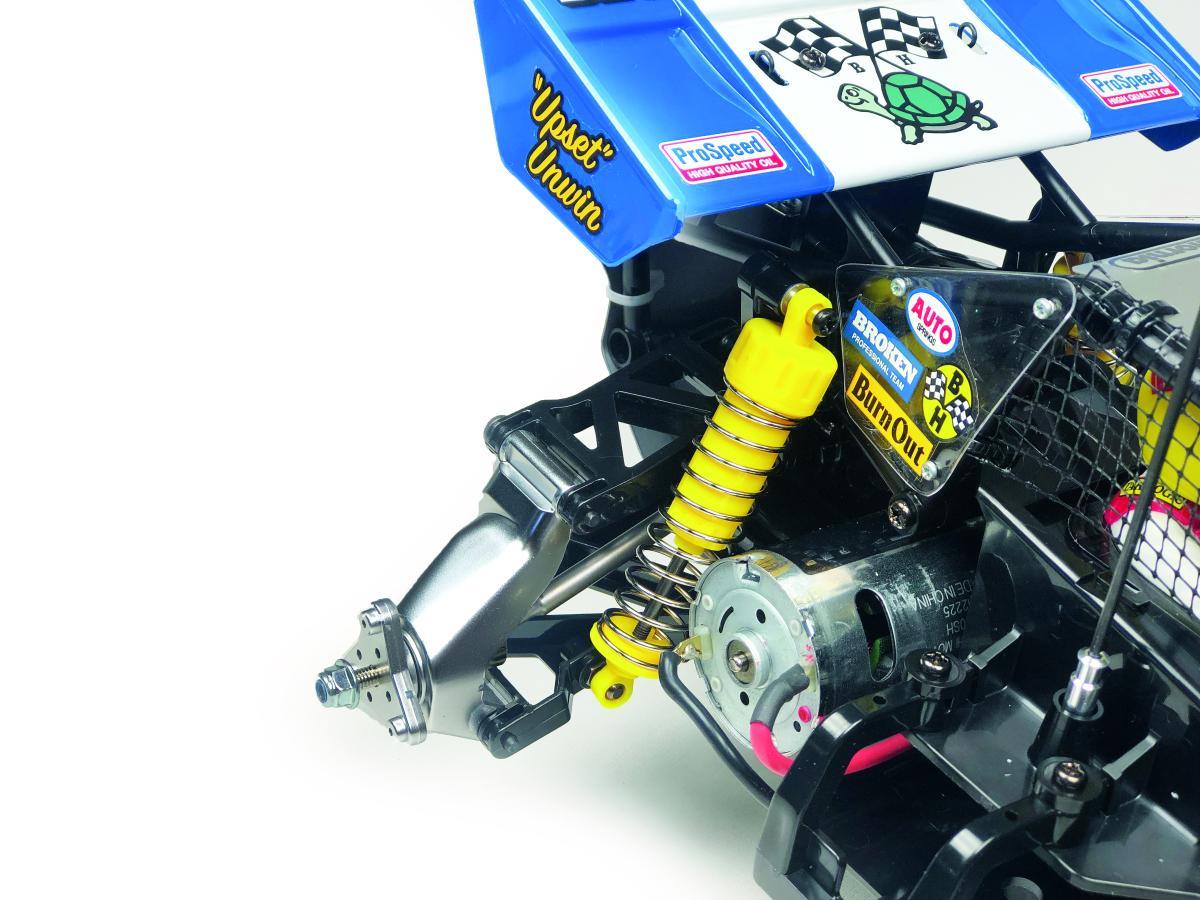
Next, we assemble the rear axle in the classic double wishbone design. It’s worth noting that when the first Hotshot hit the market in 1985, these wide wishbones were revolutionary and ushered in a new trend in suspension geometries. The front axle steering knuckles rotated in ball joints, which also represented a technical milestone for Tamiya in 1:10-scale all-wheel-drive buggies at the time.
A view of the rear axle with matte chrome axle carriers
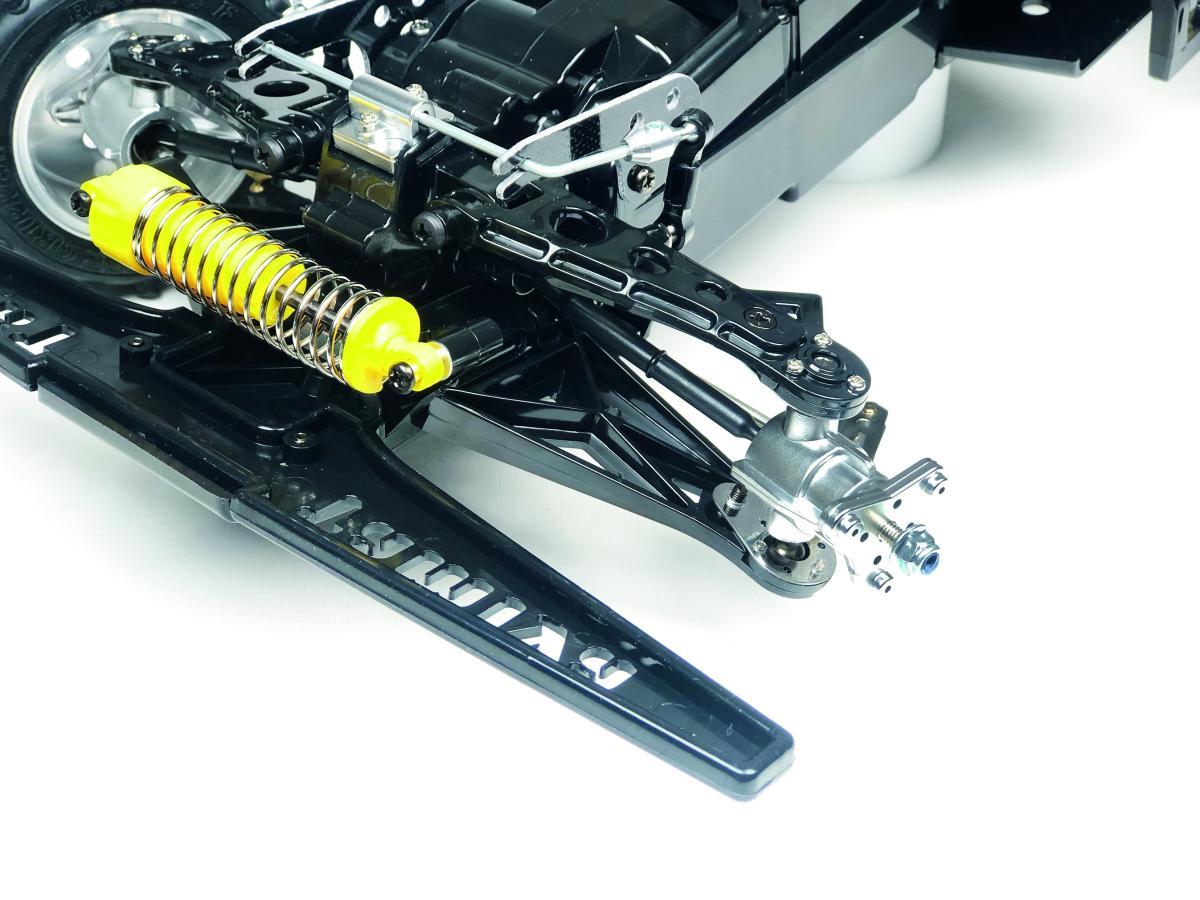
The two gearboxes are mounted on the upper chassis frame and connected by a drive shaft. A distinctive, 2-millimeter-thick stabilizer bar is located above the front axle. Directly behind the front axle is the steering servo, which connects the asymmetrical tie rods to the silver steering knuckles via the servosaver bolted directly to the servo. This steering geometry was also one of the hallmarks of the early Hotshot models. When the buggy compresses, the track width opens up significantly. This so-called “bumpsteering” was inherent to the design and could not be eliminated. However, it is also a defining characteristic of this buggy and is therefore an integral part of our Hotshot II.
All the electronics are housed inside the RC box. This box is screwed to the upper chassis frame from below and protects these components from splashing water.
Since aesthetics and design play a central role in our Blockhead Edition, the driver figure has been modified compared to the original Hotshot II and moved slightly forward within the chassis. As with the Blockhead Wild One, protective nets have been installed to shield the driver, giving it that authentic ’80s scale look.
New, taller roll cage for a more realistic appearance of the driver figure
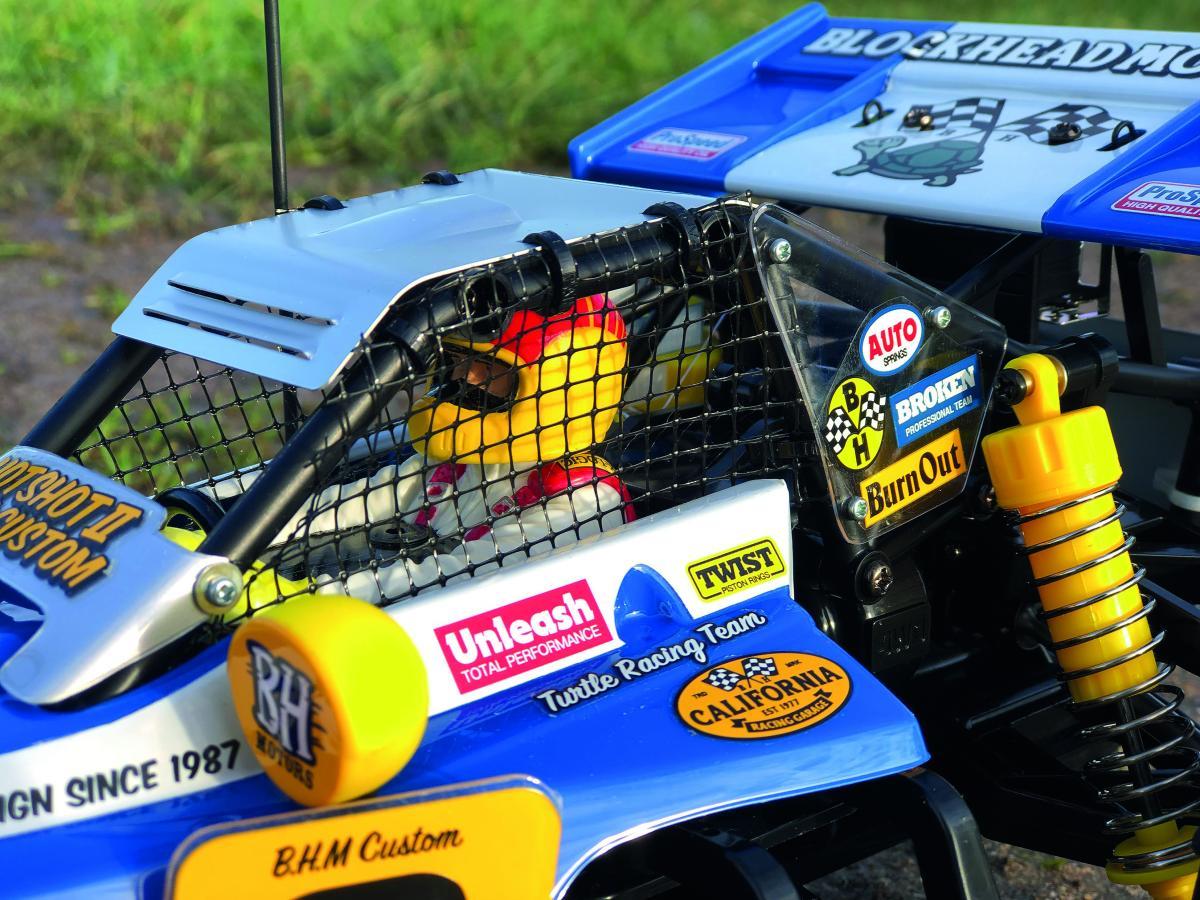
The Hotshot II features three large CVA-II oil-pressure shock absorbers: one transverse shock on the front axle and two vertical shocks on the rear axle. The author found the included 400-grade shock oil, in combination with the recommended three-hole shock plates, to be too soft. So the shocks were fitted with the two-hole shock plates that were also included, and the shock performance was much more to his liking.
To complete the chassis, the bumper and underbody are bolted to the chassis. The classic Hotshot tires are mounted on the silver rims typical of Blockhead models, and our Hotshot II stands on its wheels for the first time.
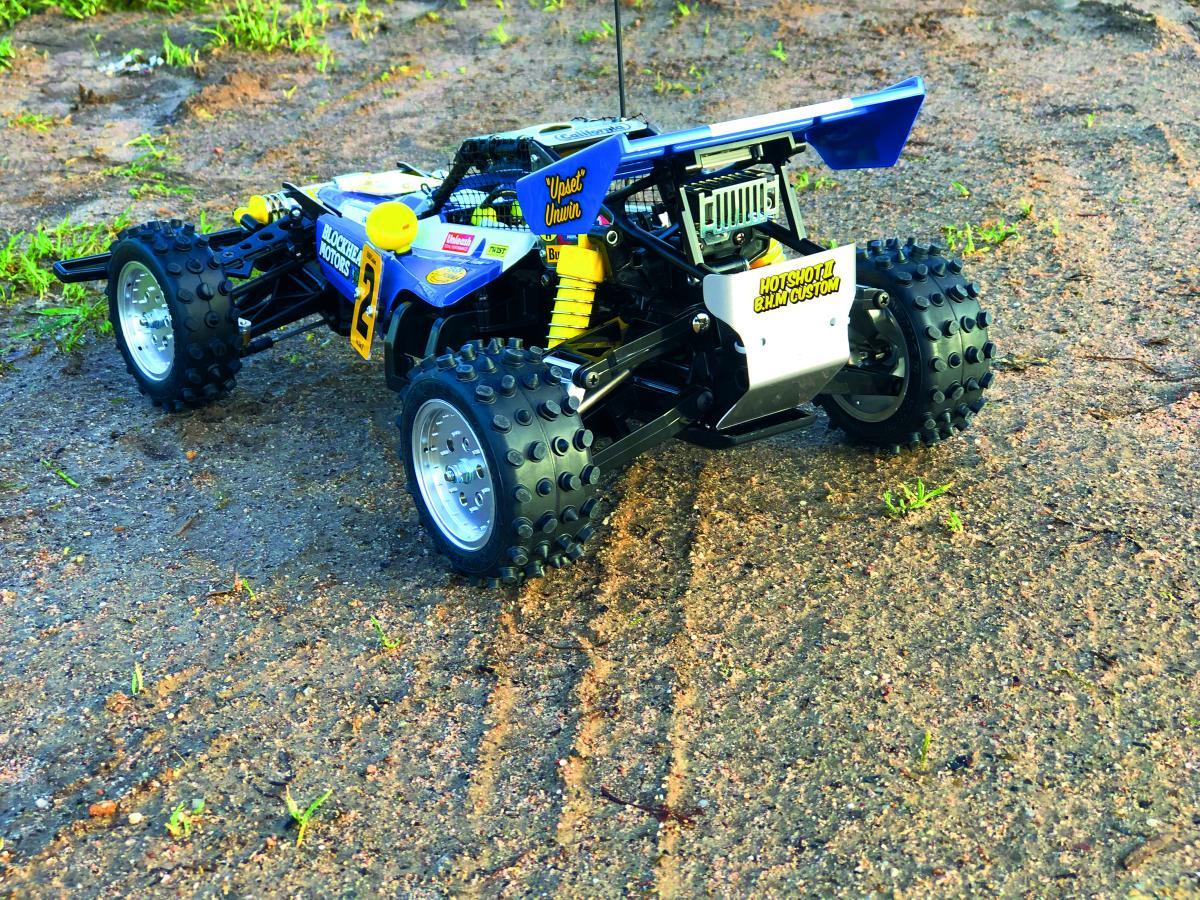
The attached number plates and lights give the vehicle a realistic appearance
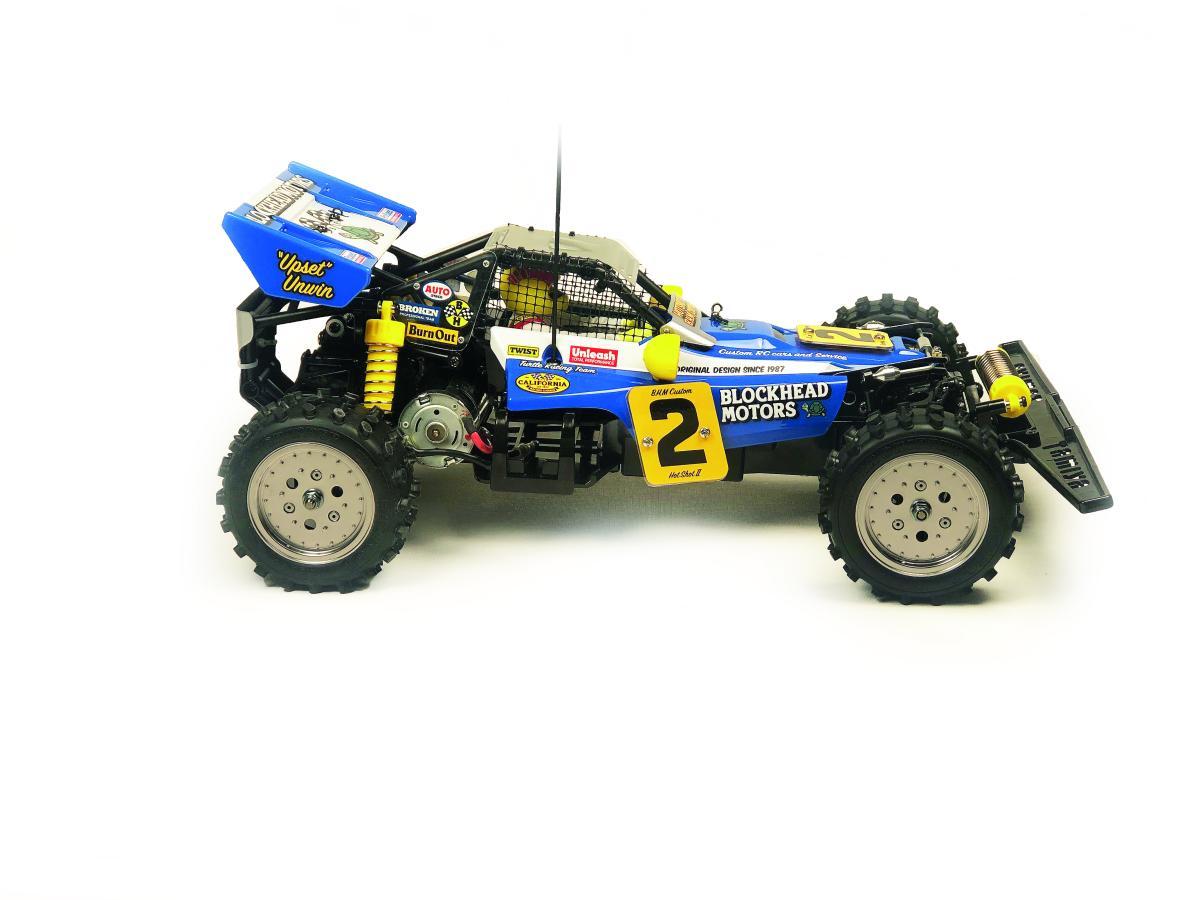
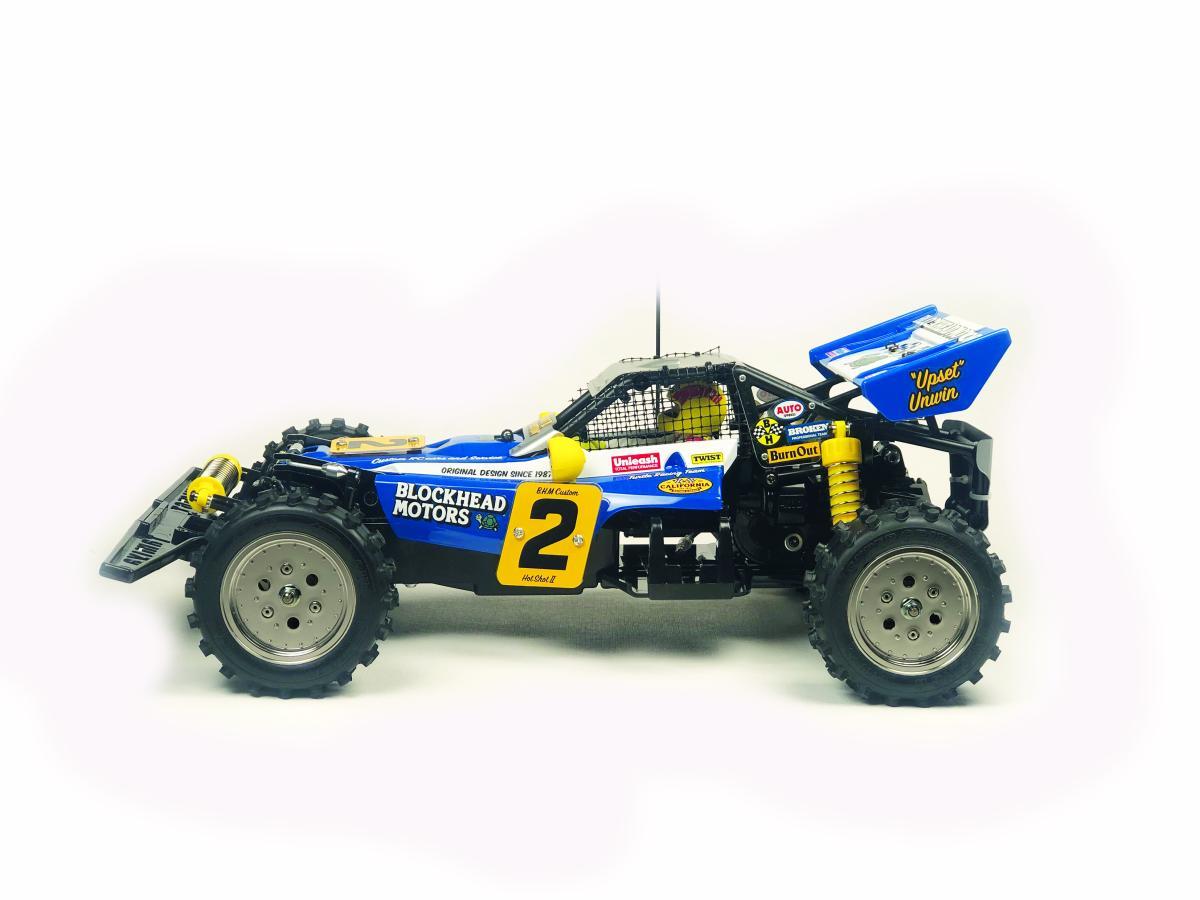
One of the special features of the Blockhead Edition is the polycarbonate body and accessories, which are pre-painted in Brilliant Blue and feature drilled and cut-out details. As with the Blockhead Motors Wild One version, the model is designed in blue with white accents. A new decal sheet from Jun Watanabe’s design brand “BLOCKHEAD MOTORS” is also included with the kit. The attached number plates and lights serve as yellow accents. The lights are LED-ready and can be fitted with optional bulbs. Side plates, window nets, and a dummy antenna are also included. For a more realistic look, a new, taller roll cage was designed, and the upper chassis was modified accordingly.
Conclusion
The Tamiya special edition models designed by Jun Watanabe have already achieved cult status among collectors and are the centerpiece of many an RC car collection. Jun’s sure hand in designing shapes and colors gives the Blockhead Motors editions that special something. We’re already looking forward to what we hope will follow.